
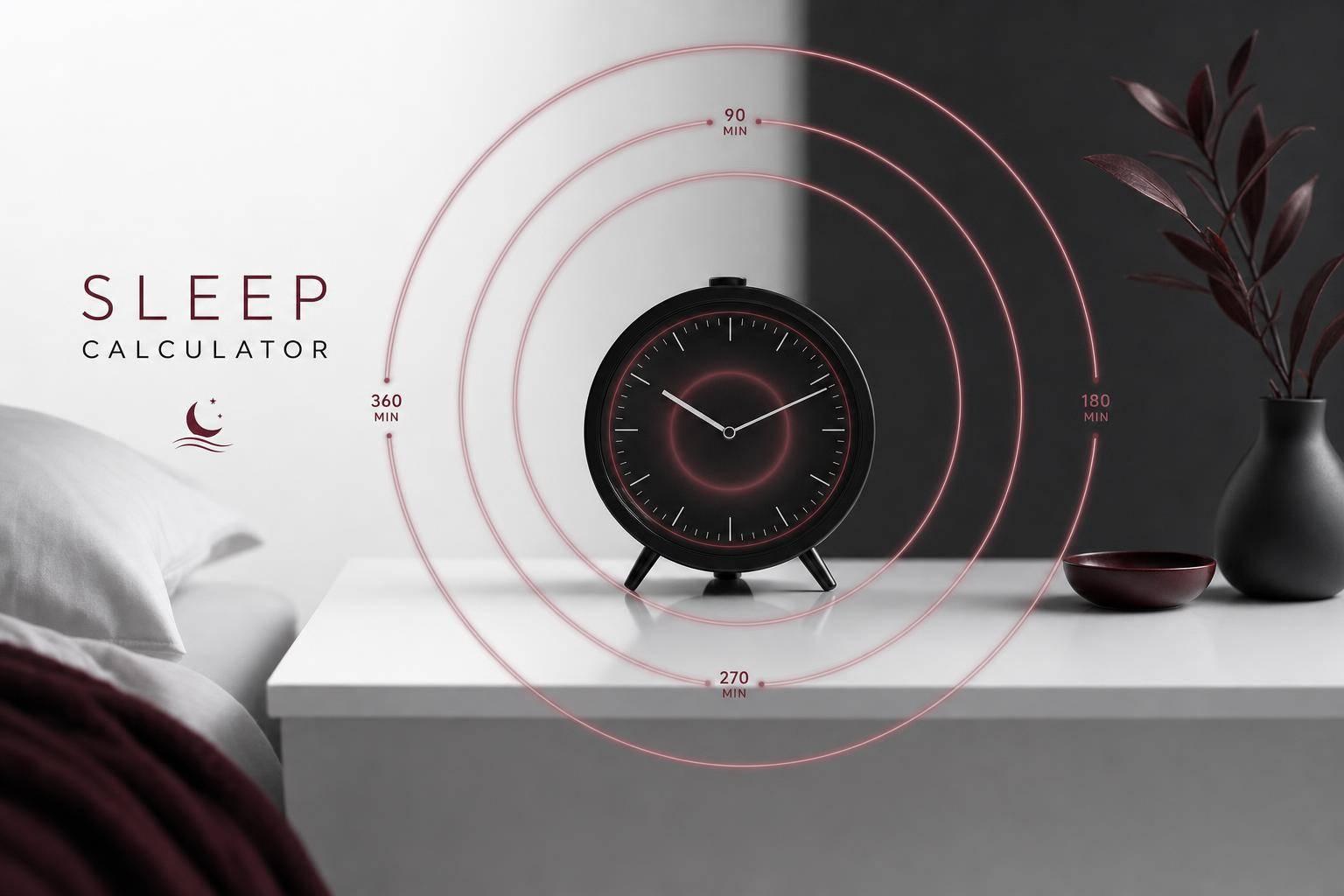
Sleep Calculator
Find ideal bedtimes or wake-up times based on 90-minute sleep cycles, with optional fall-asleep time for quick, practical results.
Plan Sleep Around Natural Cycles
A sleep calculator makes it easier to choose a realistic bedtime or wake-up time without doing mental math late at night. Instead of guessing, you can use average 90-minute sleep cycles to see several timing options that line up with a typical night of rest. That’s especially useful when your schedule changes, you need to wake up earlier than usual, or you simply want a clearer bedtime target.
A Practical Way to Pick Bedtimes or Wake Times
This tool works in both directions. You can enter the time you want to wake up and get recommended bedtimes, or start with the time you plan to go to bed and see possible wake-up times. It also factors in how long you usually take to fall asleep, which helps the results feel more useful in real life.
Fast, Clear, and Easy to Use
A good sleep cycle calculator should be simple: enter a time, review your options, and pick the one that fits your routine. Each recommendation is based on full cycles and displayed clearly with total sleep duration, so you can compare shorter and longer options at a glance. For anyone looking for a quick bedtime calculator or wake-time planner, this approach keeps things straightforward and genuinely helpful.
FAQs
How does this sleep calculator work?
The tool estimates sleep timing using 90-minute sleep cycles, which is a common average used for simple planning. If you enter the time you want to wake up, it counts backward by full cycles and subtracts your estimated time to fall asleep. If you enter your bedtime, it adds your fall-asleep time first, then calculates likely wake-up times after 4, 5, or 6 full cycles.
Why does it ask how long I take to fall asleep?
Most people don’t fall asleep the moment they get into bed, so that extra time helps make the recommendations more realistic. The default of 15 minutes is a practical estimate, but you can change it if your routine is different. That small adjustment can noticeably improve the usefulness of the suggested bedtimes or wake-up times.
Are these results exact for everyone?
No, they’re best used as practical estimates rather than precise predictions. Sleep cycles can vary from person to person and even from night to night, so the calculator is meant to give you helpful planning options based on typical timing. It’s a simple scheduling tool, not medical advice or a diagnosis tool.