

How to Start a Mindful Morning Reflection Practice
Simple 3-step morning practice: read a verse, do 4-4-8 breathing, and journal 3–5 minutes to start calm and focused.
Starting your day with mindful reflection can help you feel calmer, more focused, and intentional. Instead of diving into your phone or rushing, take a few moments to pause and center yourself. Here's a simple 3-step routine to get started:
- Read a Dhammapada Verse: Begin with a short, meaningful teaching to inspire your day.
- Practice 4-4-8 Breathing: Breathe in for 4 seconds, hold for 4, and exhale for 8 to relax your mind and body.
- Journal for 3-5 Minutes: Write down your thoughts, gratitude, or intentions to clear your mind.
Tips to Make It Work:
- Create a dedicated space for reflection (like a chair or quiet corner).
- Avoid your phone for the first 30 minutes of the day.
- Use habit stacking (e.g., pair reflection with brewing coffee) to stay consistent.
Even 5-10 minutes can set a calm, intentional tone for your day. Start small and build this habit over time for lasting benefits.
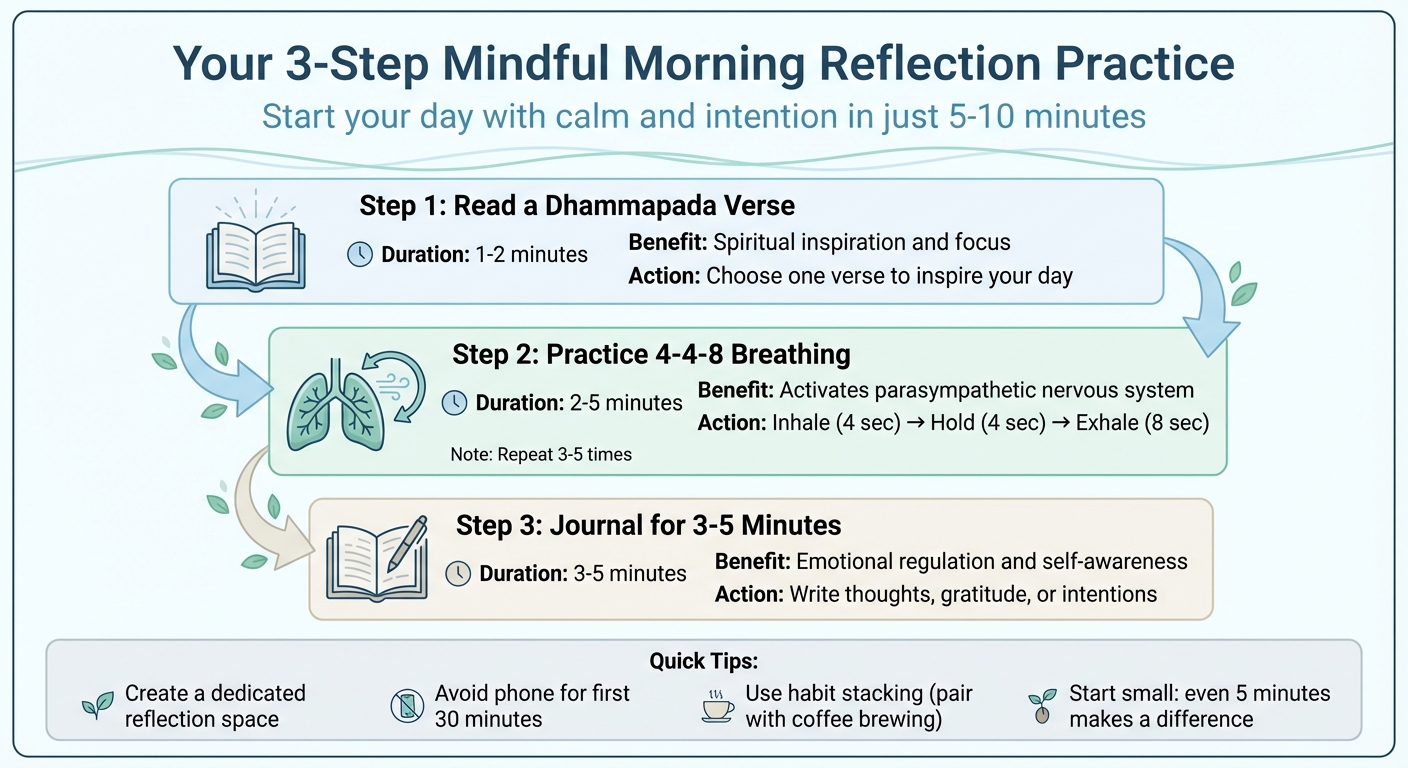
3-Step Mindful Morning Reflection Practice Guide
Morning Mindfulness Meditation to Set Your Intentions | Beginners Meditation | Mindful Movement
Review Your Current Morning Routine
Take a closer look at your morning routine to find natural opportunities for mindfulness. What’s the first thing you do when you wake up? Do you instinctively grab your phone or rush through your morning tasks without much thought? Recognizing these habits can help you figure out where mindfulness might naturally fit.
Look for moments that lend themselves to a pause - like when your feet hit the floor, while your coffee brews, or as you brush your teeth. The idea is to transition from a reactive mindset (like responding to notifications or external demands) to a more intentional one.
Recognize Common Morning Distractions
One of the biggest hurdles to a mindful morning is your smartphone. To combat this, try keeping your phone in another room and commit to a "no-phone" window for the first 30–60 minutes of your day. This creates mental space before external distractions take over.
Rushing is another common issue. When you’re trying to cram in a shower, get dressed, and mentally plan your day all in 20 minutes, you’re likely operating on autopilot. This kind of hurried approach activates a stress response, making it harder to feel calm or reflective.
Here’s a quick breakdown of distractions and how to address them:
| Distraction | Minimization Strategy |
|---|---|
| Smartphone/Email | Keep your phone in another room; delay digital access for 30–60 minutes. |
| Rushing/Chaos | Prep clothes and tasks the night before; wake up 15 minutes earlier. |
| Mental To-Do Lists | Spend 3–5 minutes journaling to "dump" your thoughts; set a one-word intention. |
| Forgetting to Practice | Stack habits (e.g., "When my feet touch the floor, I take 3 deep breaths"). |
Once you’ve identified these distractions, you can structure your morning to create space for mindfulness.
Set Up Your Reflection Space and Schedule
Now that you’re aware of what pulls your focus, it’s time to create an environment that encourages mindfulness. Choose a consistent spot that feels calming - whether it’s the edge of your bed, a favorite chair, or a quiet corner in your home.
Next, carve out a small window of time in your morning routine. Even just 5 minutes can help shift your mindset. If mornings feel too hectic, prepare the night before. Lay out your journal, place a cushion in your chosen spot, or set out a cozy blanket. These small steps reduce the barriers to starting your practice.
For example, replace your phone’s alarm with an analog clock to avoid diving into notifications first thing. You could even leave a sticky note on your mirror as a gentle nudge to embrace a mindful moment.
How to Build Your Morning Reflection Practice
Creating a morning reflection routine can be simple and effective with just three steps: reading a Dhammapada verse, practicing the 4-4-8 breathing technique, and journaling. Here's a quick overview of the structure:
| Practice Component | Recommended Duration | Primary Benefit |
|---|---|---|
| Dhammapada Verse Selection | 1-2 Minutes | Spiritual inspiration and focus |
| 4-4-8 Breathing | 2-5 Minutes | Activates the parasympathetic nervous system |
| Reflective Journaling | 3-5 Minutes | Emotional regulation and self-awareness |
By following these steps in order, you can start your day with a sense of calm and clarity before diving into your daily tasks.
Choose a Daily Dhammapada Verse
Begin your practice by selecting a verse from the Dhammapada, a collection of teachings that can provide inspiration and guidance. The Sutta 423 app simplifies this process by offering one verse from the collection's 423 verses each day. Opening the app first thing in the morning - before checking emails or scrolling through social media - helps maintain your focus.
If you'd rather choose your own verse, consider reading it aloud to fully absorb its meaning. Some people even create a "Personal Anthology" by compiling verses that resonate with them the most, revisiting these during tough times. The idea is to approach the text with an open heart, focusing on its practical wisdom rather than overanalyzing it.
"By developing a daily habit of contemplative and devotional reading of the suttas you will deepen your understanding and practice of his timeless wisdom." - ReadingFaithfully.org
Try the 4-4-8 Breathing Exercise
Once you've reflected on your verse, transition into the 4-4-8 breathing exercise to calm your mind and body. This technique works by extending your exhale, which helps activate your body's relaxation response. You can do this while lying in bed or sitting with your feet flat on the floor.
Here’s the process:
- Inhale slowly through your nose for 4 seconds, letting your abdomen rise.
- Hold your breath gently for 4 seconds.
- Exhale fully through your mouth for 8 seconds - twice as long as your inhale.
- Repeat this cycle 3–5 times, or continue for up to 10 minutes if you have the time.
Even just a few rounds can help shift your state from stress to calm. To make this habit stick, pair it with something you already do every morning, like waiting for your coffee to brew or the moment your feet touch the floor.
"Lengthening the exhale activates your parasympathetic nervous system, which can help you feel calmer." - Calm Editorial Team
Write in Your Journal for 3-5 Minutes
After grounding yourself with breath work, take a few minutes to journal. This is the perfect time to reflect, as your mind is often more open and less cluttered right after waking. Spend 3–5 minutes writing about the verse, expressing gratitude, or setting an intention for the day.
Journaling doesn’t need to be lengthy or complex. The goal is to clear your mind and align your actions with your values before the distractions of the day take over. Research even suggests that as little as five minutes of gratitude journaling can increase optimism by 10%. Keep your journal within easy reach - on your nightstand or in your reflection space - so you can start without hesitation.
Maintain Your Practice and Handle Obstacles
Begin with Short Sessions
Starting small can make all the difference when building a morning reflection habit. Studies suggest it takes anywhere from 21 to 66 days to form a habit, so there's no need to aim for perfection right away. Instead, begin with just 2–5 minutes of practice. Even a single verse paired with a three-breath exercise counts as a complete session. These brief moments help create a strong foundation for a consistent, mindful routine.
The focus here is consistency, not duration. On busy days, try a quick 3-breath version of your practice rather than skipping it entirely. This keeps the habit alive, making it easier to return to your full routine when you have more time. As the habit solidifies, you can gradually extend your practice.
Set Up Reminders and Visual Cues
A little preparation can go a long way in maintaining your practice. Before bed, set up your reflection space - lay out your journal, place a meaningful object like a small plant or cushion, and designate a visible spot for your practice. These visual cues can gently remind your brain that it’s time to pause and be present.
You can also try habit stacking to make your routine feel natural. Link your reflection practice to something you already do, like sitting on your bed, waiting for coffee to brew, or the moment your feet hit the floor. Small touches, like changing your alarm tone to something calming or sticking a note with a word like "Patience" or "Present" on your bathroom mirror, can reinforce your intention. These strategies build on the earlier idea of creating a distraction-free, intentional space for your reflections.
Access Daily Verses with Sutta 423

To deepen your reflective practice, incorporate daily verses into your routine. The Sutta 423 app’s Free Plan delivers one carefully chosen verse from the Dhammapada each day, making it easy to engage with Buddhist teachings without the hassle of deciding what to read. This simple step can enrich your mornings and help you start the day with focus.
Resist the urge to dive into emails or social media first thing in the morning. Research shows that checking your phone within the first hour of waking can lead to increased stress and reduced focus throughout the day. Instead, use this time to open the app and read your daily verse. This helps you maintain the calm, focused state that sets the tone for a productive and mindful day.
Conclusion
Key Takeaways
Building a mindful reflection practice doesn't require complexity - just intention, consistency, and a touch of Buddhist wisdom. Start by evaluating your current morning habits and identifying anything that pulls your focus away from the present. Dedicate a small, quiet space for reflection, even if it’s just a chair or a corner. Keep distractions like emails and notifications at bay during these early moments.
Incorporate simple steps: choose a daily Dhammapada verse, take three deep breaths, and journal for 3–5 minutes. As Bhikkhu Bodhi aptly put it, "The Dhammapada is... a guidebook for resolving the countless problems of everyday life, a primer for the instruction of novices in the monasteries." This time-tested wisdom encourages you to reflect on your actions and align them with wholesome intentions.
Remember, consistency matters more than the length of your practice. Even two minutes can make a difference. Anchor your reflection to an existing routine and use visual reminders to prompt mindfulness. By reviewing your habits, selecting a verse, practicing controlled breathing, and journaling briefly, you create a framework for a mindful start to your day.
Begin Your Journey Now
There’s no need to wait for ideal conditions - start today. As Respiro noted, "The first conscious moments of your day possess extraordinary power to shape what follows."
Take one small step tomorrow morning. Open the Sutta 423 app to read your daily Dhammapada verse, take three conscious breaths, or write down a single word that reflects your intention for the day. With this simple act of pausing and reflecting, you set the tone for a day filled with awareness and purpose. Your path toward spiritual growth begins with this choice.
FAQs
What if I don’t have time for all three steps?
If you're pressed for time, pick one or two steps that feel the most doable for you. Even something as simple as a quick breathing exercise, a few gentle stretches, or spending five minutes jotting down your thoughts can make a noticeable difference in how you feel. Start with what works for your schedule, and as it becomes a habit, you can gradually expand your routine for lasting benefits.
How do I pick a Dhammapada verse that fits my day?
To pick a Dhammapada verse for the day, start by considering your mood, goals, or any challenges you're facing. Think about themes like mindfulness, compassion, or patience. For instance, if you're working on being more patient, choose a verse that highlights endurance. If kindness is your focus, look for one that encourages compassion. The idea is to find a verse that resonates with your current needs and helps shape your mindset for the day.
What should I write about when I journal?
When incorporating journaling into your mindful morning routine, choose prompts that encourage setting intentions, building self-awareness, and cultivating gratitude. Write about what you hope to achieve today, how you want to feel, or what emotions you're experiencing right now. Reflecting on what you're thankful for can also help start your day on a positive note.
For deeper self-discovery, consider exploring your personal needs, revisiting childhood memories, or simply pausing to observe your thoughts and emotions. The key is to keep your journaling purposeful and heartfelt, allowing it to ground you for the day ahead.