

Right Speech in Modern Relationships
Use Buddhist Right Speech to speak truthfully, protect boundaries, reduce harm, and handle conflict with calm, clear requests.
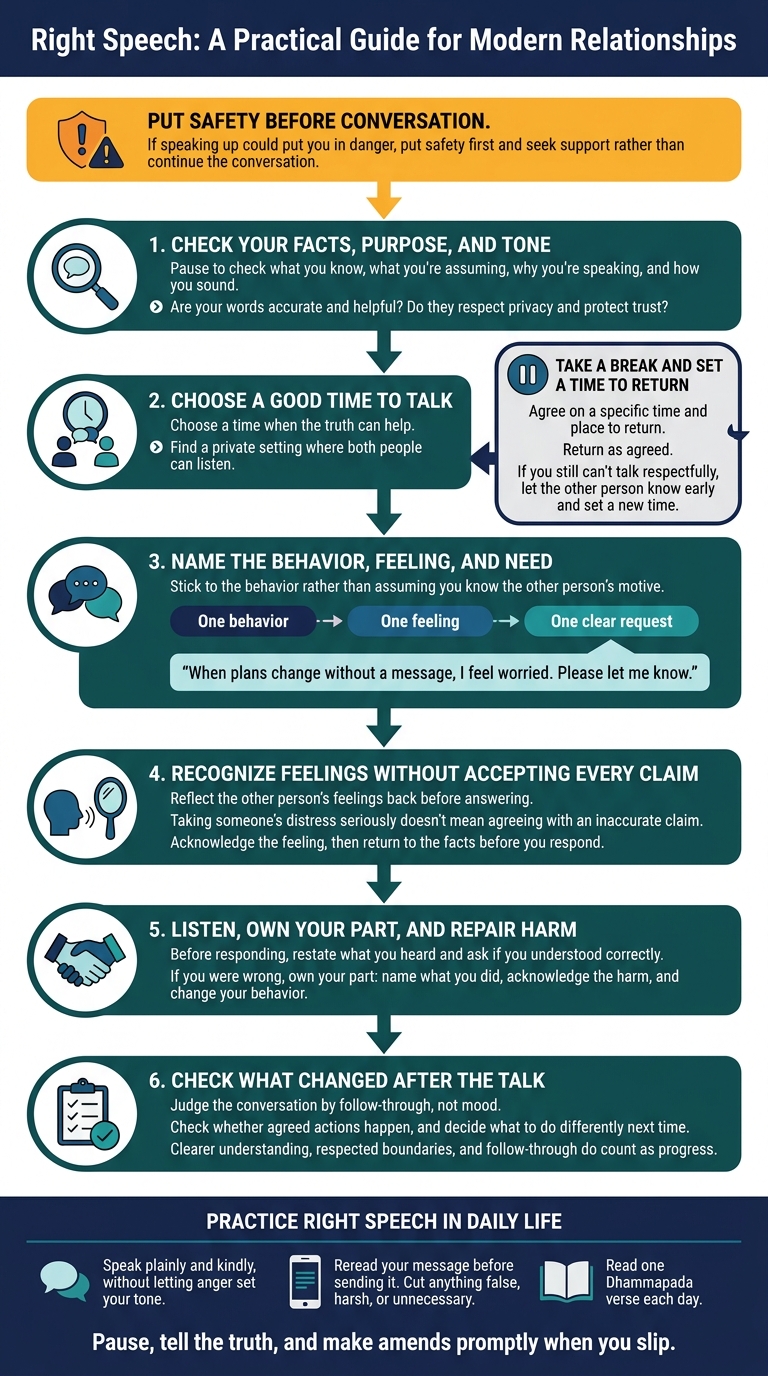
I can tell the truth without blame - and keep my boundaries. I start with one behavior, one feeling, and one clear request: “When plans change without a message, I feel worried. Please let me know.”
Right Speech is part of Buddhism’s eightfold path. I use it to guide how I speak, listen, and act:
- Check first: I separate facts from guesses and respect privacy.
- Choose the moment: I talk in private, pause when emotions run high, and agree on when to return.
- Listen and repair: I acknowledge feelings without agreeing to every claim, own my mistakes, and follow through.
- Put safety first: I seek support if speaking could put me at risk.
- Practice daily: I reread messages and use reflection or a Dhammapada verse to check my words.
My aim isn’t to win. It’s to <u>reduce harm</u>, protect trust, and turn a hard conversation into action.
Right Speech: A Guide to Difficult Conversations
Right Speech in Long-Term Relationships | Buddhist Teachings
Speak Honestly Without Blame
When the time is right, separate what happened from what you think it means. Describe the behavior, how you feel, and what you need - without blame or guesses. Keep personal matters out of conversations where they don’t belong, and speak from your own perspective.
Name the Behavior, Feeling, and Need
Use first-person language to explain what you observed, how it affected you, and what you need. Stick to the behavior rather than assuming you know the other person’s motive.
Recognize Feelings Without Accepting Every Claim
Reflect the other person’s feelings back before answering. This can ease tension and help you both keep talking. Taking someone’s distress seriously doesn’t mean agreeing with an inaccurate claim or setting aside your own perspective. Acknowledge the feeling, then return to the facts before you respond.
Check Your Facts, Purpose, and Tone
Pause to check what you know, what you’re assuming, why you’re speaking, and how you sound. Are your words accurate and helpful? Do they respect privacy and protect trust?
Choose a Good Time to Talk
A conversation may need to happen, but that doesn’t mean it needs to happen right now. Once you’ve settled the facts, purpose, and tone, choose a time when the truth can help. Wait if better timing could reduce harm, and find a private setting where both people can listen.
If strong emotions, the setting, or divided attention could distort your message, pause rather than push ahead.
Take a Break and Set a Time to Return
If the conversation gets heated, take a break to calm down. Agree on a specific time and place to return so neither person is left wondering what happens next.
Use that time to settle yourself, not rehearse the argument. Return as agreed. If you still can’t talk respectfully, let the other person know early and set a new time.
Explain Your Pause Instead of Using Silence
A pause works only if the other person knows it’s temporary. Explain that you need space so you can continue with more care. Make clear that the issue still matters and that you plan to return.
Explaining your pause can help repair the relationship. Using silence to pressure the other person or avoid the issue does not.
Work Through Conflict With Mindful Speech
Open With the Issue and a Clear Request
After the pause, return to one issue and one request. Start gently: name a specific behavior, explain your concern, and say what you’d like to change. Keep it short, then listen.
Listen, Own Your Part, and Repair Harm
Once you’ve named the issue, give the other person room to speak without interrupting. Before responding, restate what you heard and ask if you understood correctly. If you were wrong, own your part: name what you did, acknowledge the harm, and change your behavior.
Put Safety Before Conversation
If speaking up could put you in danger, put safety first and seek support rather than continue the conversation. Right Speech should never push you to ignore risk.
Check What Changed After the Talk
Judge the conversation by follow-through, not mood. Did your words reduce harm, improve trust, or lead to change? Do you still disagree? Check whether agreed actions happen, and decide what to do differently next time.
Feeling calmer doesn’t solve the problem. Clearer understanding, respected boundaries, and follow-through do count as progress.
Practice Right Speech in Daily Life
Right Speech takes shape in everyday moments, before conflict begins.
Talk With Partners, Family, and Friends
Bring care to everyday conversations. Speak plainly and kindly, without letting anger set your tone.
Pause Before Sending a Message
Reread your message before sending it. Cut anything false, harsh, or unnecessary.
Writing and daily reflection help build the same habit: pause, then speak with care.
Reflect Each Day Before You Speak
Read one Dhammapada verse each day with Sutta 423. Use it to check your tone, timing, and honesty before you speak.
Conclusion: Your Right Speech Checklist
Pause, tell the truth, and make amends promptly when you slip.
FAQs
Can I practice Right Speech without being Buddhist?
Yes. The Dhammapada’s guidance on Right Speech - speaking kindly, avoiding harsh words, and pausing before reacting - can help anyone, not just Buddhists. You can put it into practice each day as a way to act ethically and stay mindful. You don’t need to enter a monastery or adopt a religious identity.
Verse 133 warns that harsh speech makes trouble worse, while Verse 134 points to restraint and silence as ways to move toward peace.
How can I be kind without becoming a people-pleaser?
Aim for non-harm and goodwill, not approval. When you feel agitated, pause before speaking so you don’t react by lashing out or shutting down. Harsh words often invite retaliation. Choose a calm, measured response that protects everyone - including you.
Practice loving-kindness toward yourself first, then extend it to others, even when you’re frustrated. Set firm boundaries gently, and release resentment without brushing aside your needs. Being kind doesn’t mean giving yourself up.
What if someone repeatedly ignores my requests?
Pause, stay calm, and avoid harsh words or escalating the conflict. Harsh speech can trigger retaliation and more trouble (Dhammapada Verse 133). If anger or resentment builds, break the cycle with kindness and goodwill (Verse 5), including metta (loving-kindness) toward the other person.
Deliberate silence - the “broken bell” approach - can keep the situation from getting worse. Then speak clearly and with care to ease the strain rather than deepen it.