

Right Livelihood: 5 Signs Work Causes Harm
Five warning signs to spot when your job causes harm, with Dhammapada reflections and one-change steps to reduce damage.
I assess Right Livelihood by what my work asks me to do - not just my job title. I start with one task: Does it harm someone, and what can I change?
I look for 5 warning signs:
- Deception: My work depends on lies or hidden terms.
- Coercion: People agree because they fear threats or punishment.
- Exploitation or abuse: Profit comes at the cost of someone’s health, safety, or dignity.
- Harmful mental habits: The work feeds greed, fear, hostility, or compulsive use.
- Profit from suffering: Revenue depends on killing, trafficking, addiction, or other harm.
My goal is less harm, not a perfect record. I use a daily Dhammapada reflection to check my choices, then <u>make one change within my control</u>. If speaking up or leaving could put my income, health insurance, or safety at risk, I seek advice and plan my next step.
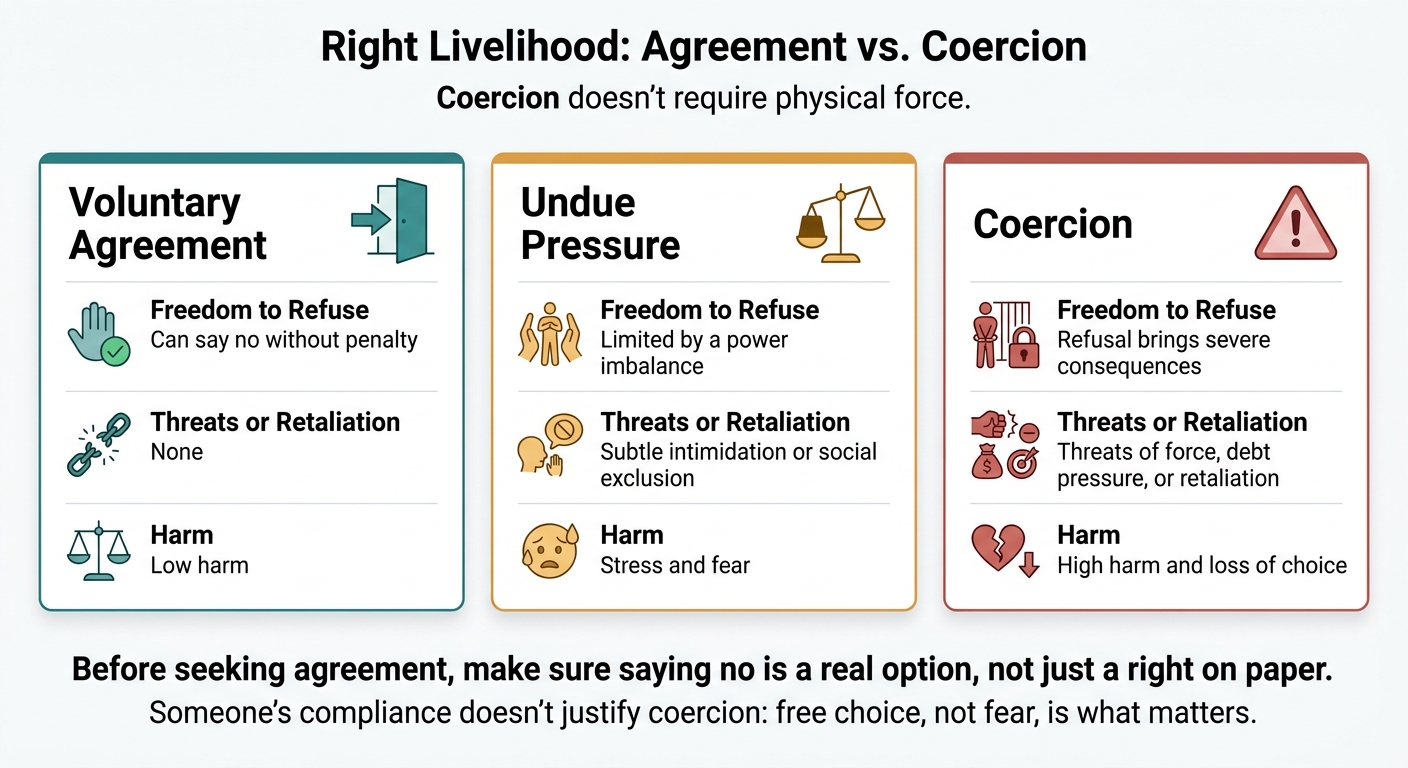
Right Livelihood: Agreement vs. Coercion
Practicing Buddhist Right Livelihood: Surprisingly Beneficial
What Right Livelihood Means at Work
Right Livelihood means earning a living without harming others through your speech or conduct. This applies both to what you do and to what your income supports. It gives you a way to spot harmful work.
Legal work can still cause harm, and difficult work isn’t automatically wrong. Judge a job by what it asks you to do and whom it harms.
The Dhammapada’s Verse 183 offers three practical directions: avoid evil, cultivate good, and purify the mind. Put them into practice by refusing deception, treating people fairly, and checking whether greed or fear clouds your judgment.
Does your work depend on lying, theft, or impaired judgment? Asking this moves your attention beyond your intentions to the harm your actions may support.
The first sign is deception.
1. Work Requires Deception
Workplace patterns
Deception is the clearest warning sign. Look for fraud, misleading claims, hidden terms, false counts, and deliberate concealment. Is dishonesty built into the job? That’s the question to focus on.
Who benefits and who is harmed
Ask who gains and who loses. Then check whether your pay depends on someone else’s confusion or financial loss.
Connection to Buddhist ethics
In Buddhist ethics, deception violates truthful speech and right action.
Dhammapada reflection
Use Dhammapada verses 246–247 to examine your role before you send, approve, or repeat a claim. A dishonest system does not excuse your part in it.
If deception isn’t the issue, the next question is whether the work uses pressure or force.
2. Work Relies on Coercion or Force
Workplace patterns
Watch for threats, intimidation, debt pressure, abuse of authority, and retaliation. Coercion doesn’t require physical force. Pressure alone can leave someone with no real choice.
| Agreement Type | Freedom to Refuse | Threats or Retaliation | Harm |
|---|---|---|---|
| Voluntary Agreement | Can say no without penalty | None | Low harm |
| Undue Pressure | Limited by a power imbalance | Subtle intimidation or social exclusion | Stress and fear |
| Coercion | Refusal brings severe consequences | Threats of force, debt pressure, or retaliation | High harm and loss of choice |
Who benefits and who is harmed
Ask who gains from the arrangement and who bears the risk. Before seeking agreement, make sure saying no is a real option, not just a right on paper.
Connection to Buddhist ethics
Right Action calls for care in how you use power. Someone’s compliance doesn’t justify coercion: free choice, not fear, is what matters. A job is harmful when it relies on fear to function.
Dhammapada reflection
Dhammapada verses 129–130 invite you to reflect on others’ fear of violence and their wish to live. Let that reflection guide you toward a less harmful approach.
If force isn’t the issue, the next warning sign is exploitation or abuse.
3. Work Exploits People or Allows Abuse
Workplace patterns
Hard work isn’t exploitation. Exploitation makes people pay with their health, safety, or dignity. Watch for unsafe conditions, low pay, long hours, humiliation, harassment, discrimination, and neglect.
Who benefits and who is harmed
Ask who bears the harm and who keeps the profit. Look at the impact on workers, contractors, and vulnerable people who depend on the work. Pay attention to whether ignoring their pain gets rewarded.
Connection to Buddhist ethics
Compassion means naming the harm and taking steps to change it. That could mean safer conditions, reasonable hours, fair pay, or action against harassment.
Dhammapada reflection
Reflect on verses 129–132:
Whose pain am I overlooking to keep this work going?
Name one change within your authority that reduces harm.
When harm becomes routine, it shapes the mind, too. The next sign is what the work trains you to feel.
4. Work Encourages Harmful Mental Habits
Harm at work can also shape how people think and behave.
Workplace patterns
Watch for incentives or design choices that encourage greed, fear, hostility, compulsive use, or heedlessness.
Streaks, gamification, notifications, infinite scroll, and autoplay can remove natural stopping cues.
Who benefits and who is harmed
The business gains engagement, while workers and users lose time, attention, and freedom. Add stopping cues and measure completion or satisfaction rather than time spent.
Connection to Buddhist ethics
Buddhist ethics asks whether work strengthens craving, aversion, and delusion in those who build and use it. Verse 216 links craving to sorrow and fear. Verse 251 describes the destructive force of passion, hatred, delusion, and craving.
Dhammapada reflection
Which habits does my work strengthen: greed, fear, hostility, or delusion?
Test one message, incentive, or feature: would people choose it if they understood how it shapes their behavior?
When a job profits directly from suffering, the harm is even harder to miss.
5. Work Profits Directly From Suffering
When harm becomes a source of revenue, the concern goes beyond what your work teaches you to feel. It also matters how the work makes money.
Workplace patterns
Look for revenue that grows with violence, trafficking, killing, intoxicants, poisons, or addiction.
Who benefits and who is harmed
Follow the money - and the damage. Who earns, and who bears the cost?
Separate direct participation from distribution, financing, and indirect support. Then look at what your work makes possible, what you know about the harm, and what you can change.
Connection to Buddhist ethics
AN 5.177 names five trades to avoid. Legality and intent aren't the only tests. Ask whether the livelihood depends on predictable harm.
| Trade | Primary harm | Ethical question |
|---|---|---|
| Weapons | Enables violence and killing | Does this revenue depend on conflict getting worse? |
| Living beings | Human trafficking and slavery | Does this work treat people as commodities rather than beings? |
| Meat | Killing animals | Does the profit come from ending life? |
| Intoxicants | Addiction and heedlessness | Does this business grow as customers lose self-control? |
| Poisons | Health or environmental damage | Is its main purpose to harm health? |
Dhammapada reflection
Ask whether revenue grows as suffering or vulnerability continues. Choose one decision at work, name the harm it rewards, and identify one change within your control.
A Daily Dhammapada Practice for Work
Use a daily check to apply the five signs at work: deception, coercion, exploitation or abuse, harmful mental habits, and direct profit from suffering.
Before work, read one Dhammapada verse slowly. Think of one task and ask what it requires, who benefits, and who might be harmed.
Then look at the pressure behind the task. Does success depend on greed, fear, deception, or heedlessness? If so, change the task before you act. Ask how you can do it more honestly and compassionately. Calm attention does not excuse harm.
After work, note whether your actions matched your intention and what still needs attention.
Sutta 423 offers one Dhammapada verse each day for reflection.
Conclusion: Steps to Reduce Harm at Work
When these signs appear, start with one change you can make now. Correct misinformation, change a harmful duty, or ask for support before bringing up a concern. Reflection alone isn’t enough.
If reporting could put you at risk, speak with a trusted adviser first and choose your reporting channels carefully. Internal reports may not stay confidential or protect you from retaliation.
In the United States, dependence on income and health insurance can make leaving hard. Planning a move to another job may be more realistic than quitting right away.
Right Livelihood means reducing harm, not proving purity. Take responsibility for what you can change while working toward safer work. Slow progress isn’t failure.
FAQs
Am I responsible for harm elsewhere in my company?
You’re responsible for your own actions and ethical choices, even when you can’t control the entire company. The teachings stress that purity and impurity depend on you - no one else can purify your conduct.
Mindfulness helps you examine your intentions and keep greed, hatred, or delusion out of your contributions. This keeps your conduct grounded in ethics, regardless of what others do [5].
How can I challenge harmful work without risking my job?
Choose restraint and a mindful response over confrontation. The Dhammapada’s “broken gong” approach suggests meeting unfair criticism or hostility with silence and calm, rather than harsh words that add to the tension.
View criticism as something everyone faces, not as a personal attack. Before responding, pause for three breaths and notice your emotions. Keeping your composure and acting with integrity helps protect your inner peace as you work through difficult workplace dynamics.
How do I judge a job that does both good and harm?
Think carefully about your actions and their effects. The Dhammapada describes a person of principle as someone who weighs both the benefits and drawbacks of their choices. Look at your intentions and the impact of your work: does it support peace and clarity, or cause distress and harm?
Use the Sutta 423 app’s daily verses as a prompt for reflection. They can help you pause and mindfully assess whether your work aligns with ethical living.