

Right Action and Right Livelihood
Practical guidance to reduce harm at work and home through ethical conduct, mindful earning, and responsible money use.
I start with one test: Does my work depend on harm, deception, or exploitation? Right Action guides what I do; Right Livelihood guides how I earn. I can begin by stopping one harmful practice or setting one clear boundary.
Here’s how I bring these teachings into daily life:
- Conduct: Protect life, take only what is given, respect sexual boundaries, and speak honestly.
- Work: Check my duties, products, and business practices for harm. AN 5.177 names 5 trades to avoid: weapons, living beings, meat, intoxicants, and poisons.
- Money: Earn honestly, meet household needs, save, repay debt, and give within my means.
- Change: If leaving a harmful job would put dependents at risk, reduce my involvement and plan my next step.
My aim is less harm, not just good intentions. I can review my choices each day, use a Dhammapada verse as a prompt, and choose <u>one change for tomorrow</u>.
Joseph Goldstein on Right Action & Livelihood | Insight Hour Ep.248–Satipatthana Sutta Series Pt.45
Right Action: Ethics in Bodily Conduct
Sammā-kammanta, or Right Action, means choosing actions that reduce harm, respect boundaries, and protect life. These commitments build trust and reduce remorse. They guide how you work, earn money, and treat others.
Avoid Killing, Stealing, and Sexual Misconduct
Protect life: Don’t intentionally kill or seriously harm living beings, and prevent injuries you can avoid. Follow safety procedures, report dangerous conditions, and seek nonviolent ways to resolve conflict. When decisions are difficult, weigh the harm, the available alternatives, and your responsibilities to everyone affected.
Take only what is given: Respect other people’s property, including coworkers’ belongings, wages, and tips. Ask before using someone else’s equipment, data, or other property. Access isn’t permission.
Respect sexual boundaries: Avoid coercion, exploitation, and betrayal of relationship commitments. Consent must be informed, voluntary, specific, and freely maintained throughout. At work, a supervisor’s power can make it harder for someone to refuse. Interest alone doesn’t establish consent.
Intention, Right Speech, and the Five Precepts
Intention matters, but so do the consequences you can foresee. Before acting, check who might be affected, whether you have clear permission, and whether a less harmful option is available. If you cause harm, acknowledge it, repair it, and change the conditions that allowed it to happen.
These rules are part of a broader ethical discipline. The Five Precepts combine these limits on bodily conduct with truthful speech and abstaining from intoxicants that lead to heedlessness. False speech falls under Right Speech; the intoxicant precept supports mindfulness and responsibility. Speak truthfully, don’t pressure anyone to drink, and never drive or perform hazardous work while impaired.
These standards also guide the work you choose and the income you earn.
Right Livelihood: Ethical Limits on Earning
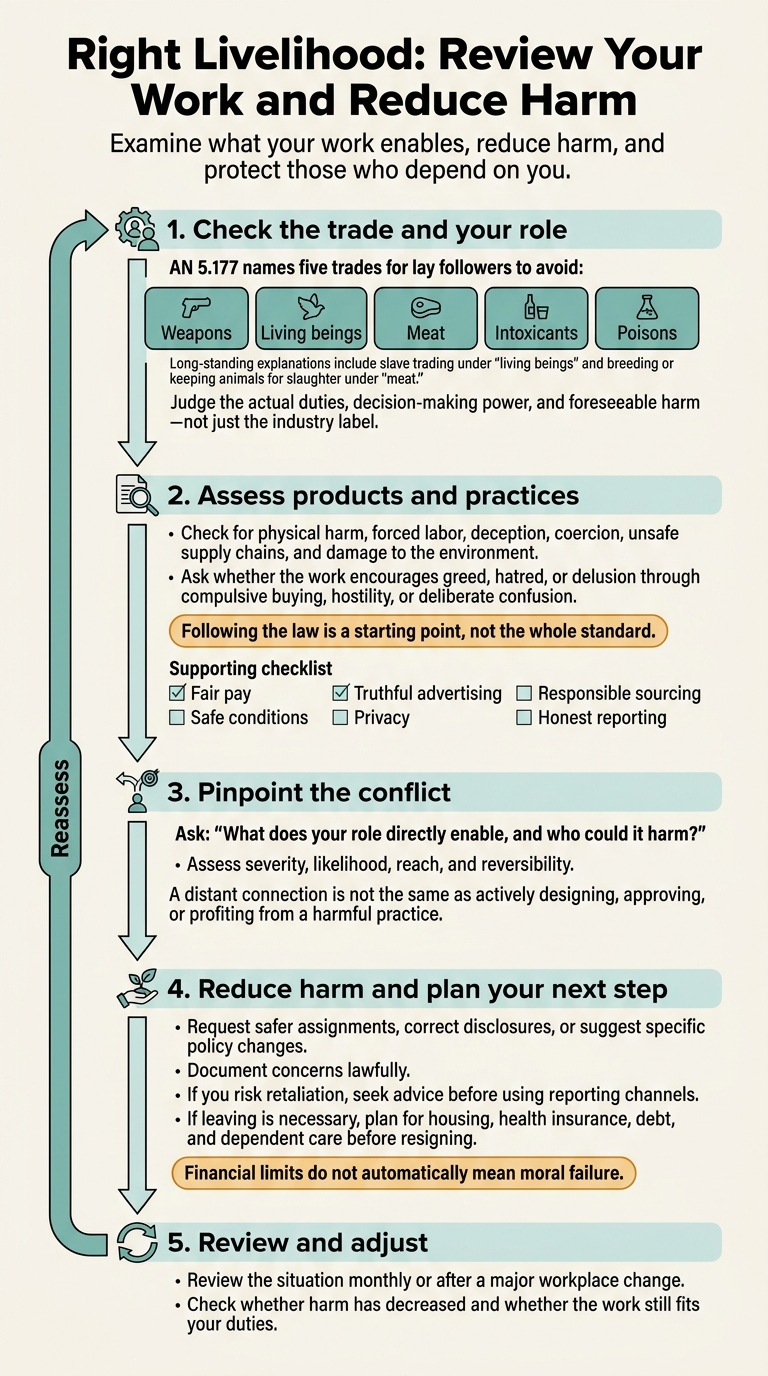
Right Livelihood: Review Your Work and Reduce Harm
Right Livelihood applies Right Action to how you earn a living. As the fifth factor of the Noble Eightfold Path, it brings ethics into what a business sells, how it makes money, and who bears the costs. Buddhism makes this guidance concrete by naming trades to avoid.
The 5 Trades Discouraged in AN 5.177
AN 5.177 names five trades for lay followers to avoid: weapons, living beings, meat, intoxicants, and poisons. Long-standing explanations include slave trading under “living beings” and breeding or keeping animals for slaughter under “meat.”
For modern work, judge the actual duties, decision-making power, and foreseeable harm - not just the industry label. Applying these boundaries means looking at specific products, roles, and supply chains.
Assess Products, Practices, and Harm
Look beyond what a business sells to how it makes money. Check for physical harm, forced labor, deception, coercion, unsafe supply chains, and damage to the environment. Does the work feed greed, hatred, or delusion by encouraging compulsive buying, hostility, or deliberate confusion?
For a small business, this means removing unsupported health claims, disclosing limitations, honoring refunds, and changing incentives that reward misleading sales.
Following the law is a starting point, not the whole standard. Fair pay, safe conditions, truthful advertising, privacy, responsible sourcing, and honest reporting matter too.
When Income Conflicts With Responsibility
Supporting children, caring for relatives, paying employees, and protecting customers are real duties. Financial limits do not automatically mean moral failure.
Pinpoint the conflict: what does your role directly enable, and who could it harm? Consider the harm’s severity, likelihood, reach, and reversibility. A distant connection is not the same as actively designing, approving, or profiting from a harmful practice.
Reduce your involvement where you can. Request safer assignments, correct disclosures, or suggest specific policy changes. Document concerns lawfully. If you risk retaliation, seek advice before using reporting channels.
If you need to leave, plan for housing, health insurance, debt, and dependent care before resigning.
Review the situation monthly or after a major workplace change. Check whether harm has decreased and whether the work still fits your duties. The next test is how you earn, spend, save, and give.
Money: Earning, Spending, Saving, and Giving
Lay Buddhists don’t need to reject money or household prosperity. AN 4.62 praises honestly acquired wealth, its proper use, freedom from debt, and blameless conduct - and places blamelessness above wealth. After earning money ethically, the next task is deciding how to cover bills, save, repay debt, and give without neglecting duties or generosity.
AN 8.54 connects household well-being with diligence, protecting wealth, wise friends, and balanced living. That means knowing your income and expenses without drifting into extravagance or stinginess. These principles can guide emergency funds, retirement savings, and debt repayment. Judge each by whether it reduces harm and supports responsibility.
Meet Responsibilities and Practice Generosity
Start with food, housing, health care, transportation, education, and dependent care. Account for existing obligations, reasonable emergency savings, and spending that keeps the household healthy. Saving can be an act of care. Hoarding money while dependents go without basic needs can be an act of stinginess.
Generosity shouldn’t make someone else bear the hardship. Give within your means, check that your support reaches its intended recipients, and offer time or skills when money is tight. AN 8.54 encourages generosity but sets no universal donation percentage.
Compare Ethical and Harmful Money Choices
Ethical conduct applies to both earning money and using it. The comparisons below show how motives and effects separate wise financial care from grasping.
Money choices Motive and effects Ethical distinction Transparent pricing vs. deceptive mandatory fees Clear disclosure helps customers make informed choices; hidden fees make them pay through confusion. Honest earning requires truthful pricing. Saving for emergencies and dependents vs. hoarding while basic needs go unmet Responsible saving reduces vulnerability; possessiveness causes preventable hardship. Protect wealth without neglecting household duties. Paying workers accurately and on time vs. falsifying time records to cut wages Fair pay supports workers’ security; false records shift costs onto them. Respect workers rather than profit through deception. Giving after meeting basic obligations vs. public giving for status while workers are harmed Responsible giving supports others without draining the resources needed to keep helping; status-seeking leaves the underlying harm unresolved. Generosity doesn’t excuse neglect or harmful earning.
Conclusion: Bring Conduct, Work, and Money Together
Right Action guides bodily conduct: avoid killing, stealing, and sexual misconduct. Right Livelihood guides how you earn. Work is part of your conduct, not separate from it. Choose work that does no harm, act honestly, and handle money responsibly.
Review Your Conduct and Work Each Day
At the end of each day, ask yourself: Did I protect life, respect boundaries, speak honestly, and earn without causing harm? Did I use my income to meet obligations and give to others?
Look at both your intentions and the effects of your actions. Then choose one adjustment for tomorrow. Debt, dependents, and limited job options can make change a gradual process. The aim is to reduce harm.
Reflect With a Daily Dhammapada Verse
Let daily reflection help you make your next choice. Sutta 423 offers one Dhammapada verse each day from a collection of 423 verses - enough for a year of reflection and more. Use the verse to guide one concrete choice at work or home. Reflection supports action; it does not replace it.
FAQs
How can I assess indirect harm in my job?
Look beyond your own tasks. Consider how your work affects suppliers, contractors, investors, customers, and downstream users. Who gains from it, and who carries the risks or costs?
Think about whether your contributions support violence, addictive substances, exploitation, deception, or suffering. Do your daily choices bring people together or drive them apart? Check whether those choices align with non-harm and ethical integrity.
When should I leave an unethical job?
You don’t need to resign right away. Reduce harm where you can while meeting your financial and family responsibilities. That might mean correcting misleading claims, setting boundaries, or documenting safety concerns.
If serious harm remains central to your role, plan your next move around monthly expenses, debt, and health coverage. Make finding another position your priority before resigning. Use daily reflection, such as verses from Sutta 423, to help you stay true to your principles.
How do I apply Right Livelihood to investments?
Treat your investments as part of your ethical conduct. Look at the industries, suppliers, and business practices your money supports. Check for harm, including violence, trafficking, addiction, exploitation, deception, or damage to the environment.
If you find conflicts with your values, change what you can control. That might mean selling investments in harmful businesses or choosing companies with safer labor practices. Keep reviewing whether your financial choices reflect non-harm and compassion.