

Mindfulness in the Dhammapada
Explores appamada (heedfulness) in the Dhammapada: vigilance as mental training, path to Nibbana, and daily practice tools.
The Dhammapada, a collection of 423 verses, emphasizes the power of the mind in shaping reality and highlights mindfulness, or appamada (heedfulness), as a cornerstone of its teachings. Unlike modern interpretations, appamada involves vigilance, diligence, and ethical awareness. Key verses stress mindfulness as the path to liberation from suffering and attachment, offering practical guidance for daily life.
Key Takeaways:
- Mindfulness Defined: Appamada means vigilance, awareness, and mental discipline.
- Core Teachings: Mindfulness leads to Nibbana (freedom), while heedlessness results in spiritual stagnation.
- Practical Insights:
- Cultivate mindfulness in daily actions.
- Use self-restraint and effort to avoid indulgence.
- Build inner stability, like an "island" impervious to life's challenges.
- Timeless Relevance: The Dhammapada’s wisdom addresses modern struggles, such as distraction and emotional reactivity.
Mindfulness is presented as a gradual, consistent practice that transforms the mind, offering clarity and inner peace. For daily reflection, tools like the Sutta 423 app provide simple ways to engage with these teachings.
What Mindfulness Means in the Dhammapada
The Concept of Appamada
In the Dhammapada, the term appamada - which translates to heedfulness, diligence, and vigilance - takes center stage, contrasting sharply with its opposite, pamada, meaning carelessness. Unlike the modern interpretation of mindfulness, appamada carries a broader and more active connotation.
Professor Angraj Chaudhary captures its essence:
"Appamāda, therefore, means heedfulness, mindfulness, zeal, earnestness and diligence. A presence of mind is its characteristic (Appamādoti sati avippavāsa lakkhaṇo)."
The Buddha viewed appamada as the foundation of all virtuous qualities, likening it to an elephant’s footprint, which encompasses all other positive traits. This analogy underscores the expansive and all-encompassing nature of vigilance in one’s mental and ethical life.
This concept of heedfulness naturally ties into the practice of consistent mental discipline.
Mindfulness as Mental Training
The Dhammapada emphasizes deliberate and sustained effort in mental cultivation through verbs like bhāveti (to develop) and vaddheti (to increase). This process is referred to as sātaccakiriyā, meaning the practice of doing good without pause or relaxation.
Thanissaro Bhikkhu highlights the importance of appamada in mental cultivation:
"All skillful qualities of mind are rooted in appamada, converge in appamada, and have appamada as the foremost among them."
Key Verses on Mindfulness
Core Verses on Mindfulness
The second chapter of the Dhammapada, known as the Appamada Vagga (Chapter on Heedfulness), begins with some of the most powerful and direct teachings on mindfulness in Buddhist scripture. Verses 21 through 28 form a cohesive sequence, each verse adding depth to the importance of mindfulness.
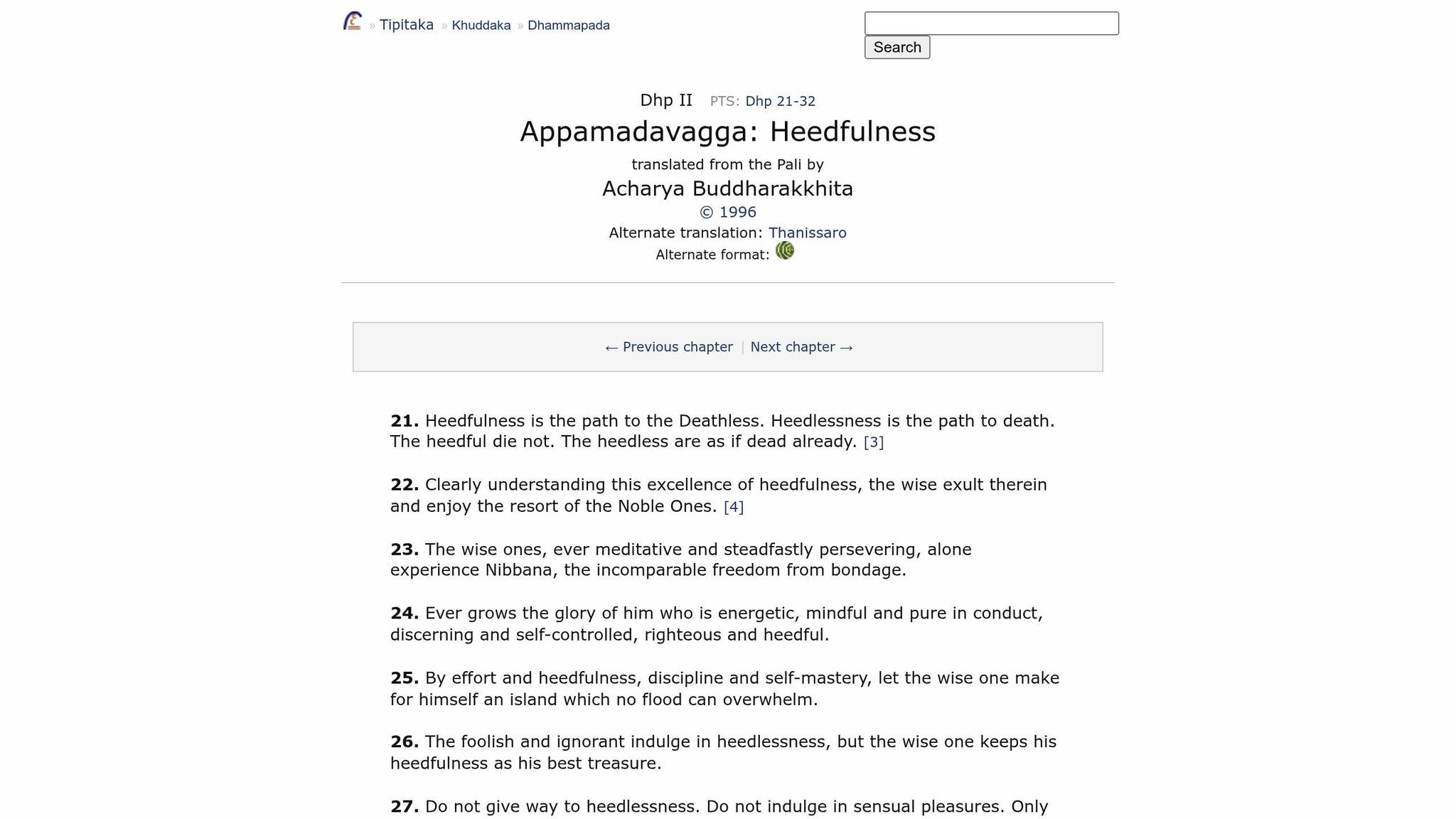
"Mindfulness is the way to the Deathless (Nibbana); unmindfulness is the way to Death. Those who are mindful do not die; those who are not mindful are as if already dead." - Gautama Buddha, Dhammapada Verse 21
This verse draws a stark contrast between mindfulness and unmindfulness, framing the former as the path to spiritual awakening and the latter as a state akin to spiritual death. Verse 22 follows this idea, emphasizing that the wise find joy and freedom in mindfulness rather than seeing it as a burden. By Verse 23, the Buddha sets an inspiring goal for practitioners:
"The wise ones, ever meditative and steadfastly persevering, alone experience Nibbana, the incomparable freedom from bondage." - Gautama Buddha, Dhammapada Verse 23
Verses 25 and 26 use vivid imagery to underline the transformative power of mindfulness. In Verse 25, mindfulness is likened to an island - a secure refuge that remains unshaken by the floods of passion and suffering. Verse 26 elevates mindfulness as the ultimate treasure for the wise, contrasting it with the heedlessness that leads to wasted potential.
Verse Analysis and Practical Meaning
The concept of appamada (heedfulness) in these verses highlights how mindfulness can turn abstract ideas into practical tools for inner strength and clarity. These teachings are not just poetic - they offer tangible guidance for cultivating resilience and insight.
In Verse 25, the metaphor of an "island" stands out. It symbolizes the stability that comes from consistent mindfulness and self-discipline. This stability acts as a safeguard, allowing one to weather emotional storms or external challenges:
"By effort and heedfulness, discipline and self-mastery, let the wise one make for himself an island which no flood can overwhelm." - Gautama Buddha, Dhammapada Verse 25
Verse 28 expands on this with the image of a "tower of wisdom." This metaphor suggests that mindfulness, when fully developed, elevates a person to a vantage point where they can observe suffering - both personal and collective - with clarity and detachment, rather than being consumed by it:
"When the wise person drives out heedlessness with heedfulness, having climbed the high tower of discernment, sorrow-free, he observes the sorrowing crowd." - Gautama Buddha, Dhammapada Verse 28
These verses emphasize that mindfulness is not an overnight transformation but a gradual process requiring effort and persistence. Verse 23 also identifies four key attachments - sense pleasures (kama), existence (bhava), wrong beliefs (ditthi), and ignorance of the Four Noble Truths (avijja). Mindfulness helps loosen these bonds, leading to greater freedom and understanding.
The metaphors of the "island" and the "tower" beautifully illustrate how mindfulness fosters both inner stability and a clearer perspective on life's challenges.
For those interested in integrating these teachings into their daily lives, the Sutta 423 app (https://sutta423.com) provides a daily verse from the Dhammapada for reflection and mindful practice. It’s a simple yet powerful way to stay connected to these timeless lessons.
Mindfulness as the Path to Liberation
Mindfulness and Freedom from Suffering
The Dhammapada teaches that suffering stems from craving, attachment, and an undisciplined mind. To overcome these, it highlights mindfulness (appamada) as a powerful tool. The text vividly compares mindfulness to a forest fire, capable of burning away attachments. Another striking metaphor likens an untrained mind to a leaky roof, vulnerable to passions, while a mind strengthened by mindfulness becomes impervious.
"Just as a fletcher straightens an arrow shaft, even so the discerning man straightens his mind - so fickle and unsteady, so difficult to guard." - Gautama Buddha, Dhammapada 3:33
Mindfulness acts as a guide for a scattered mind, gradually leading it toward clarity and stability. This process isn’t instantaneous but unfolds as mindfulness continuously observes, adjusts, and brings the mind back from distraction. This disciplined practice aligns seamlessly with the broader teachings of the Noble Eightfold Path.
Mindfulness in the Noble Eightfold Path
Mindfulness not only helps reduce suffering but also plays a central role in the Noble Eightfold Path. Specifically, Right Mindfulness (samma sati) is part of the "Mental Discipline" group, along with Right Effort and Right Concentration. These three practices work together: effort prevents harmful states from arising, mindfulness ensures alert awareness, and concentration deepens that awareness into insight.
The Dhammapada emphasizes personal responsibility in this journey. While the Buddha provides the guidance, walking the path is up to each individual.
"The meditative ones who practice the path are released from the bonds of evil." - Gautama Buddha, Dhammapada v. 276
Mindfulness doesn’t exist in isolation. It complements sila (moral discipline) and prajna (wisdom), forming the three pillars of the Theravada path. These elements support one another: ethical behavior steadies the mind, mindfulness sharpens awareness, and wisdom eliminates the craving that fuels suffering. The Dhammapada presents this as a dynamic, practice-driven path rather than a rigid set of rules.
Appamada Vagga: Essence of Heedfulness in Dhammapada | Bhante Sumitta
How to Practice Mindfulness from the Dhammapada
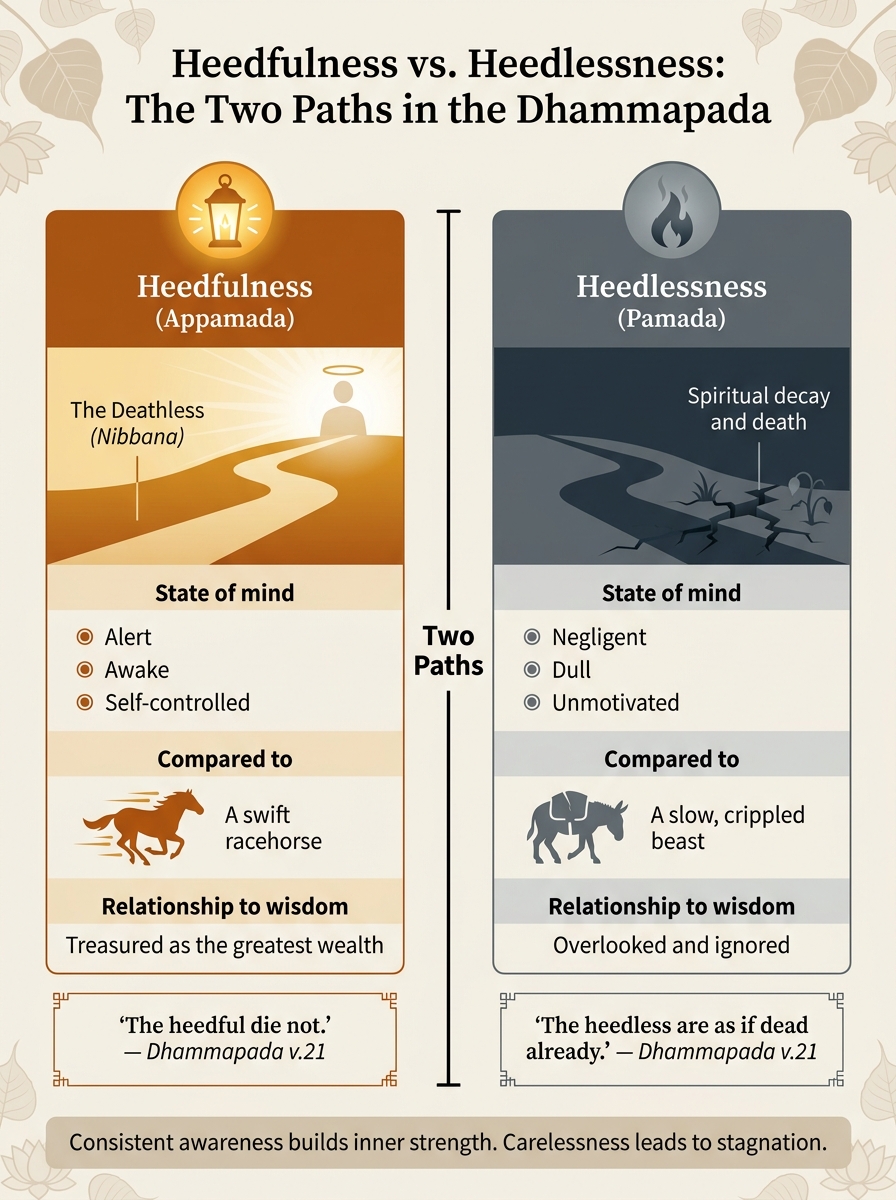
Heedfulness vs. Heedlessness: The Two Paths in the Dhammapada
Key verses from the Dhammapada offer practical ways to make mindfulness a part of your daily life, transforming abstract ideas into habits that guide your actions and thoughts.
Mindfulness in Daily Activities
The Dhammapada teaches that mindfulness isn't confined to formal meditation. Instead, it’s something you carry into every moment - whether you're eating, working, speaking, or resting. The ideal practitioner is described as "wide‐awake among the sleepy" and mindful even when others are thoughtless. This means pausing before you act, ensuring your actions align with your values. Over time, these mindful pauses create a sense of inner calm, like an island of stability in a chaotic world.
This approach naturally extends to managing impulses and maintaining ethical behavior in everyday life.
Self-Restraint and Right Effort
Mindfulness plays a key role in guiding ethical behavior by encouraging you to notice impulses before acting on them. The Dhammapada warns against indulgence in fleeting pleasures, as it can lead to heedlessness. Practicing right effort involves staying intentional and energetic, avoiding the trap of routine or laziness. The text praises those who are "mindful, discerning, and self-controlled", noting that these qualities not only build a good reputation but also bring lasting inner peace.
"Don't give way to heedlessness or to intimacy with sensual delight - for a heedful person, absorbed in jhana, attains an abundance of ease." - Gautama Buddha, Dhammapada
Heedfulness vs. Heedlessness
The Dhammapada contrasts two mental paths: heedfulness (appamada) and heedlessness (pamada). These are more than traits - they represent entirely different ways of living. Here's a closer look:
| Quality | Heedfulness (Appamada) | Heedlessness (Pamada) |
|---|---|---|
| Path leads to | The Deathless (Nibbana) | Spiritual decay |
| State of mind | Alert, awake, self-controlled | Negligent, dull, unmotivated |
| Compared to | A swift racehorse | A slow, crippled beast |
| Relationship to wisdom | Treasured as the greatest wealth | Overlooked and ignored |
"Heedfulness is the path to the Deathless. Heedlessness is the path to death. The heedful die not. The heedless are as if dead already." - Gautama Buddha, Dhammapada
The message is simple but powerful: consistent awareness builds inner strength, while carelessness leads to stagnation and loss.
"When the wise person drives out heedlessness with heedfulness, having climbed the high tower of discernment, sorrow-free, he observes the sorrowing crowd." - Gautama Buddha, Dhammapada
For a manageable way to engage with these teachings, consider the Sutta 423 app. It delivers a single verse from the Dhammapada each day, making it easier to reflect on these lessons in small, focused moments rather than trying to absorb the entire text at once.
Why the Dhammapada's Mindfulness Teachings Still Matter
Even though the Dhammapada is over 2,500 years old, its wisdom feels strikingly relevant in our fast-paced, modern world. The text highlights a concept called pamada - a state of heedlessness that clouds judgment and disrupts inner peace. In today’s age of constant distractions and stress, this ancient idea serves as a reminder to cultivate mindfulness and regain clarity.
Applying Dhammapada Teachings Today
The Dhammapada vividly describes the untrained mind as restless and unsteady. Sound familiar? It’s a lot like the scattered focus many of us experience after hours of scrolling through social media or juggling endless notifications. The text identifies distorted thinking as the root of suffering, a perspective that aligns closely with principles of modern cognitive behavioral therapy - though it predates them by thousands of years.
One of its most powerful lessons is on emotional reactivity. Instead of letting ourselves be swept up by the constant demands and noise of the digital age, mindfulness offers a way to stay grounded. By training the mind, we can create a sense of calm and resilience, even in the face of overwhelming external chaos. These teachings provide a practical path for finding balance in a world that often feels anything but.
Timeless Wisdom for Inner Peace
The Dhammapada’s enduring appeal lies in its simple yet profound truth: the state of your mind shapes the quality of your life. A disciplined mind becomes a source of strength and peace, far more reliable than any external comfort.
"Through diligence and awareness, restraint and self-mastery, I create a refuge which no flood can overwhelm." - Gautama Buddha
This "refuge" isn’t a physical sanctuary; it’s a mental space built through consistent mindfulness and self-awareness. Tools like the Sutta 423 app make these teachings accessible, offering a daily verse for reflection. Over a year, its 423 verses provide a gentle, steady guide for integrating mindfulness into everyday life, helping to nurture inner peace one day at a time.
Conclusion: Taking Mindfulness from the Dhammapada into Daily Life
The principles we've explored reveal how mindfulness can seamlessly weave into the fabric of daily life.
At its heart, the Dhammapada teaches a simple yet profound truth: your mind shapes your reality. Every thought, every decision, and every moment of restraint or reaction builds upon the last. This idea of progress "step by step" isn’t just symbolic - it’s a reminder that mindfulness grows in life's ordinary moments, not solely in the stillness of meditation.
What makes these teachings approachable is their emphasis on persistence rather than perfection. The restless nature of the mind is acknowledged, but the Dhammapada encourages steady, patient practice. Over time, this consistency calms the mind and nurtures meaningful change. The key is to return to mindfulness every day, no matter how small the effort may seem.
"The self is the master of the self. Who else could be the master? With a well-trained self, one gains a master hard to find." - The Dhammapada
For those seeking a daily nudge toward mindfulness, the Sutta 423 app provides a verse each day for quiet reflection, offering guidance without overwhelming pressure.
The enduring relevance of the Dhammapada lies in its ability to address the timeless struggles of the human mind. Whether grappling with stress, anger, or distraction, its verses serve as a clear and honest guide. By taking just one mindful step each day, you move closer to lasting inner peace and balance.
FAQs
How is appamada different from modern “mindfulness”?
In the Dhammapada, the term appamada is often translated as heedfulness, mindfulness, or earnestness. It highlights the importance of making a proactive effort toward ethical living, mental discipline, and spiritual development. This concept encourages the cultivation of virtues such as self-control and perseverance, emphasizing an active and intentional approach to personal growth.
In contrast, modern interpretations of "mindfulness" tend to center around present-moment awareness and non-judgmental observation. While both share a foundation in awareness, appamada leans more toward diligent practice and striving for liberation. This differs from the modern mindfulness approach, which often prioritizes acceptance and a non-reactive state of mind.
How can I practice heedfulness outside meditation?
You can bring mindfulness into your everyday life by paying close attention to your actions, thoughts, and intentions. The Dhammapada emphasizes the value of staying alert, exercising self-discipline, and putting in consistent effort to lead an ethical life and nurture spiritual growth. This means remaining focused on your duties, steering clear of carelessness, and aiming to cultivate wisdom and integrity in all that you do.
How does mindfulness help loosen attachment and reduce suffering?
Mindfulness plays a key role in easing attachment and alleviating suffering. By encouraging a calm and steady mind, it nurtures a sense of inner clarity. This clarity helps pave the way to happiness and a sense of freedom, breaking free from the grip of Mara's bonds. Through mindfulness, one learns to steady and quiet the restless mind, fostering a more peaceful state of being.