

Mindful Eating and Dhammapada Teachings
A side-by-side look at mindful eating and Dhammapada verses: pause, notice craving, choose moderation, and reflect ethically.
I see a shared lesson in mindful eating and the Dhammapada: pause, notice desire, and eat enough to meet your needs. Try it with one meal - not as a diet rule, but as a chance to pay attention.
I compare the two through four points: awareness, craving and restraint, moderation and nourishment, and ethical intent. Verses 7 and 185 frame eating within Buddhist training; mindful eating can be secular. Their overlap does not make them the same practice.
Quick Comparison
| Point | Mindful eating | Dhammapada teachings |
|---|---|---|
| Awareness | Notice taste, hunger, and satisfaction | Support mental training |
| Craving and restraint | Pause before acting on an urge | Practice restraint of the senses |
| Moderation and nourishment | Eat enough while noticing your needs | Place moderate eating within Buddhist practice |
| Ethical intent | May support personal well-being | Serve the Buddhist aim of liberation |
My approach is simple: notice the first bite, check your needs, and reflect without blame. <u>Awareness is not a reason to ignore hunger.</u> This verse-inspired exercise does not replace Buddhist training or nutrition care, including eating-disorder care.
1. What Mindful Eating Involves
Present-Moment Awareness
Pay attention to flavor, texture, hunger, and satisfaction. Notice distractions, too: does your attention stay with the meal, or drift elsewhere?
Craving and Restraint
Notice a craving without judging yourself. Ask whether you’re hungry, want a particular flavor, or are eating on autopilot. Restraint means leaving room for choice, not treating desire as a failure.
Moderation and Nourishment
Moderation should support enough nourishment, not set a strict limit on how little you eat. Check in with hunger and satisfaction throughout the meal. Let those signals guide what you do next, rather than labeling your eating as good or bad.
Ethical Purpose
Look beyond your plate to the work and resources that brought the meal to you. This extends mindfulness beyond eating and prepares you for verse-based reflection, leading directly into the Dhammapada’s teaching on restraint and awareness.
2. What the Dhammapada Teaches About Eating
Moderation and Nourishment
Verse 185 presents moderation as a way to support mindfulness, not simply to restrict eating. It places moderate eating among the teachings of the enlightened ones, alongside non-harming, mental cultivation, and simple living. Together, these practices support a steady mind.
Craving and Restraint
Verse 185 offers the aim; Verse 7 gives the warning. It connects immoderate eating with unrestrained faculties and weaker self-control. Even during an ordinary meal, appetite can take over attention. The concern is desire’s grip, not food quantity alone.
In Buddhism, the tongue is one of six sense doors. Silently naming an urge during a meal can help you notice craving before you act. That means observing the urge - not denying hunger - and letting that awareness guide your next bite.
Ethical Purpose
To bring these verses into your reflection on a meal, ask:
“How did my choices support steadiness?”
This question helps you see where mindful eating and verse-based reflection overlap, and where their purposes differ, before moving into a simple meal practice.
How to Bring Mindfulness into Eating with Yongey Mingyur Rinpoche
Where the Approaches Meet and Differ
Mindful eating and the Dhammapada share concerns about awareness, craving, moderation, and ethical intent. But their aims and language aren't the same.
Awareness During Meals
Mindful eating makes the meal itself a practice. The Dhammapada places that attention within broader mental training.
| Shared concern | Mindful eating expression | Dhammapada theme | Important distinction |
|---|---|---|---|
| Attention | Pause before eating | Mental cultivation | No formal mealtime rule |
Recognizing Craving and Practicing Restraint
Hunger and craving are signals, not judgments. Restraint means pausing to choose rather than simply reacting.
| Shared concern | Mindful eating expression | Dhammapada theme | Important distinction |
|---|---|---|---|
| Pleasure | Enjoy without grasping for more | Restraint of the senses and less attachment | Enjoyment and attachment differ |
That pause also helps distinguish eating for nourishment from eating out of attachment.
Eating With Moderation and Enough Nourishment
Moderation means getting enough nourishment for steadiness, not eating less for its own sake.
| Shared concern | Mindful eating expression | Dhammapada theme | Important distinction |
|---|---|---|---|
| Quantity | Pay attention to portions | Moderate eating | No fixed portion rule |
The next distinction concerns the meal's purpose: well-being, reflection, or both.
The Ethical Purpose of Eating Practices
Mindful eating can be secular. Using verse reflection during a meal is a modern application, not a lesson in sustainability taught by the verses.
| Shared concern | Mindful eating expression | Dhammapada theme | Important distinction |
|---|---|---|---|
| Ethical intent | Reflect on the purpose of eating | Buddhist conduct and nonattachment | The Buddhist aim is liberation, not just well-being |
These differences help frame a simple meal practice with verse reflection.
A Simple Meal Practice With Verse Reflection
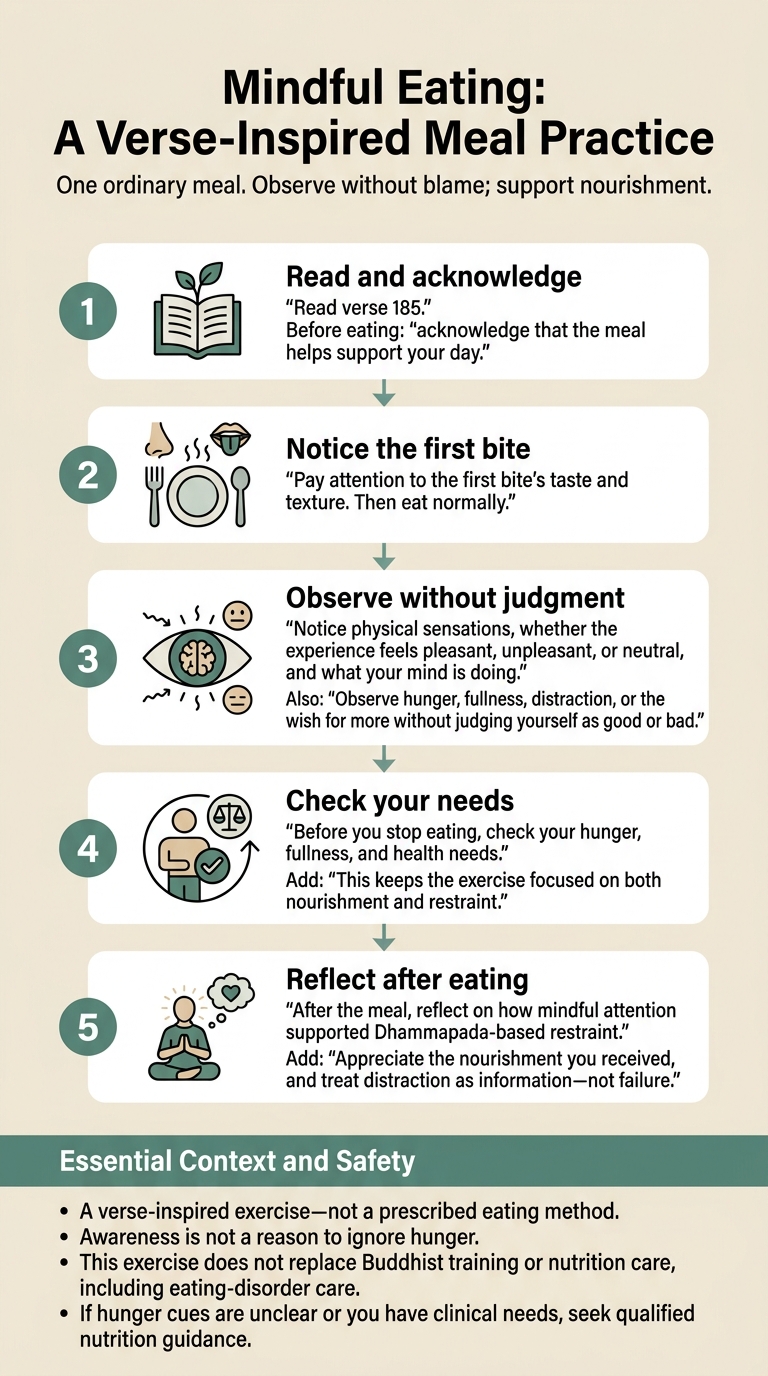
Mindful Eating: A Verse-Inspired Meal Practice
Use one ordinary meal - lunch or dinner - to put the comparison into practice. Treat it as a verse-inspired exercise, not a prescribed eating method. Read verse 185. Sutta 423 offers one daily Dhammapada verse, guiding you through the full text in 423 days and continuing after that.
Before eating, acknowledge that the meal helps support your day.
Pay attention to the first bite’s taste and texture. Then eat normally. Notice physical sensations, whether the experience feels pleasant, unpleasant, or neutral, and what your mind is doing. Observe hunger, fullness, distraction, or the wish for more without judging yourself as good or bad.
Before you stop eating, check your hunger, fullness, and health needs. This keeps the exercise focused on both nourishment and restraint.
After the meal, reflect on how mindful attention supported Dhammapada-based restraint. Appreciate the nourishment you received, and treat distraction as information - not failure.
Strengths, Limits, and Key Takeaways
The meal practice above shows where these two approaches overlap - and where they differ. Paying attention during meals can support reflection, but it does not replace Buddhist training.
| Approach | Distinct strengths | Limits | Best use |
|---|---|---|---|
| Mindful eating | Brings attention to meals. | Attention alone cannot guide eating choices. | Notice patterns while meeting nourishment needs. |
| Dhammapada verse reflection | Places restraint within Buddhist practice. | Verses are not dieting rules or instructions to eat less. | Reflect on intentions rather than set food limits. |
| Combined practice | Links daily awareness with verse-based reflection. | A meal exercise cannot replace Buddhist training or nutrition care. | Keep returning to observation without expecting perfection. |
Avoid shame, punitive restriction, and “good” or “bad” labels for food. Judge the practice by whether it builds awareness without adding shame.
This matters most when eating involves health limits, not just habits. If hunger cues are unclear or you have clinical needs - including eating-disorder care - seek qualified nutrition guidance.
FAQs
How can I distinguish hunger from craving?
Slow down and give eating your full attention. When you feel the urge to eat, pause and notice it instead of acting on it right away. Pay attention to how that urge changes as you eat. This can help you tell physical hunger apart from the mental pull of desire. Practicing moderation and reflecting on Dhammapada teachings through the Sutta 423 app can support this awareness.
Can I practice restraint while enjoying food?
Yes. Restraint isn’t about punishing yourself or denying pleasure. It’s about making mindful choices while enjoying your food.
Slow down and pay attention as you chew each bite. This can help you tell physical hunger apart from cravings. Pause before eating or between bites to notice your urges without immediately acting on them. Practicing moderation this way helps you stay present and balanced as you eat.
How can I eat mindfully when hunger cues are unclear?
When hunger cues feel unclear, slow down and give your meal your full attention. Pause to notice how your body feels and what’s prompting you to eat. Savor each bite to help tell physical hunger apart from cravings or the urge to eat in response to emotions. Check in as you eat, noticing stress or distractions so you can practice moderation and let your body’s needs - not outside pressures - guide your choices.