
Karuna: Compassion and Empathy in Buddhism
Clear guide to karuna: its place in the Four Brahmaviharas, how wisdom informs compassion, meditation practices, and ethical applications.
Karuna, in Buddhism, means compassion - a deep, active desire for all beings to be free from suffering. Unlike fleeting emotions, it’s a cultivated mental state that transforms how we perceive and respond to the world. Central to Buddhist practice, Karuna is one of the Four Brahmaviharas (divine qualities) and works alongside loving-kindness (Metta), sympathetic joy (Mudita), and equanimity (Upekkha). Together, these qualities nurture emotional balance and interconnectedness.
Key points:
- Karuna’s essence: Alleviating suffering with a boundless, unbiased approach.
- Interplay with wisdom (Prajna): Compassion paired with wisdom prevents emotional overwhelm and ensures ethical action.
- Practical methods: Meditation techniques like Brahmavihara and Tonglen help develop compassion, while mindfulness integrates it into daily life.
- Ethical living: Karuna guides non-violent actions and difficult decisions, focusing on reducing harm and addressing systemic suffering.
Karuna is not just about feeling for others - it’s about acting with clarity and purpose to ease suffering while fostering resilience and ethical growth.
37. Guided Meditation on Compassion (Karuṇā)
The Four Brahmaviharas: Understanding Karuna's Place
The Four Brahmaviharas: Buddhist Divine Qualities and Their Relationships
The Four Brahmaviharas Explained
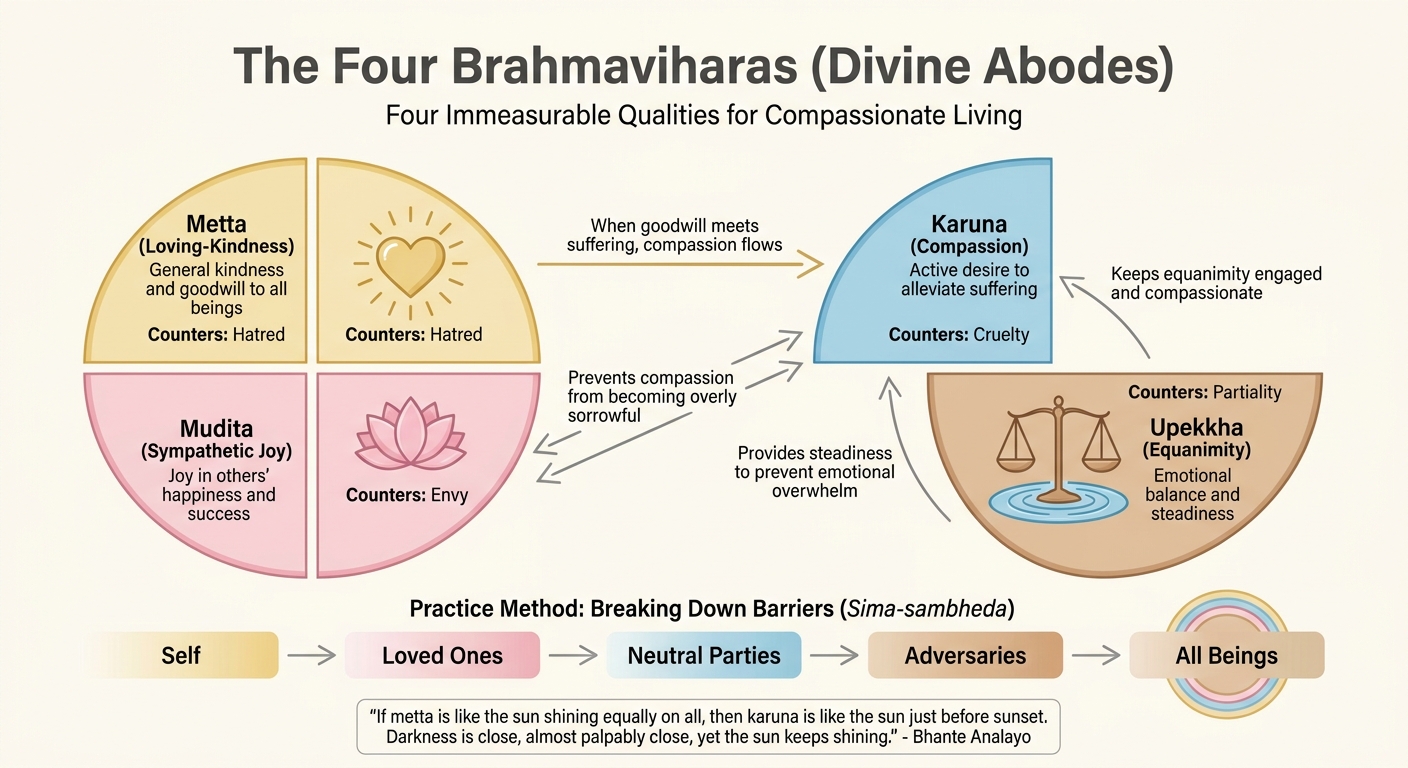
The Four Brahmaviharas (Pali: cattāro brahmavihārā) represent key virtues aimed at nurturing a more enlightened and compassionate mind. The term Brahmavihara translates to "divine abodes" or "sublime attitudes", suggesting these qualities are meant to be enduring states of mind, not just fleeting experiences during meditation. These four qualities - metta (loving-kindness), karuna (compassion), mudita (sympathetic joy), and upekkha (equanimity) - are often called the "four immeasurables" because they are practiced without limits, extending to all beings equally.
Each of these virtues addresses a specific negative mental state: metta counters hatred, karuna softens cruelty, mudita dispels envy, and upekkha balances partiality. Together, they act as what Buddhist teacher Nyanaponika Thera described as "great healers" of both social and inner discord. Practitioners cultivate these states systematically, often beginning with themselves and gradually extending them outward to loved ones, neutral parties, and even adversaries. This method, referred to as "breaking down barriers" (sima-sambheda), includes expanding the focus spatially - from one’s immediate surroundings to the broader world.
This structured approach provides a foundation for understanding the interconnected roles of karuna and the other Brahmaviharas.
How Karuna Works with the Other Brahmaviharas
Karuna, rooted in the desire to alleviate suffering, interacts with the other Brahmaviharas in ways that deepen both compassion and emotional balance. It naturally arises from metta - when a heart filled with goodwill encounters suffering, compassion flows. While metta represents general kindness, karuna focuses specifically on recognizing and easing others' distress.
The Brahmaviharas work together to maintain harmony in the mind. Metta ensures that compassion remains inclusive and non-discriminatory. Mudita, or sympathetic joy, tempers karuna by preventing it from becoming overly sorrowful or sentimental. Meanwhile, upekkha (equanimity) provides the steadiness and emotional balance needed to keep compassion from spiraling into overwhelming emotion, enabling a calm yet determined response to suffering.
Karuna also plays a vital role in refining the other Brahmaviharas. It prevents metta and mudita from becoming complacent or self-satisfied, reminding us that suffering is intertwined with all experiences of joy. Additionally, karuna helps upekkha avoid becoming detached or indifferent, ensuring it remains engaged and compassionate. Bhante Analayo beautifully captures this relationship:
"If metta is like the sun shining equally on all, then karuna is 'like the sun just before sunset. Darkness is close, almost palpably close, yet the sun keeps shining.'"
This intricate interplay creates a balanced and comprehensive system for mental and emotional growth. As Nyanaponika Thera aptly notes:
"Compassion takes away from the heart the inert weight, the paralyzing heaviness; it gives wings to those who cling to the lowlands of self."
Wisdom and Compassion: The Connection with Prajna
How Wisdom Deepens Compassion
In Buddhist teachings, prajna (wisdom) and karuna (compassion) are often compared to the two wings of a bird - both are essential for spiritual growth. Wisdom allows us to perceive reality without the distortions of bias or conditioning. When we see the interconnectedness of all beings with clarity, compassion naturally broadens, evolving from a selective emotion into a universal response.
Meditation teacher Sara-Mai Conway puts it beautifully:
"Partnering compassion with wisdom means understanding that our compassion has little value if we only offer loving kindness to those we like... Wisdom is understanding that our freedom is dependent on applying compassion equally, to everyone, at all times."
Wisdom also reveals deeper truths, such as the idea that outward joy might mask ignorance or unresolved karma. This insight encourages us to extend compassion universally, rather than limiting it to those who outwardly appear to suffer. The Four Noble Truths teach that the root of suffering lies in the mind and the illusion of separateness. By understanding this, wisdom inspires a compassion that is not just empathetic but also informed and far-reaching. This combination of insight and empathy helps guide ethical choices, creating a compassion that is both effective and free from personal distress.
Preventing Harm Through Wise Compassion
Wisdom plays a crucial role in preventing compassion from turning into personal distress. Without the grounding influence of wisdom, compassion can sometimes lead to harm rather than healing. Buddhist texts warn that compassion’s "near enemy" is personal distress or sympathetic grief. The 14th Dalai Lama explains:
"Compassion's near enemy is personal distress or grief based on worldly life. This grief is the sadness and distress felt when we or those we care about cannot get what we want."
A practical example is a doctor treating a patient. If the doctor becomes overwhelmed by the patient’s suffering, their ability to think clearly and provide effective care is compromised. As the ancient text Vimuttimagga succinctly states:
"Sorrow is failed compassion."
When compassion gives way to personal distress, it loses its ability to genuinely alleviate suffering.
Wisdom ensures that compassion remains grounded in the right perspective, guided by an understanding of karma and the Four Noble Truths. With this foundation, compassion becomes skillful and focused, aiming to reduce suffering rather than amplifying it through overwhelming grief.
How to Develop Karuna: Practices and Methods
Meditation Methods for Building Compassion
Brahma-vihara meditation is a powerful way to nurture karuna by transforming how you respond to suffering and tapping into your natural compassion. This practice involves focusing on your heart center - the area around your chest - and breathing as though drawing energy from that space. Unlike loving-kindness meditation, the sequence here begins with directing compassion toward a friend in distress. From there, you move to a benefactor, a neutral person, yourself, and finally, all beings. As you focus on each individual, you silently repeat phrases such as, "May you be free of your pain and sorrow" or "May you find peace." If these phrases feel unnatural, you can simplify them to something like, "I care about your pain".
Tonglen, a Tibetan Buddhist practice, offers another approach. In this method, you visualize inhaling a dark cloud of suffering and exhaling light and warmth, creating a tangible sense of compassion in action.
The Dalai Lama provides a profound perspective on cultivating compassion for those who cause harm:
"Irrespective of what they do to you, if you remember that all beings like you are only trying to be happy, you will find it much easier to develop compassion towards them."
These meditation techniques serve as a foundation for integrating karuna into your daily life.
Bringing Karuna into Daily Life
Meditation builds compassion within, but mindfulness helps carry it into your everyday interactions. With mindfulness, you’re more likely to notice the "bystander effect" - the tendency to overlook others' suffering in the rush of daily life. When you encounter someone in distress, take a moment to pause and acknowledge the shared human desire to be free from pain.
Throughout your day, observe and gently quiet judgmental thoughts. This practice fosters a deeper sense of connection and shared humanity. You can also incorporate simple affirmations, like compassionate reflections, into your daily routine.
Small gestures - kind words, attentive listening, or acts of kindness - help bridge the gap between meditation and real-world compassion. When dealing with difficult people or tense situations, try shifting your mindset. Instead of seeing the world in terms of "good and bad", focus on "suffering and the end of suffering". This shift can help you move away from feelings of anger or self-righteousness and toward genuine compassion.
Karuna in Practice: Ethics and Spiritual Growth
Living Compassionately Every Day
Karuna shifts the focus of ethical decision-making from self-centered motives to a broader goal of easing suffering for all beings. It comes to life in small, everyday actions rooted in non-cruelty and non-violence.
This principle breathes life into the Eightfold Path, particularly through Right Speech, Right Action, and Right Livelihood. These practices are driven by the intention to avoid causing harm. Instead of reacting with anger or blame, the advice of Zen Master Yunmen to cultivate an "appropriate response" becomes key. This means pausing before responding harshly, choosing ethical work, and consistently showing kindness.
To avoid confusing genuine compassion with its "near enemy" - personal distress - it's important to regularly check in with your emotions when witnessing suffering. If sadness becomes overwhelming, you might be emotionally "suffering along" rather than practicing karuna. The focus should remain on envisioning freedom from suffering rather than being consumed by the pain itself.
These everyday expressions of karuna naturally prepare you for making more challenging ethical decisions.
When Compassion Requires Difficult Choices
The inner work of cultivating karuna often leads to outward actions, which may include the courage to address systemic harm. True compassion doesn’t stop at small gestures - it sometimes calls for making tough ethical decisions.
Christina Feldman refers to this as "courageous compassion" - the strength to say "no" to actions or systems that cause harm, even when that choice may seem harsh in the moment. She explains:
"Compassion also lies in our capacity to say 'no.' To be able to accept and embrace what is does not mean that everything is acceptable".
This involves recognizing when certain situations or behaviors perpetuate suffering and require firm boundaries instead of passive acceptance. Whether it’s confronting racism, tackling environmental destruction, or addressing harmful dynamics in personal relationships, compassion demands both healing suffering and addressing its root causes.
Before taking action, the practice of "bearing witness" to suffering ensures your response is thoughtful and genuinely helpful, rather than a reaction aimed at easing your own discomfort. When dealing with someone acting unethically, the "Just Like Me" reflection can help you see their shared human vulnerability to impulsiveness and reactivity. This practice prevents you from dehumanizing them while still holding firm boundaries.
Sutta 423: A Tool for Daily Reflection

Cultivating karuna (compassion) takes consistent effort, and reminders can help keep it central to your life. Sutta 423 is an app designed to make this easier by offering a daily verse from the Dhammapada, a collection of Buddhist teachings.
The app cycles through 423 verses over the course of a year, repeating the sequence annually. This steady, manageable pace encourages quiet reading and reflection without feeling overwhelming. Each verse serves as a gentle nudge to contemplate the timeless insights it offers.
By engaging daily, you can focus on freeing yourself from suffering while staying mindful of compassion’s "near enemies", such as personal distress or worldly grief. This regular practice sharpens your ability to recognize when sadness or despair might interfere with compassionate action. Over time, it helps build emotional resilience, transforming how you handle negative experiences. The habit of daily reflection naturally connects inner contemplation with practical actions in your everyday life.
With a free plan that grants access to all 423 verses, the app is an accessible way to deepen your understanding of karuna and integrate Buddhist wisdom into your routine.
Conclusion
Karuna holds a central place in Buddhist practice and the journey toward enlightenment. As Kamalashila highlights in his Stages of Meditation, compassion is the foundation of omniscience and must be nurtured from the very start. This principle reshapes how we engage with suffering - our own and that of others.
When wisdom reveals the shared longing for happiness among all beings, compassion inspires ethical action. However, without wisdom, compassion can spiral into personal anguish, and without compassion, wisdom risks becoming detached and self-absorbed. Wisdom keeps compassion from turning into overwhelming sorrow, while compassion ensures wisdom remains connected to the world. This balance is key to the daily practices discussed earlier.
Cultivating karuna means steering clear of falling into despair while actively rejecting cruelty. Genuine compassion doesn’t drain you or leave you hopeless. Instead, it empowers you to face suffering with resilience. As the 14th Dalai Lama wisely said:
"Compassion enables us to look at suffering in all its tortuous varieties without succumbing to despair".
The meditation techniques and ethical practices shared here provide practical paths to develop karuna. By embracing these methods, you can transform not only your inner world but also your interactions with others.
FAQs
How is karuna different from empathy?
In Buddhist teachings, karuna - or compassion - extends beyond simply feeling empathy. While empathy is about understanding and sharing someone else's pain, karuna takes it a step further by fostering an active desire to ease that suffering. It’s deeply tied to principles of nonviolence and kindness, focusing on reducing harm and offering support to others. Though empathy can lay the groundwork for karuna, it doesn’t always translate into action.
How can I practice compassion without feeling overwhelmed?
In Buddhism, practicing Karuna (compassion) requires finding a balance between acknowledging suffering and preserving your emotional stability. To do this, it's essential to develop a calm, non-judgmental awareness of others' pain. Meditation practices, such as focusing on the four immeasurables - loving-kindness, compassion, empathetic joy, and equanimity - can help you navigate this balance. These techniques allow you to support others in meaningful ways while safeguarding your own well-being. Genuine compassion involves being deeply moved by suffering without letting it overwhelm you, ensuring you stay centered as you care for others.
What’s a simple daily way to build karuna outside meditation?
Cultivating karuna - or compassion - doesn't have to be limited to meditation. You can bring it into your daily life through small, thoughtful actions. For instance, offering a genuine smile or a few kind words to someone who seems lonely can make a big difference. Simple acts like helping an injured animal or assisting someone in need also embody compassion. These everyday gestures help nurture empathy and kindness in the world around us.