
How Dhammapada Teachings Shape Daily Habits
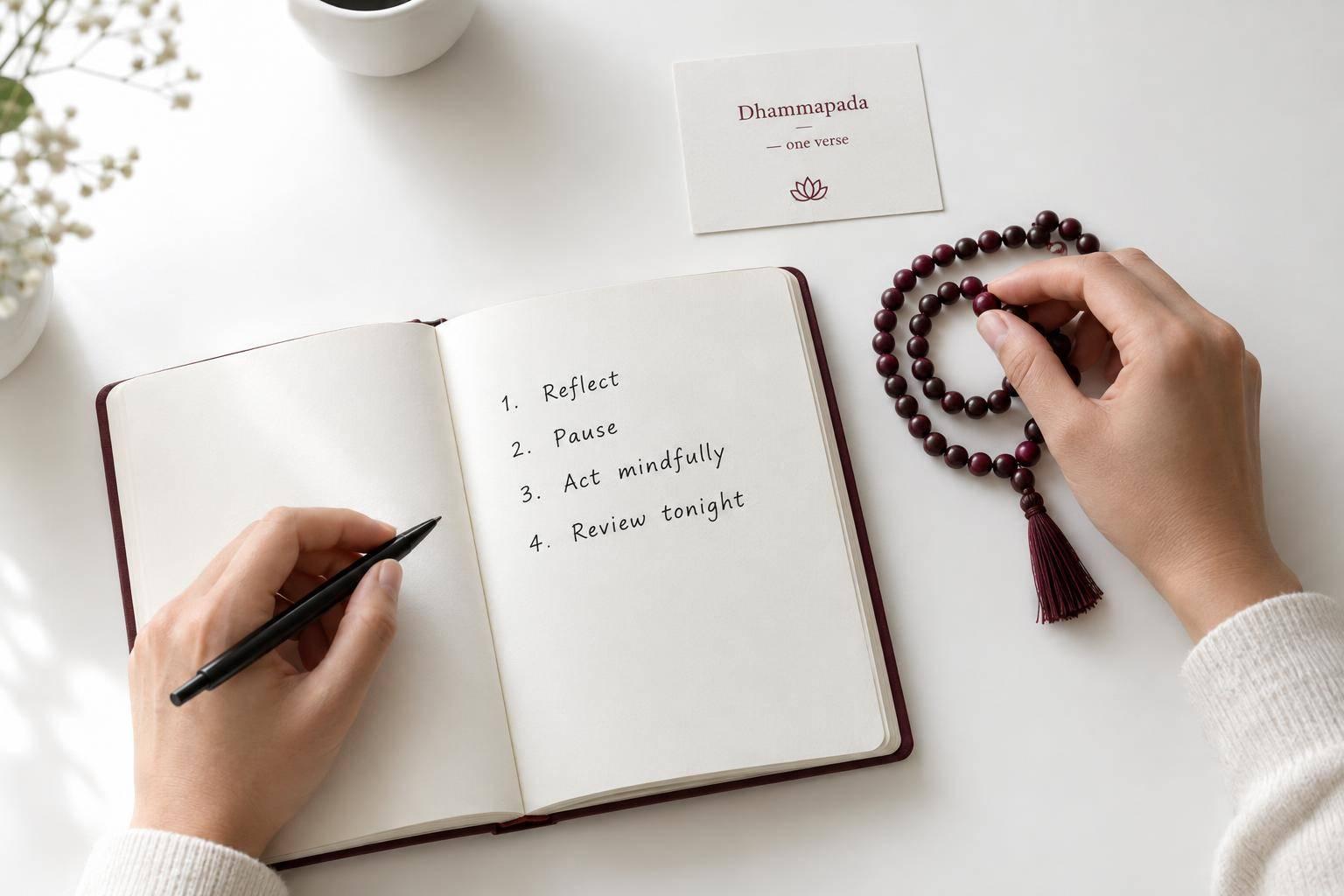
Train attention with one Dhammapada verse and a single daily routine: reflect, pause, act mindfully, and review each evening.
I start with one verse and one daily routine, not all 423 verses at once. In 1–2 minutes each morning, I choose a response to a likely challenge - such as listening without interrupting.
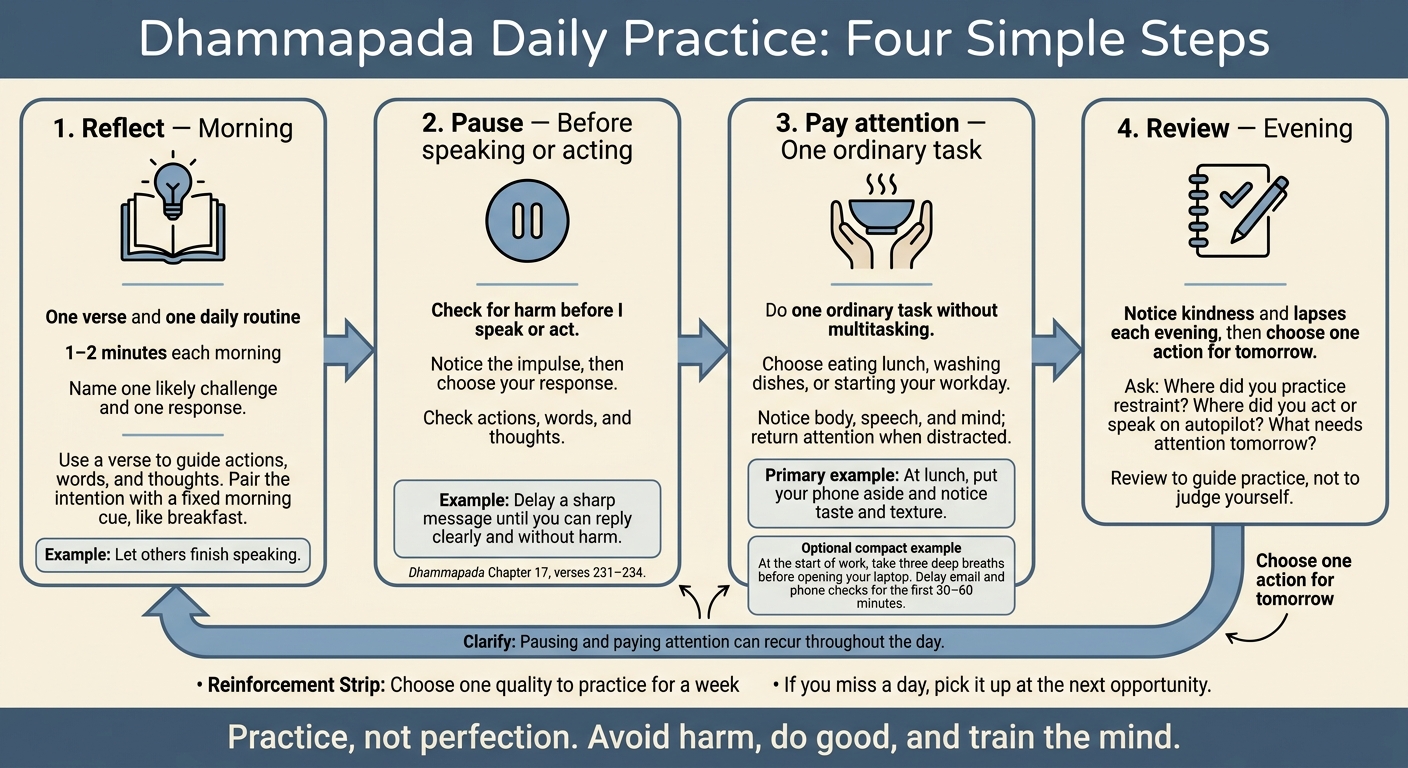
My daily practice follows four steps:
- Reflect: Use a verse to guide my actions, words, and thoughts.
- Pause: Check for harm before I speak or act.
- Pay attention: Do one ordinary task without multitasking.
- Review: Notice kindness and lapses each evening, then choose one action for tomorrow.
The aim is practice, not perfection: <u>avoid harm, do good, and train the mind</u>. I build that habit through repetition and return to it when I slip.
Dhammapada Daily Practice: Four Simple Steps
Dhammapada Verse 2/ Dhammapada In Practice/ Thanh Hưng
Begin the Morning With Reflection
Start your morning by naming one likely challenge and one response.
Reading is only part of the practice. The point is to use the verse when the day starts to pull you off course.
Read One Verse and Set an Intention
Spend 1–2 minutes reading one verse slowly. Pick a short phrase and use it to set a specific intention for the day. Pair it with a fixed morning cue, like breakfast, to help you remember.
Make the intention specific: let others finish speaking.
Use Sutta 423 as Your Reading Cue
Use Sutta 423 as your daily reading cue. Connect the verse to your intention and the next moment that might test it.
Treat the verse as a prompt to act, not just a line to save. Bring your intention to mind during that first pause before you speak or act.
Pause Before Speaking or Acting
When pressure tests your morning intention, pause before you respond. Dhammapada Chapter 17, verses 231–234, supports this practice of restraint. Take a moment to check your next action, your words, and your thoughts - especially when the impulse to react feels strongest.
Restraint doesn’t mean pretending to be calm. You can feel angry or notice a harsh thought without acting on it.
Notice the Impulse and Choose Your Response
Notice when you want to interrupt, send a sharp message, or act right away. Pause long enough to ask whether your next words or actions could cause harm. Memorize one short verse from Chapter 17 to remind you to pause during conflict.
In a tense exchange, delay the message until you can reply clearly and without harm.
Bring Attention to One Daily Routine
After the pause, carry that attention into an ordinary task.
Choose one daily routine - eating lunch, washing dishes, or starting your workday - and do it without multitasking. Use it to test your morning intention.
At lunch, put your phone aside and notice taste and texture.
At the start of work, take three deep breaths before opening your laptop. Delay email and phone checks for the first 30–60 minutes. Use that time to give your starting task your full attention.
This turns a daily habit into practice.
Observe Body, Speech, and Mind
Notice your posture and move with care. If the routine involves others, pay attention to your speech: listen fully, speak accurately, and avoid harsh words.
When distraction, irritation, or craving shows up, notice it. Name it silently, without judging yourself.
“This is stress,”
Then bring your attention back to the sensations of the task or your breath.
As you notice your body, speech, or mind, check your intention. Is it compassion, greed, or anger? Choose a next action that avoids harm and helps others.
Build Discipline Through Daily Repetition
Your next action - in body, speech, or mind - becomes discipline through repetition. That practice takes vigilance and restraint. Choose one quality to practice for a week and link it to a fixed routine, like brushing your teeth. If you miss a day, pick it up at the next opportunity.
Review Your Actions Each Evening
Keep your review short and specific. Where did you practice restraint? Where did you act or speak on autopilot? What needs attention tomorrow?
Use what you notice to guide tomorrow’s practice, not to judge yourself. Acknowledge kindness alongside lapses, then choose one concrete action to practice the next day.
Keep a Simple Daily Schedule
Return to these two touchpoints each day to keep practice simple, even when you’re busy.
| Timing | Method | Habit built |
|---|---|---|
| One daily routine | Act with deliberate attention | Mindful conduct |
| Evening | Review body, speech, and mind | Self-observation and steady effort |
Conclusion: Start With One Verse and One Routine
Start with one verse and one routine. Reflect in the morning, pause before reacting, act mindfully, and review your day each evening. Each gives you another chance to practice attention and restraint. When your attention slips, return to the next concrete action.
FAQs
How do I choose a Dhammapada verse for my day?
Choose a verse that speaks to your current mood, personal goals, or challenges. Themes like patience, compassion, or inner peace can help you find one that fits your needs.
For a simple daily practice, try the Sutta 423 app. It provides one verse each morning for reflection. You can also keep a personal collection of meaningful verses to return to when you need guidance or support.
How can I practice restraint without suppressing anger?
Practicing restraint means pausing before you respond, not suppressing your emotions. Notice your thoughts and impulses without acting on them right away. That pause gives you room to choose a response with care and compassion.
When tempers flare, let silence ease the tension. Meet anger with patience and kindness. The aim is to stay clearheaded and work through conflict with a steady mind - not push your feelings down.
How can I tell if my daily practice is helping?
Pay attention to how you handle daily challenges. Rather than reacting with frustration or anger, you may pause and choose a calmer response. You might also feel more grounded in traffic or during difficult conversations.
With consistent practice, you may find greater inner peace, better focus, and more mindful actions and decisions as the teachings become part of your daily life.