

How Dhammapada Teaches Gratitude
Explores how Dhammapada verses teach gratitude, interdependence, and daily practices like journaling, reflection, and meditation.
The Dhammapada, a collection of 423 verses central to Buddhist teachings, emphasizes gratitude as a key practice for spiritual growth and inner peace. Gratitude, or kataññutā, in Buddhism is about recognizing the kindness and support we've received from others, including parents, teachers, and spiritual friends. It fosters mindfulness, ethical living, and a deeper understanding of interconnectedness.
Key takeaways:
- Gratitude strengthens mindfulness by helping us reflect on the kindness that sustains our lives.
- Ingratitude, rooted in arrogance, blocks spiritual progress and disrupts inner peace.
- Verses from the Dhammapada encourage letting go of resentment, appreciating small acts of kindness, and cultivating compassion.
- Practices like daily verse reflection, gratitude journaling, and meditation on interdependence deepen this awareness.
How Buddhism Defines Gratitude
Gratitude as Awareness of Interconnection
In Buddhism, gratitude goes beyond a fleeting emotion - it's about understanding how deeply connected we are to others. The Pāli term kataññutā highlights the importance of being consciously aware of the kindness and support we’ve received. Think about it: every meal we eat, every piece of clothing we wear, and every lesson we learn exists because someone else cared enough to provide it. According to the Buddha, two types of people are rare in this world: those who help others selflessly and those who respond to that help with genuine gratitude.
Buddhist teachings place a special emphasis on three groups of people to whom we owe gratitude: parents, teachers, and spiritual friends (kalyāṇa mittas). But here's the key - repaying their kindness isn’t about giving material gifts. Instead, the best way to honor them is by cultivating qualities like conviction, generosity, virtue, and discernment. This mindset builds a foundation for applying the wisdom found in the Dhammapada’s teachings.
How Ingratitude Blocks Spiritual Progress
On the flip side, ingratitude doesn’t just strain relationships - it can also stall spiritual growth. The Buddha taught that ingratitude is a serious obstacle to achieving deep meditation (jhānas) and enlightenment, potentially leading to lives filled with suffering. At its core, ingratitude stems from arrogance - the refusal to acknowledge how much we rely on others. This attitude directly opposes the mindfulness (sati) needed to remember and appreciate the help we’ve been given. In AN 2.31, the Buddha explained:
A person of no integrity is ungrateful & unthankful. This ingratitude, this lack of thankfulness, is advocated by rude people. It is entirely on the level of people of no integrity.
Ancient texts like the Rasavāhinī describe the ungrateful as those who "say one thing, think another, and act differently." This inner conflict disrupts the clarity necessary for meditation and ethical living. In contrast, true gratitude fosters a sense of integrity, aligning our thoughts, words, and actions. It reminds us of the countless ways others contribute to our lives, encouraging us to live with greater mindfulness and purpose. Recognizing these challenges underscores why practicing gratitude daily is so essential - a theme that the Dhammapada’s verses will further explore.
Dhammapada Verses That Teach Gratitude
Verses on Thought and Intention
The Dhammapada begins with a profound insight into the power of the mind:
Mind precedes all mental states. Mind is their chief; they are all mind-wrought.
This verse highlights that gratitude is a deliberate choice. By focusing on appreciation rather than dwelling on grievances, we create a foundation for lasting happiness.
Verses 3 and 4 expand on this idea, showing how clinging to resentment perpetuates hatred. However, choosing to let go of such grievances "stills hatred", creating space for gratitude and inner peace.
Verses 365 and 366 emphasize the importance of valuing even the smallest gifts. These verses teach that avoiding envy and appreciating modest offerings sharpen one’s meditative focus. Those who cherish small acts of generosity - "even though it be little" - and live ethically, with steady effort ("pure in livelihood and unremitting in effort"), are praised even by the gods.
These teachings remind us that gratitude is deeply connected to compassion and resilience, as explored in the verses that follow.
Verses on Gratitude and Compassion
Verse 83 offers a powerful lesson on maintaining gratitude, even in the face of adversity:
Indeed, the virtuous give up all attachments... when faced with joy or sorrow, the wise do not show elation or depression.
A story tied to this verse recounts how bhikkhus endured a famine with only "shrivelled grain" to eat, yet they remained steady and content. This example shows how practicing gratitude unconditionally can cultivate good karma, even during challenging times.
Verses 16 and 18 further explore this theme, stating that a "doer of good" experiences joy by:
recollecting his own pure deeds.
Reflecting on one’s virtuous actions fosters self-gratitude and spiritual joy. It transforms the kindness we’ve received into motivation for continued good deeds, rather than simply indulging in fleeting pleasure.
Gratitude and Generosity Dharma Talk - Jack Kornfield

How to Practice Gratitude with the Dhammapada
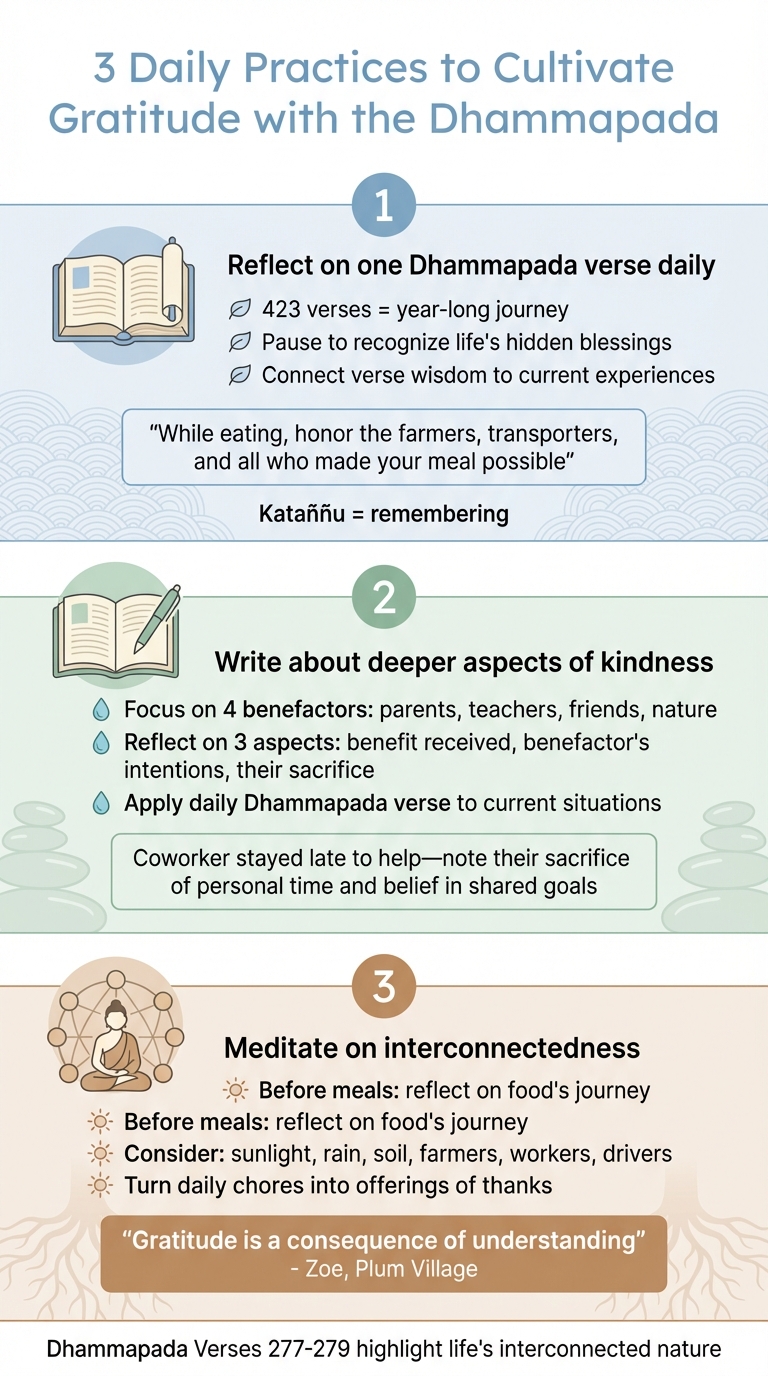
Three Daily Practices for Cultivating Gratitude Through Dhammapada Teachings
Daily Reflection with Dhammapada Verses
In Buddhism, the term for gratitude is kataññu, which underscores the importance of remembering. Daily reflection on verses from the Dhammapada can sharpen mindfulness and help reveal the kindness that often goes unnoticed in everyday life.
The Sutta 423 app offers a simple way to engage with this practice. Each day, it delivers a verse from the Dhammapada, guiding you through a year-long journey of reflection with its 423 verses. This daily rhythm encourages you to pause and recognize life's hidden blessings. As you read each verse, take a moment to consider how it connects to your current experiences and whether there are acts of kindness in your life that you may have overlooked.
For example, while eating, take a moment to honor all the elements that contributed to your meal - from the farmers who grew the food to the people who transported it. This simple act deepens your awareness of interdependence. As Zoe, a Plum Village practitioner, explains:
Gratitude is actually a consequence of understanding.
To take this practice further, consider recording your reflections for a more profound sense of gratitude.
Keeping a Gratitude Journal
A gratitude journal becomes a powerful tool when it focuses on the deeper aspects of kindness. Instead of jotting down simple items like "my bed" or "my job", reflect on the motives and sacrifices of those who have supported you. Center your entries on four key benefactors: parents, teachers, supportive friends, and nature.
When writing about an act of kindness, think about three aspects: the benefit you received, the trust you have in the benefactor's intentions, and the effort or sacrifice they made on your behalf. For example, if a coworker stayed late to help you meet a deadline, note not just the outcome but also their willingness to give up personal time and their belief in your shared goals. You can also weave in your daily Dhammapada verse by applying its wisdom to your current circumstances. If you're dealing with conflict, for instance, a verse about patience can help you uncover valuable lessons in the situation.
The Buddha taught that the best way to repay kindness is by helping benefactors strengthen their virtues, generosity, and discernment. Use your journal to plan how you can honor the kindness you've received through your own thoughtful actions.
In addition to journaling, meditative practices can help you internalize gratitude and deepen your connection to the world around you.
Meditation on Gratitude and Interdependence
Meditation on interdependence helps illuminate the truth that no one exists in isolation; our well-being is supported by countless conditions. This concept aligns with Dhammapada verses 277-279, which highlight the interconnected nature of life.
Before a meal, try a simple meditation on interdependence. Hold a piece of fruit and reflect on its journey: the sunlight that nurtured it, the rain that helped it grow, the soil that supported it, the farmers who cared for it, and the workers and drivers who brought it to your table.
Brother Thien Hoa emphasizes that living with gratitude fosters a sense of completeness and fearlessness.
You can also express gratitude through acts of service. Practices like "sit and sweep", where seated meditation is paired with tasks like cleaning, turn everyday chores into offerings of thanks for your teachers and community. Even small acts of service can be meaningful gestures of gratitude. As Jack Kornfield shares in a traditional temple prayer:
May I be given the appropriate difficulties so that my heart can truly open with compassion.
This mindset transforms challenges into opportunities for growth and deeper appreciation.
How Gratitude Affects Inner Peace and Spiritual Growth
Using Gratitude to Let Go
Gratitude has a unique way of lightening emotional burdens that often stand in the way of inner peace. Feelings like envy can unsettle the mind, making it hard to find calm. But gratitude shifts your focus - from comparing yourself to others to appreciating what you already have. This simple shift helps quiet the mind and brings a sense of ease.
As Verse 5 of the text reminds us:
Resentment does not cease by resentment; it only ceases by not-resenting; this is the ancient and venerable rule.
This principle works as a mental pause button, interrupting anger and encouraging reflection before reacting. By recalling acts of kindness you’ve experienced, you can soften impulsive reactions and protect your peace of mind. Gratitude also encourages non-attachment, helping free the mind from endless desires and cravings. Buddhist teachings suggest that full awakening comes when one no longer depends on others' sacrifices and lives free from spiritual debt. In this way, gratitude naturally prepares you to make ethical decisions, grounded in a sense of thankfulness.
How Gratitude Supports Ethical Living
Once resentment is released, gratitude becomes a foundation for living ethically. It aligns with the Buddhist principle of karma, which teaches that actions have consequences, intentions matter, and skillful choices are always possible. Recognizing how others' actions have shaped your life inspires mindfulness about how your own behavior affects others.
The Dhammapada highlights that true serenity comes from self-restraint - over your senses, speech, and thoughts. As Verse 378 explains:
The monk who is calm in body, calm in speech, calm in thought, well-composed and who has spewn out worldliness - he, truly, is called serene.
This kind of calmness helps dissolve arrogance by reminding you that your success is often built on the support and kindness of others.
In Buddhist teachings, gratitude is seen as a defining trait of a sappurisa - a person of integrity, balance, and humility. The Buddha emphasized this by saying that two types of people are "hard to find in the world": those who are the first to offer kindness and those who are grateful for kindness received. By practicing gratitude, you cultivate this rare and admirable quality, which strengthens both inner peace and ethical living. These actions, rooted in gratitude, pave the way for spiritual growth.
Conclusion
The Timeless Lessons of the Dhammapada
The Dhammapada's teachings on gratitude and mindfulness offer profound insights that remain relevant even in today's fast-paced world. By recognizing our interconnectedness and practicing mindfulness, we can use gratitude as a tool for personal growth and inner peace.
With its 423 verses, the Dhammapada has been a source of guidance for spiritual seekers across generations. These verses remind us that gratitude is not just an emotion but a safeguard against negativity - like resentment, envy, and unchecked desire. The Buddha emphasized in the Maha-mangala Sutta that gratitude, along with humility and contentment, serves as one of the "highest protections". Acting with a grateful and peaceful mind naturally brings happiness. This wisdom encourages us to see the web of connections that sustain us and to value the many conditions that make life possible.
Your Next Steps
Understanding these lessons is just the beginning. To truly benefit, take action. Consider reflecting on a single verse from the Dhammapada each day. This practice can gradually shift your perspective from focusing on what’s lacking to appreciating what you already have. As the text reminds us, wisdom grows "just a little at a time".
FAQs
What is kataññutā in Buddhism?
In Buddhism, Kataññutā refers to gratitude - a profound sense of appreciation and thankfulness toward others, especially figures like parents. This concept plays a key role in Buddhist teachings, including the Kataññu Suttas, which highlight the importance of recognizing and honoring the kindness, care, and support we receive from those around us.
How can gratitude help me let go of resentment?
Gratitude has a way of softening resentment by replacing negative feelings with more positive ones. It encourages feelings of understanding and compassion, which can disrupt the cycle of anger and pain. When you focus on what you’re thankful for, your perspective shifts, making it easier to embrace healing and forgiveness.
How do I use Sutta 423 for daily gratitude?
The Sutta 423 app is a simple way to bring daily gratitude into your life. It offers 423 verses from the Dhammapada for quiet reflection. Each day, you can open the app, read one verse, and spend a few moments reflecting on its meaning. How does it connect to your life? What lessons can it teach you? This daily practice can help nurture mindfulness, gratitude, and a sense of inner calm.