
How Gratitude Meditation Aligns with Dhammapada Teachings
Explains how Dhammapada verses guide gratitude meditation to reduce craving, calm the mind, and cultivate lasting mindfulness and contentment.
Gratitude meditation, rooted in the Buddhist concept of kataññu (remembering and appreciating kindness), connects deeply with the teachings of the Dhammapada. This practice not only fosters mindfulness but also helps redirect negative thoughts, reduce cravings, and cultivate inner peace. Key verses from the Dhammapada, such as Verse 5 (overcoming negativity with loving-kindness) and Verse 188 (shifting from craving to contentment), provide practical guidance for integrating gratitude into daily life. By reflecting on acts of kindness and the sacrifices of others, gratitude meditation transforms from a simple mental exercise into a path toward mental purification and spiritual growth.
Key Takeaways:
- Gratitude meditation encourages mindfulness by focusing on kindness received.
- Dhammapada verses, like 5, 188, 203, and 367, guide this practice by addressing negativity, craving, and mental purification.
- Reflecting on the efforts behind life’s comforts fosters a deeper sense of interdependence and calm.
- A simple 5-step practice, including reflection on Dhammapada verses, can help integrate gratitude meditation into daily routines.
This approach isn’t just about feeling grateful - it’s about using gratitude as a tool for mindfulness and spiritual progress.
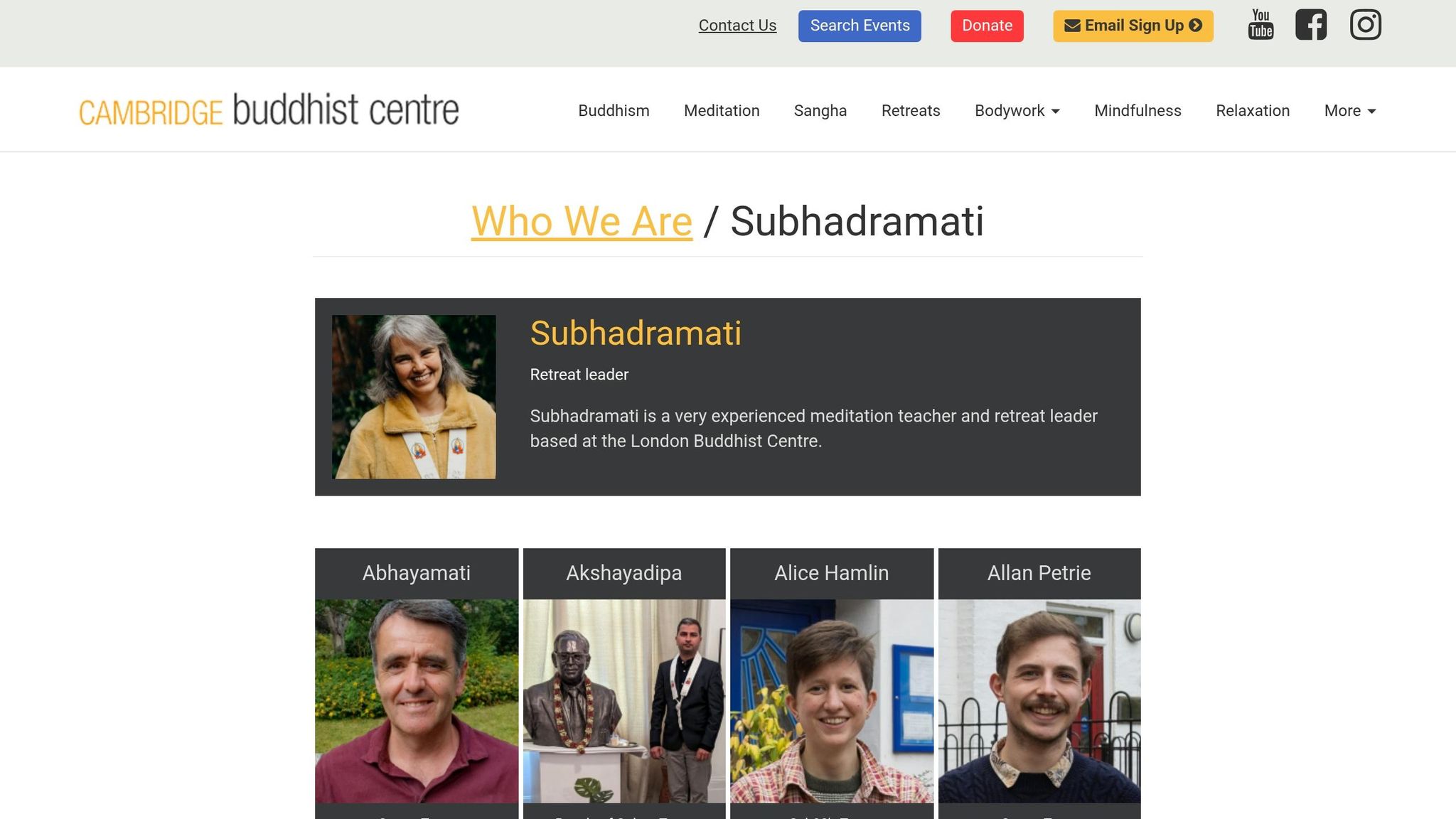
Meditation on Cultivating Gratitude | Subhadramati
Dhammapada Verses That Support Gratitude Meditation
The Dhammapada provides timeless advice for transforming negativity into appreciation, paving the way for greater inner peace.
Verse 5: Breaking Negativity Through Appreciation
Verse 5 offers a profound insight: "Hatred is, indeed, never appeased by hatred in this world. It is appeased only by loving-kindness. This is an ancient law." This verse highlights that responding to negativity with more negativity only perpetuates conflict.
Gratitude meditation embodies this teaching by replacing harmful thoughts with memories of kindness. The concept of kataññu - gratitude for acts of generosity - encourages focusing on positive interactions rather than past wrongs. Shifting from a mindset of competition to one of cooperation disrupts cycles of resentment.
Practically, this means consciously recalling acts of kindness instead of dwelling on grievances. As Thanissaro Bhikkhu explains, "If you perceive help as an expression of trust - the other person wouldn't want to help you unless he or she felt you would use the help well - then gratitude feels ennobling, an aid to self-esteem." By reinterpreting help as trust, gratitude becomes a powerful antidote to hostility.
This approach lays the groundwork for exploring how gratitude can redirect cravings for external validation, as seen in Verse 188.
Verse 188: Shifting from Desire to Contentment
Verse 188 speaks to the human tendency to seek security in external refuges, such as sacred places or natural sanctuaries, when faced with fear or dissatisfaction. The Buddha taught that these external solutions are unreliable because they fail to address the root cause: craving and desire.
Gratitude meditation helps shift focus from what is lacking to what is already present. By recognizing the abundance provided by the kindness and sacrifices of others, this practice encourages contentment. It redirects attention from fleeting distractions to the genuine support that surrounds you.
During meditation, reflecting on the efforts of parents, teachers, and friends, as well as the daily essentials - food, clothing, and shelter - can foster a deep sense of interdependence. This mindfulness reduces the craving for external validation. As the verse reminds us, "One is not liberated from all evil consequences of existence (dukkha) for having come to such a refuge," pointing instead to the need for an inner refuge rooted in gratitude and understanding.
Verse 203: Mindful Awareness Through Gratitude
Building on the themes of overcoming negativity and redirecting desires, Verse 203 emphasizes the importance of mindful awareness in countering unskillful mental states. Gratitude meditation enhances this awareness by training the mind to recognize the difference between thoughts fueled by craving and those arising from genuine appreciation.
Reflecting regularly on the intentions behind acts of kindness deepens your gratitude and sharpens your ability to observe your mental patterns. This practice strengthens your capacity to focus on positive mental states, making it easier to cultivate a sense of peace and balance.
Verse 367: Mental Purification Through Appreciation
Verse 367 outlines the path to avoid harm, do good, and purify the mind. Gratitude meditation aligns with these goals by fostering an awareness of the interconnected acts of kindness and sacrifice that sustain life.
Mental purification occurs when you view the help you’ve received as an expression of trust, which can uplift your mind and reinforce self-esteem. Reflecting on the four requisites - food, clothing, shelter, and medicine - while acknowledging the hardships endured by others to provide them can inspire a sense of urgency (samvega) to deepen your practice of the Dhamma.
As Thanissaro Bhikkhu wisely notes, "Kindness and gratitude are virtues you can cultivate, but they have to be cultivated together. Each needs the other to be genuine." The ultimate expression of this mental purification is full awakening, where the mind no longer relies on others’ sacrifices and becomes "no longer a burden to anyone." In this way, gratitude becomes a means of repaying the kindness you’ve received by strengthening your own conviction, virtue, generosity, and discernment.
How to Practice Gratitude Meditation with Dhammapada Teachings
Practicing gratitude meditation with insights from the Dhammapada doesn’t require elaborate rituals or lengthy sessions. The focus is on creating a simple, consistent habit that bridges timeless wisdom with present-moment mindfulness.
5-Step Gratitude Meditation Practice
- Find a Quiet Space: Set aside 10–15 minutes in a peaceful spot where you can focus without interruptions.
- Begin with Breath Awareness: Pay attention to your natural breathing pattern. This anchors you in the present and prepares your mind for reflection.
- Reflect on a Dhammapada Verse: Pick a verse - like Verse 5, which emphasizes overcoming negativity with loving-kindness - and let its meaning resonate with you.
- Identify Specific Blessings: Think of three specific things you’re grateful for, particularly acts of kindness from others. Instead of general gratitude, focus on the effort and intention behind these acts. Reflect on the four requisites and the sacrifices involved in providing them.
- Extend Loving-Kindness and Set Intentions: Begin by directing loving-kindness toward yourself, then extend it to others, including those who challenge you. Let this connection inspire compassionate action. Conclude by setting an intention to live with mindfulness.
Incorporating this practice daily, alongside reflections on Dhammapada verses, can help you cultivate deeper mindfulness and gratitude.
Using Daily Dhammapada Verses to Deepen Your Practice
Adding a daily reflection on Dhammapada verses enhances your meditation routine. These verses provide new insights and encourage mindfulness. For instance, tools like the Sutta 423 app (https://sutta423.com) share one verse from the Dhammapada each day, offering a full year of reflective practice.
This habit aligns with the Buddhist perspective of mindfulness as the ability to recall and reflect on past actions. Each verse can subtly shift your perspective, helping you see life as a web of interconnected acts of kindness. Over time, these reflections nurture qualities like generosity, virtue, and discernment.
The Buddha beautifully highlighted the value of gratitude, saying:
"These two people are hard to find in the world. Which two? The one who is first to do a kindness, and the one who is grateful and thankful for a kindness done" (AN 2.118).
Benefits of Combining Gratitude Meditation with Dhammapada Teachings
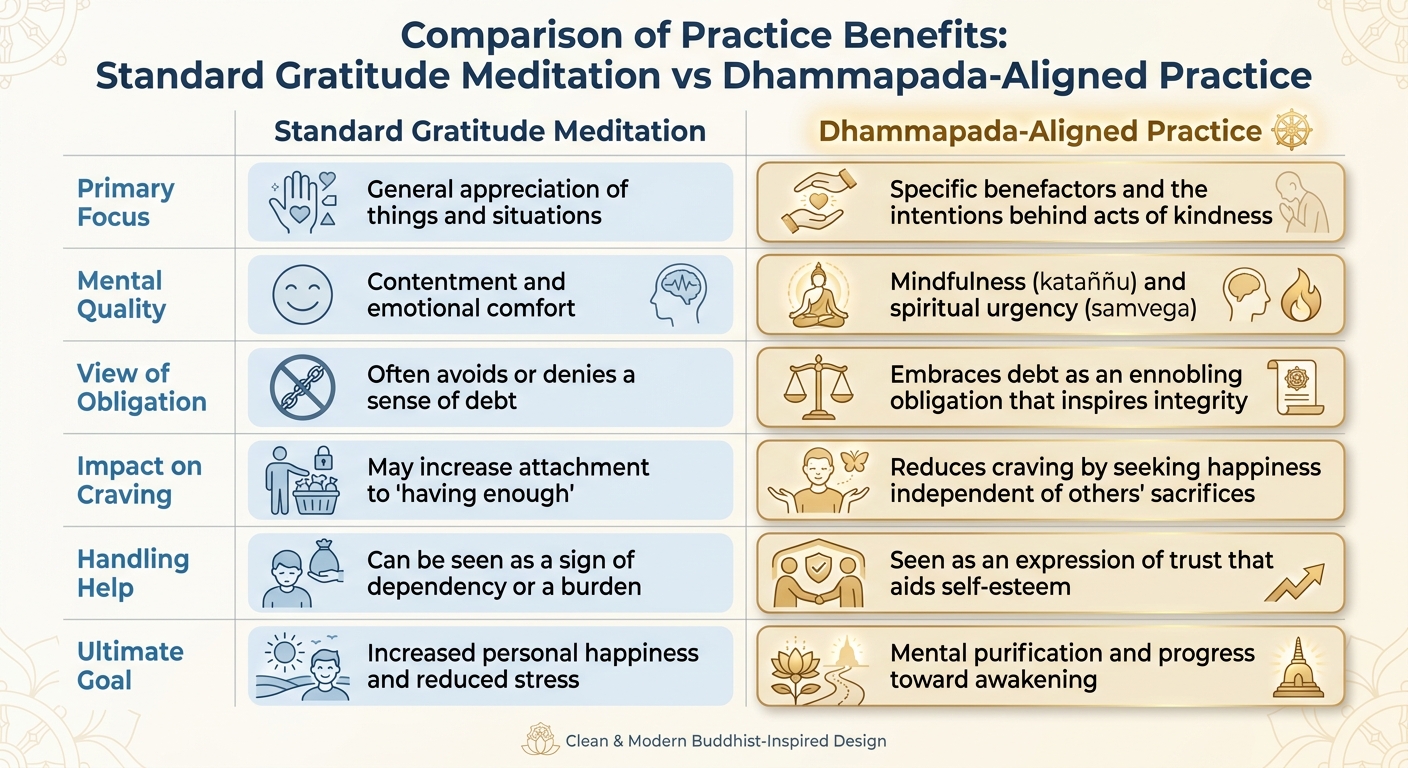
Standard vs Dhammapada-Aligned Gratitude Meditation Benefits Comparison
Bringing together the wisdom of the Dhammapada and the practice of gratitude meditation can reshape how we understand kindness, duty, and spiritual development.
Traditional gratitude meditation often focuses on appreciating material comforts, which may provide temporary relief but doesn’t address deeper cravings. When aligned with the Dhammapada, however, gratitude meditation introduces the concept of samvega - a sense of spiritual urgency that arises from recognizing the sacrifices behind everyday comforts. This shift is important because it nurtures kataññu, a mindfulness that deeply acknowledges and remembers acts of kindness and effort. For instance, reflecting on how your food, clothing, or shelter come from the labor of others - like farmers working under difficult conditions or the lives of animals - can inspire you to pursue a kind of happiness that doesn’t rely on such sacrifices. Thanissaro Bhikkhu captures this beautifully:
"Attaining full release is not a selfish act; instead, it's the highest expression of kindness and gratitude".
The Dhammapada reframes gratitude as more than a fleeting emotion. It becomes a commitment to live with virtue, generosity, and wise discernment. This perspective encourages an active and transformative approach to gratitude, emphasizing the importance of intention, action, and choice. Instead of seeing gratitude as passive, it becomes a practice that fosters meaningful growth and change.
Below is a table comparing the benefits of conventional gratitude meditation with the enriched perspective provided by Dhammapada teachings.
Comparison of Practice Benefits
| Feature | Standard Gratitude Meditation | Dhammapada-Aligned Practice |
|---|---|---|
| Primary Focus | General appreciation of things and situations | Specific benefactors and the intentions behind acts of kindness |
| Mental Quality | Contentment and emotional comfort | Mindfulness (kataññu) and spiritual urgency (samvega) |
| View of Obligation | Often avoids or denies a sense of debt | Embraces debt as an ennobling obligation that inspires integrity |
| Impact on Craving | May increase attachment to "having enough" | Reduces craving by seeking happiness independent of others' sacrifices |
| Handling Help | Can be seen as a sign of dependency or a burden | Seen as an expression of trust that aids self-esteem |
| Ultimate Goal | Increased personal happiness and reduced stress | Mental purification and progress toward awakening |
Conclusion
Gratitude meditation takes on new depth when paired with the teachings of the Dhammapada. It’s not just about appreciating what you have but developing kataññu - a mindfulness of past kindnesses that enriches your practice over time. As Thanissaro Bhikkhu wisely notes, "Kindness and gratitude are virtues you can cultivate, but they have to be cultivated together". This approach transforms gratitude from a fleeting feeling into a disciplined path toward awakening.
Daily practice is key to building this connection. Gratitude isn’t something we’re born with; it’s a skill that grows with consistent reflection on the efforts and sacrifices that make our lives possible. By regularly engaging with the Dhammapada’s teachings, we train our minds to shift away from craving and self-pity toward a state of genuine contentment and deeper understanding. Tools like the Sutta 423 app can make this practice more accessible.
The Sutta 423 app offers a simple way to stay connected to these teachings. Each day, it delivers one verse from the Dhammapada - no streaks, no pressure - just a quiet moment to reflect. With 423 verses covering an entire year, the app provides a gentle way to integrate these insights into your daily life, and the core feature is available for free.
These daily reflections echo the Buddha’s timeless message about gratitude. In AN 2.118, the Buddha said, "These two people are hard to find in the world. Which two? The one who is first to do a kindness, and the one who is grateful and thankful for a kindness done". Taking just a few minutes each day to reflect on this teaching can nurture a heart that recognizes kindness and responds with sincerity.
Ultimately, practicing gratitude through the lens of the Dhamma not only honors the kindnesses we’ve received but also strengthens our journey toward awakening. The greatest expression of gratitude isn’t just saying “thank you” - it’s living the Dhamma and working toward awakening. Start small, stay consistent, and let these teachings guide you toward lasting happiness.
FAQs
How is kataññu different from “being thankful”?
Kataññu isn't just about “being thankful.” It's a deeper, richer sense of gratitude that recognizes the significance of a benefit or debt owed. This form of gratitude often carries a moral or spiritual weight, setting it apart from the more fleeting, surface-level feelings associated with thankfulness.
How does gratitude meditation reduce craving, not increase attachment?
Gratitude meditation helps curb cravings by cultivating a sense of interconnectedness and fostering appreciation for the kindness we receive from others. By shifting attention away from self-centered desires and attachments, this practice promotes a feeling of contentment. As a result, the need for external approval or material possessions becomes less significant.
What should I do if gratitude feels forced or brings up guilt?
If practicing gratitude feels unnatural or stirs up feelings of guilt, it’s important to remember that gratitude isn’t something to force. True appreciation develops naturally over time, not out of obligation. Take a moment to reflect on your intentions, and give yourself the patience to let gratitude grow at its own pace. Adopting a compassionate attitude toward yourself can help ease any guilt and make room for sincerity, allowing your gratitude to feel more genuine and aligned with your emotions.