
Gratitude in the Dhammapada: Key Lessons
Explains how the Dhammapada defines gratitude vs ingratitude and offers daily practices to cultivate mindful thankfulness.
Gratitude in the Dhammapada goes beyond feeling thankful - it's about actively recognizing kindness and repaying it through actions. The Buddha described gratitude as a rare but essential quality of integrity, emphasizing its role in spiritual growth and inner peace. Unlike modern views that focus on general appreciation, the Dhammapada highlights gratitude toward specific benefactors like parents, teachers, and friends.
Key takeaways:
- Gratitude involves two parts: recognizing kindness (kataññutā) and repaying it (katavedi).
- It strengthens mindfulness, ethical behavior, and social connections.
- Ingratitude, seen as a moral flaw, leads to dissatisfaction and spiritual decline.
- Daily practices, like reflecting on life’s essentials, can help cultivate gratitude.
The teachings show how gratitude fosters harmony, humility, and spiritual progress, offering a practical path to inner peace.
How to Develop Gratitude | Kataññu Katavedi | Ajahn Dhammasiha | Dhammagiri

Key Verses on Gratitude in the Dhammapada
The Dhammapada doesn’t dedicate an entire chapter to gratitude, but this virtue is intricately woven into its teachings on wisdom, ethical behavior, and spiritual growth. The Buddha’s words often connect gratitude with the qualities of a person of integrity, emphasizing how this virtue translates into ethical and communal actions. These teachings highlight gratitude not as an abstract concept but as something deeply practical and transformative.
Verses That Praise Gratitude
Gratitude is closely tied to wisdom and ethical living in the Dhammapada, offering clear guidance for daily life. In verse 83, the Buddha describes the steadfastness of those who live virtuously:
"Indeed, the virtuous give up all... the virtuous (lit., the tranquil) do not talk with sensual desire; when faced with joy or sorrow, the wise do not show elation or depression."
This verse reflects how a steady and grateful mind contributes to inner peace and spiritual merit. Gratitude helps individuals remain rooted in ethical principles and maintain stability, no matter the circumstances. Without it, a person risks becoming "uprooted and lifeless", a stark image of spiritual decline.
On a broader level, gratitude strengthens social connections, fostering harmony within families and communities. These teachings underline how gratitude not only fortifies personal integrity but also creates the calm and clarity necessary for spiritual advancement.
Verses That Warn Against Ingratitude
The Dhammapada treats ingratitude as a serious moral flaw. The Buddha pointedly remarked that ingratitude is a hallmark of those lacking integrity (asappurisa):
"A person of no integrity is ungrateful & unthankful. This ingratitude, this lack of thankfulness, is advocated by rude people."
Such behavior is portrayed as a sign of a disruptive and unruly character. In fact, ingratitude is listed among the four great offenses that can lead to rebirth in states of suffering. The Jātaka tales, which often expand on the Buddha’s teachings, vividly illustrate how ingratitude can lead to harm. One tale captures this sentiment:
"The ungrateful man is always on the look-out for an opening, but even given the whole world, he still wouldn't be satisfied."
This paints a striking picture of how ingratitude breeds dissatisfaction. Failing to acknowledge kindness or support from others runs counter to the peace and liberation sought through Buddhist practice. By drawing attention to the harm caused by ingratitude, these verses emphasize the importance of cultivating gratitude as a foundation for inner tranquility and spiritual progress.
Gratitude vs. Ingratitude: A Comparison
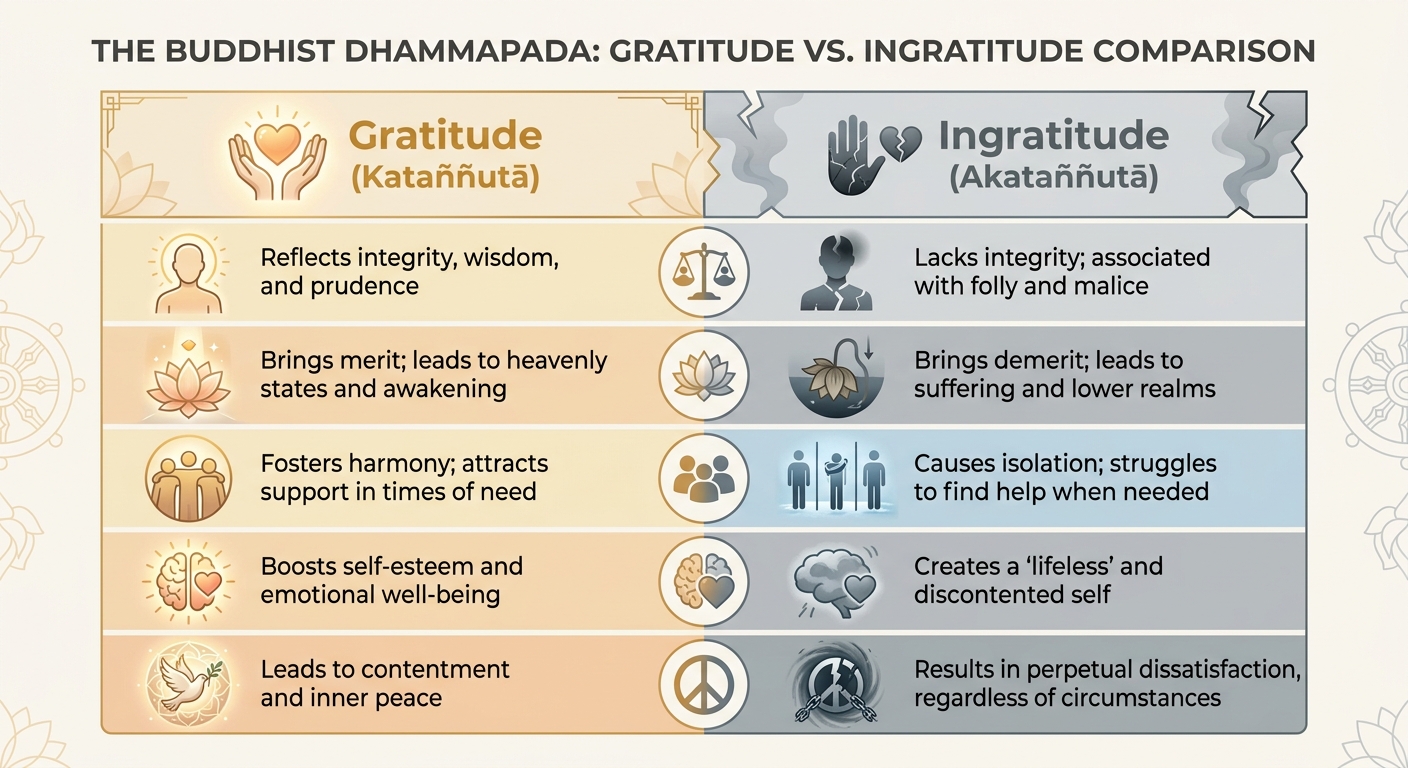
Gratitude vs Ingratitude: Effects on Character and Spiritual Growth
The Effects of Gratitude and Ingratitude
The Dhammapada draws a clear distinction between gratitude and ingratitude, portraying them as two opposing forces that influence both character and destiny. According to the Buddha's teachings, gratitude reflects integrity and wisdom, while ingratitude signals a lack of integrity and moral grounding.
This contrast goes deeper than personality traits. A grateful person is described as spiritually vibrant, while an ungrateful one is seen as spiritually drained. This imagery highlights how ingratitude saps one’s inner vitality, creating disconnection from both personal peace and broader community ties.
From a karmic perspective, gratitude generates merit and guides individuals toward favorable outcomes, including heavenly states. On the other hand, ingratitude brings demerit and suffering. These effects extend beyond the spiritual realm into everyday life: a grateful person tends to attract support during challenging times, while an ungrateful individual often remains dissatisfied, no matter how much they receive.
| Feature | Gratitude (Kataññutā) | Ingratitude (Akataññutā) |
|---|---|---|
| Character Type | Reflects integrity, wisdom, and prudence | Lacks integrity; associated with folly and malice |
| Spiritual Impact | Brings merit; leads to heavenly states and awakening | Brings demerit; leads to suffering and lower realms |
| Social Effect | Fosters harmony; attracts support in times of need | Causes isolation; struggles to find help when needed |
| Mental State | Boosts self-esteem and emotional well-being | Creates a "lifeless" and discontented self |
| Satisfaction | Leads to contentment and inner peace | Results in perpetual dissatisfaction, regardless of circumstances |
This stark comparison not only shapes one’s identity but also impacts the journey toward inner peace and spiritual growth. Gratitude fosters spiritual merit, strengthens relationships, and enhances emotional stability, paving the way for awakening. In contrast, ingratitude can hinder progress by blocking access to higher meditative states and stalling spiritual development. These insights underline the profound role gratitude plays in shaping both personal well-being and spiritual advancement.
How Gratitude Creates Inner Peace
Gratitude and Spiritual Growth
Gratitude plays a key role in spiritual growth by encouraging the development of four key qualities: conviction, virtue, generosity, and discernment. These are the same traits the Buddha associated with an "admirable friend". In essence, gratitude fosters the qualities needed for spiritual awakening.
One of its most profound effects is on mindfulness. The Buddha described mindfulness as the ability to "remember & able to call to mind even things that were done & said long ago." Practicing gratitude directly strengthens this skill by focusing on recalling acts of kindness with clarity and intention.
Additionally, gratitude sharpens perception, a critical element for meditation. Recognizing help as an act of trust in your ability to use it wisely can transform a mindset rooted in competition or resentment into one of trust and cooperation. This shift not only enhances concentration but also boosts self-esteem, creating a foundation for deeper meditative practice. Over time, this inner growth naturally extends to more ethical behavior in daily life.
Gratitude in Ethical Living
Gratitude doesn’t stop at inner development - it also shapes how we treat others. It encourages kindness, empathy, and a genuine desire to help at the right time and in the right way. This isn’t about superficial politeness; it’s about building the basis for ethical behavior.
The Buddha emphasized that true repayment for the kindness of parents and teachers comes through cultivating conviction, virtue, generosity, and discernment. These qualities must first be developed within oneself before they can be shared with others. As Thanissaro Bhikkhu explains:
"The way to repay a teacher's compassion and sympathy in teaching you is to apply yourself to learning your lessons well".
This creates a positive cycle: gratitude drives ethical growth, which in turn deepens the capacity for gratitude. By weaving these practices into everyday life, gratitude not only enhances character but also reinforces the inner peace that lies at the heart of the Buddha's teachings.
Applying These Lessons in Daily Life
Daily Gratitude Reflection
The Dhammapada provides practical ways to turn gratitude into a daily habit, making it more than just a fleeting thought. One way to begin is by reflecting on what the Buddha called the "four requisites" - food, clothing, shelter, and medicine. Each day, pause to appreciate the many hands and efforts involved in providing these essentials: the farmers, workers, and even animals whose contributions make your life possible.
Dhammapada Verse 177 emphasizes finding joy in the generosity of others. It encourages us to celebrate acts of kindness, even when they're not our own. As the verse states:
"Indeed, misers do not go to the abode of the devas; fools do not praise charity; but the wise rejoice in charity and so gain happiness in the life hereafter".
This practice shifts the focus away from competition and instead fosters a sense of shared joy in the good deeds of others. You don’t have to perform every generous act yourself to feel connected to the virtue of giving.
A simple yet profound practice is to "bow to your mouth." Think of your voice as a gift earned through past good karma. Each morning, make a conscious choice to use your words wisely - speaking only when your words are timely, helpful, and truthful. This mindful approach turns everyday conversations into acts of gratitude.
Using Tools for Daily Reflection
Personal reflection lays the groundwork for a consistent gratitude practice, and using structured tools can help sustain it. Consistency is key to building any habit, and the Dhammapada’s 423 verses are meant to be absorbed gradually, not rushed. A resource like Sutta 423 (https://sutta423.com) delivers one verse from the Dhammapada daily, allowing for quiet reflection and steady progress through the collection over a year - and beyond.
This approach aligns with the Buddha’s concept of mindfulness, which involves recalling past actions and words with intention. By focusing on a single verse each day, you train your mind to remember and appreciate acts of kindness, cultivating a deeper sense of gratitude over time.
Conclusion
The Dhammapada highlights gratitude (kataññutā) as a cornerstone of spiritual integrity and ethical living. According to the Buddha, gratitude defines a person of moral character, while ingratitude signals a lack of integrity. This teaching provides a practical guide to inner peace by encouraging us to recognize and express thanks for the kindness we receive.
By acknowledging the support of parents, teachers, and others, we combat arrogance and ego, creating space for tranquility. Recognizing our interconnectedness fosters humility and harmony, which are essential for achieving genuine peace of mind.
The Buddha emphasized the rarity of two types of people: those who are the first to show kindness and those who express gratitude for kindness received. This rarity underscores the importance of making gratitude a daily habit. Repaying kindness involves cultivating qualities like conviction, virtue, generosity, and discernment, which naturally lead to mindful and ethical living.
Incorporating gratitude into mindfulness practice can be simple yet profound. Reflect on life's essentials, celebrate the generosity of others, and choose your words thoughtfully. These small, intentional acts align with the Dhammapada's teachings, showing how daily gratitude can foster both spiritual growth and inner peace. For ongoing inspiration, resources like Sutta 423 (https://sutta423.com) provide a mindful verse each day to support a steady and meaningful practice.
As Thanissaro Bhikkhu, Abbot of Metta Forest Monastery, insightfully stated:
"Attaining full release is not a selfish act; instead, it's the highest expression of kindness and gratitude".
In this way, your spiritual growth becomes a profound way to honor and give back to those who have supported you.
FAQs
How do I repay kindness in a Buddhist way?
To repay kindness in the Buddhist tradition, focus on cultivating gratitude. Start by acknowledging the help you've received and trusting in the positive intentions behind others' actions. Then, express your appreciation - not just in words, but through respectful and compassionate actions. These steps reflect the Buddha's teachings, which emphasize empathy and a deep sense of thankfulness in everyday interactions.
Why is ingratitude considered so harmful in the Dhammapada?
In the Dhammapada, ingratitude is portrayed as a destructive trait, leading to a sense of disconnection and a self that invites criticism from the wise. This lack of appreciation not only harms relationships but also brings negative outcomes to the individual. On the other hand, gratitude and virtuous actions nurture a positive, harmonious self. These qualities are seen as bringing merit and aligning with the journey toward inner peace and spiritual development.
How can I build a daily gratitude practice with one verse at a time?
A great way to nurture gratitude is by reflecting on one verse from the Dhammapada each day. The Sutta 423 app makes this simple by delivering a daily verse straight to you. Take a moment to read it mindfully, letting the words sink in. Think about its meaning and how it connects to your own life.
Ask yourself: What lessons does this verse offer me today? What aspects of my life can I feel thankful for as I reflect on it?
By repeating this practice every day, you'll build a steady habit of mindfulness and deepen your sense of appreciation. It’s a small yet meaningful step toward living more intentionally.