
3 Types of Generosity in Buddhism
Generosity in Buddhism heals three core sufferings - material need, fear, and confusion - through giving things, safety, and teaching.
In Buddhism, generosity means more than giving money or things. I’d sum it up this way: it helps with need, fear, and confusion.
Here’s the whole idea in plain English:
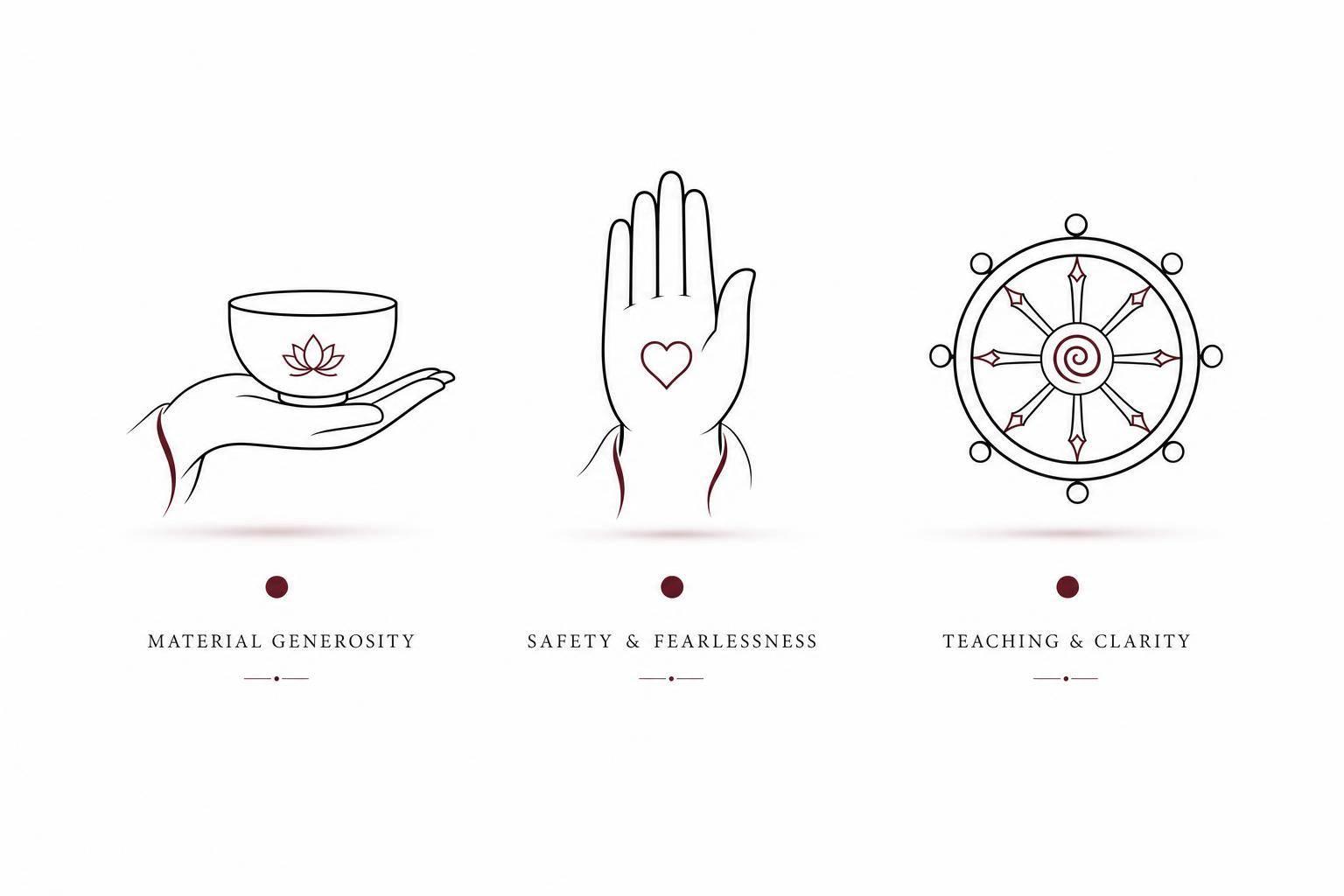
- Āmisa-dāna = giving material help, like food, clothes, shelter, or money
- Abhaya-dāna = giving safety and calm, like protection, non-harming, or staying with someone in distress
- Dhamma-dāna = giving Buddhist teaching, like sharing a verse, a meditation practice, or wise guidance
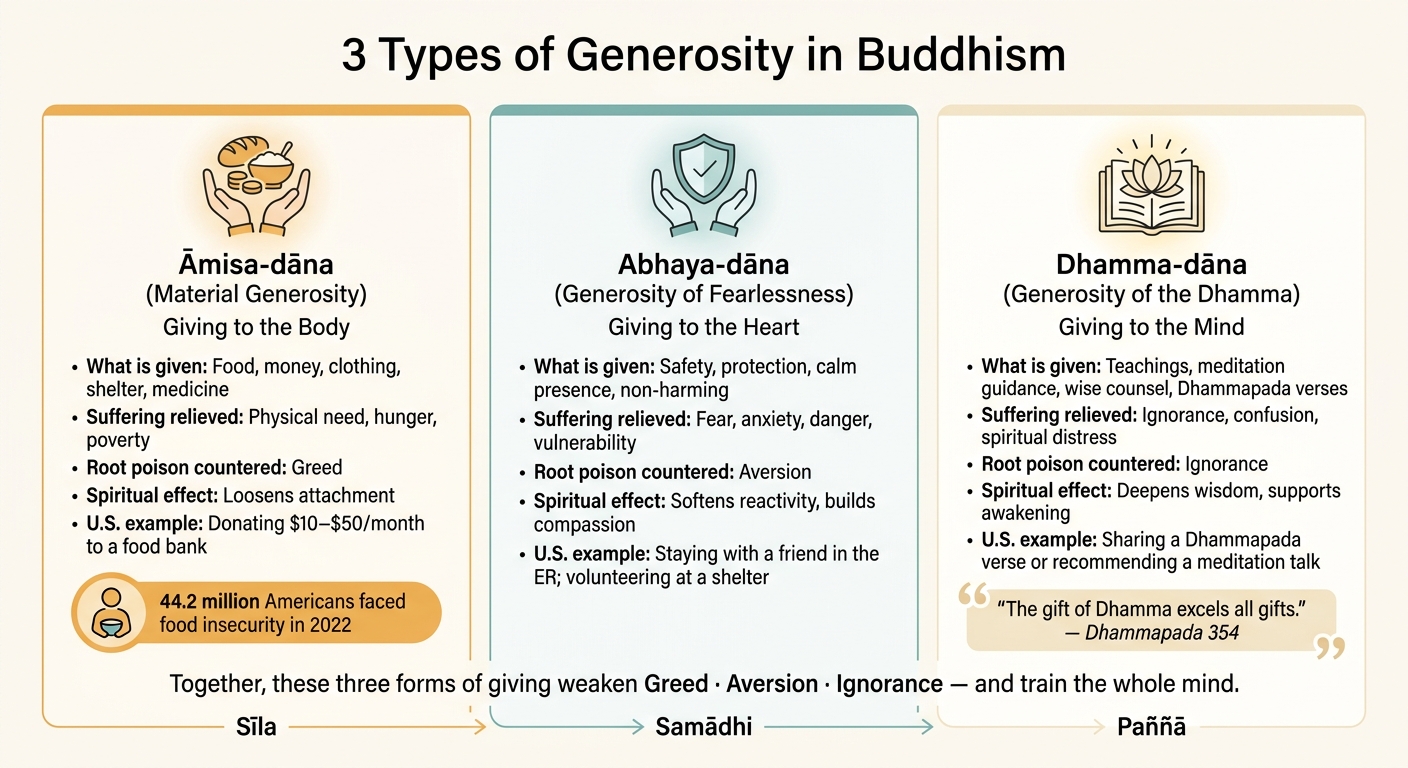
This matters because each type of giving works on a different kind of suffering. For example, a person who lost a job may need groceries, reassurance, and clear guidance at the same time. And in the U.S., material need is not small: 44.2 million people faced food insecurity in 2022.
Just as important, giving changes the giver too:
- Material giving helps me loosen grasping
- Giving safety helps me soften anger and reactivity
- Giving Dhamma helps me work on confusion and ignorance
3 Types of Generosity in Buddhism: Āmisa, Abhaya & Dhamma Dāna
The Joy of Giving: Generosity in Buddhism | Bhikshuni Thubten Chodron
Quick Comparison
| Type | What I give | What it helps with | Simple U.S. example |
|---|---|---|---|
| Āmisa-dāna | Food, money, clothing, shelter, medicine | Physical need and hardship | Donating groceries or giving $10–$50/month to a food bank |
| Abhaya-dāna | Safety, protection, calm presence, non-harming | Fear, anxiety, danger, vulnerability | Staying with a friend in the ER or helping someone being harassed |
| Dhamma-dāna | Teachings, meditation guidance, verses, wise counsel | Confusion, grief, mental suffering | Sharing a Dhammapada verse or recommending a meditation talk |
If I put it simply: one kind of giving helps the body, one helps the heart, and one helps the mind.
Why Generosity Matters in Buddhism
In Buddhism, dāna is a form of mental training. When you give freely, you weaken greed and strengthen wholesome intention. Merit (puñña) is the wholesome result that purifies the mind, so the inner change that happens when you give matters just as much as the gift itself.
That’s why dāna comes first among the perfections and supports ethical conduct and meditation. Generosity opens the mind and helps build qualities like honesty, kindness, and non-attachment. Those qualities, in turn, make ethical conduct and meditation feel more natural.
Traditional teaching puts this deeper effect in simple terms: a single act of giving expresses non-greed, non-hatred, and non-delusion. Generosity turns attention outward, which can make meditation feel lighter and steadier. A mind shaped by giving often feels less burdened, and that directly supports concentration and insight.
The clearest expression of this training begins with material generosity.
1. Material Generosity (Amisa Dana)
What Is Given
Āmisa-dāna is material giving. In plain terms, it means sharing physical things that meet real needs. Traditional texts name common gifts like food, clothing, shelter, and light. They also include bodily gifts, such as blood donation.
How It Relieves Suffering
Material giving eases suffering in the most direct way. Food helps with hunger. Shelter helps with cold. It deals with the problem right in front of you.
And this isn't rare in the U.S. In 2022, 44.2 million people experienced food insecurity.
Everyday U.S. Examples
In daily life, this can look very simple:
- Donating groceries to a food bank
- Giving winter coats to people who need them
- Contributing to a neighbor's medical fundraiser
In Buddhist communities, it may mean offering a meal to a visiting teacher or paying for a retreat scholarship for someone who can't cover the fee. The size of the gift matters less than the habit behind it. A small gift, given with steady care, still counts.
Its Spiritual Significance
The Mahāprajñāpāramitāśāstra describes material generosity as the root of all good dharmas. That idea gives this kind of giving a deeper layer. You're not just handing over an item. You're also training yourself to let go.
Material giving meets immediate needs; abhaya-dāna addresses fear itself.
2. Generosity of Fearlessness (Abhaya Dana)
What Is Given
Where material generosity meets need, abhaya-dāna meets fear.
Abhaya-dāna is the gift of fearlessness: protection and reassurance for beings who feel threatened or vulnerable. You’re giving safety, not a physical item. Sometimes that means direct protection. Sometimes it means offering a calm, nonjudgmental presence when someone feels shaken or exposed.
Nonviolence is itself a gift because it removes fear.
How It Relieves Suffering
Fear is a form of suffering. Abhaya-dāna reduces both actual danger and the distress that comes from feeling unsafe.
You can see this clearly in modern crisis lines and shelters. People often don’t need “stuff” first. They need safety, steadiness, and the sense that they are not alone.
Everyday U.S. Examples
This kind of generosity shows up in plain, everyday moments: staying with a friend in the ER, stepping in when someone is being harassed, or volunteering at a shelter.
It can also be as simple as helping a scared person feel less alone. That quiet steadiness matters more than it may seem.
That inner steadiness leads naturally to Dhamma-dāna.
Its Spiritual Significance
Abhaya-dāna calls for inner discipline. You have to deal with your own anger and fear before you can help settle someone else.
On the spiritual side, this practice builds mettā (loving-kindness) and weakens the habits of greed, hatred, and delusion. Over time, protecting others from harm deepens compassion and softens reactivity. The aim is to become someone other people can trust.
Once fear is eased, the next form of giving addresses confusion itself.
3. Generosity of the Dhamma (Dhamma Dana)
What Is Given
If material gifts meet immediate needs and fearlessness helps soften vulnerability, Dhamma Dana goes deeper. It speaks to the confusion underneath both.
Dhamma Dana is the gift of Buddhist teaching - truth, wisdom, and guidance that help people understand suffering and move toward liberation. In day-to-day life, that might mean explaining the Four Noble Truths to a friend, leading a lunchtime meditation session at work, or pointing someone to a Dharma book or talk that helped you.
The Dhammapada says it with striking clarity in verse 354: "The gift of Dhamma excels all gifts; the taste of the Dhamma excels all tastes; delight in the Dhamma excels all delights..."
How It Relieves Suffering
Dhamma Dana helps reduce anxiety, anger, and grief. It also supports ethical conduct and loosens craving and ignorance by pointing the mind toward impermanence and non-self. In plain terms, it doesn't just comfort people for a moment - it helps them see things in a way that can change how they live.
Everyday U.S. Examples
You don't need a formal teaching role to practice Dhamma Dana. Small acts count.
- Reading a Dhammapada verse with your family
- Offering a calm Buddhist perspective to a coworker
- Sharing a daily verse through Sutta 423
People also give in this way by helping teachings reach others. That can include funding publications, donating Dharma books, supporting meditation centers and teachers, or helping translate and distribute texts. Sometimes the gift is your voice; other times it's the support that lets the teaching travel farther.
Its Spiritual Significance
For the giver, Dhamma Dana deepens understanding through the act of sharing. Teaching has a way of testing what you know. When you prepare to explain an idea clearly, you often see your own gaps - and your own insight grows at the same time.
It also asks for honesty. Classical texts say Dhamma Dana should be offered with a mind free from greed and hatred. That means pausing before you speak and asking yourself: Am I trying to help, or am I trying to impress? That inner check matters.
Practiced again and again, this kind of discipline strengthens wisdom (pañña), compassion, and humility. That is why Dhamma Dana stands as a strong expression of the Dana Parami (Perfection of Generosity).
These differences are clearest in the comparison below.
Quick Comparison of the 3 Types
Each form of dāna answers a different kind of need: material help, safety, or wisdom. Put side by side, they show how generosity can ease suffering at three levels. The table below lays that out clearly.
| Āmisa-dāna | Abhaya-dāna | Dhamma-dāna | |
|---|---|---|---|
| Primary focus | Meeting material needs | Creating safety and reducing fear | Sharing wisdom and guidance |
| What is offered | Food, money, clothing, shelter, medicine | Protection, reassurance, non-harming, reassurance | Teachings, meditation instruction, books, spiritual counsel |
| Suffering relieved | Hunger, poverty, physical lack | Fear, danger, anxiety, vulnerability | Ignorance, confusion, spiritual distress |
| Spiritual effect | Builds non-attachment and the habit of giving | Cultivates compassion, courage, and harmlessness | Supports awakening |
Each one meets people in a different place. Āmisa-dāna and abhaya-dāna help with what is pressing in the moment - being hungry, scared, or unsafe. Dhamma-dāna goes deeper. It speaks to the confusion that keeps suffering in motion. The next section looks at how these three forms work together in spiritual growth.
How All 3 Forms of Giving Support Spiritual Growth
Taken together, these three forms of dāna weaken greed, aversion, and ignorance. Each one meets a different human need. But more than that, they train the whole mind.
Āmisa-dāna weakens greed because it asks you to let go of something you could have kept. That simple act matters. When your grip on money, food, or possessions starts to loosen, the mind often gets calmer too. It has less to guard, less to cling to, and more room for practice. And once attachment starts to soften, the next challenge becomes clear: learning how not to react with harm.
Abhaya-dāna works on aversion. When you choose not to harm - whether by stepping into a tense moment, calming fear, or offering a steady, nonjudgmental presence - you train the heart to protect instead of strike back. That isn’t passive. It takes courage. Over time, this repeated choice of non-harming builds integrity and empathy. Those qualities support meditation because a less reactive mind is usually a steadier mind. And when reactivity eases, it becomes easier to deal with confusion where it begins.
Dhamma-dāna addresses the deepest root: ignorance. Sharing a passage from the Dhammapada with a friend can help someone see how suffering begins and how it can end. A daily Dhammapada verse, like Sutta 423, can serve as a simple, steady form of Dhamma generosity - offering a short pause each day to sit with the Buddha's words. Bit by bit, that kind of repeated contact can change how people view their own habits, impulses, and reactions.
What gives all three their force is the way they support the classical path of sīla (ethics), samādhi (concentration), and paññā (wisdom). Material giving helps build ethical habits. Giving fearlessness strengthens moral discipline and steadies relationships. Giving Dhamma supports the insight that makes liberation possible.
| Form of Giving | Root Poison It Counters | How It Supports the Path |
|---|---|---|
| Āmisa-dāna | Greed | Loosens attachment; builds ethical habits |
| Abhaya-dāna | Aversion | Softens reactivity; stabilizes relationships |
| Dhamma-dāna | Ignorance | Cultivates wisdom; supports insight |
Practicing Dana in Everyday American Life
The same three forms of giving show up in ordinary American life too. You don’t need to be a monk, a scholar, or even part of a formal Buddhist community to practice dāna. Day-to-day choices are enough.
Material generosity can be very simple: giving $10 to $50 a month to a food bank, buying extra groceries for a pantry, bringing a meal to someone who’s sick, tipping well, giving someone a ride, or helping with a chore. The point isn’t to give until it hurts. Give what you can spare. Done with care, this starts to loosen greed.
Fearlessness is about helping people feel safe. In daily life, that might mean walking someone home, cooling down a tense moment, volunteering at a shelter, or staying steady with someone who is grieving or alone. Sometimes the kindest thing you can offer is your calm presence. This helps soften aversion.
Dhamma generosity means sharing something that helps another person see more clearly. That could be a talk you trust, a verse, a short breathing practice, or help getting a local meditation group started. If someone wants a simple daily verse practice, the Sutta 423 app offers one Dhammapada verse each day for quiet reflection; it begins with 423 verses and continues after that. This works against ignorance.
Regular giving matters more than big dramatic gestures. A small act done often can shape the heart more than a one-time display.
| Type | Simple U.S. Example | What It Trains |
|---|---|---|
| Āmisa-dāna | $10–$50/month to a food bank; buying extra groceries or bringing a meal | Loosening attachment |
| Abhaya-dāna | Staying calm in conflict; supporting a domestic violence or refugee organization | Reducing reactivity |
| Dhamma-dāna | Sharing the Sutta 423 app; recommending a helpful Dhammapada reading | Cultivating wisdom |
Conclusion
These three forms make one thing clear: generosity in Buddhism is more than charity.
It shows up in three ways: material giving, giving fearlessness, and giving the Dhamma.
Each one meets a different human need. Material giving helps with physical need. Giving fearlessness eases fear. Giving the Dhamma speaks to confusion and lack of clarity.
At the same time, each form shapes the person who gives. Material giving loosens attachment. Giving fearlessness builds steadiness. Giving the Dhamma deepens insight.
A single act of generosity can lighten the mind and strengthen the path.
FAQs
Can one act include all three types of generosity?
Yes. A single act can include all three kinds of generosity when it isn’t driven by greed, is led by goodwill, and rests on clear understanding.
When that happens, the giving is willing and helpful, not harmful or muddled. It reflects generosity practiced alongside kindness and wisdom.
Which type of generosity matters most in Buddhism?
In Buddhism, there isn’t one form of generosity that stands above the rest. What matters most is the intention behind the act.
That means material giving and the practice of virtue both matter. Each helps loosen attachment and supports spiritual growth.
Do I have to be Buddhist to practice dana?
No. You do not have to be Buddhist to practice dana.
These teachings are shared as practical wisdom for anyone who wants to build generosity, mindfulness, and inner peace in daily life. You don’t need to live in a monastery or call yourself Buddhist to reflect on these ideas and put them into practice.