

Generosity and Inner Peace: Dhammapada Guide
Practical Buddhist guidance on giving: check motives, set limits, speak kindly, and practice small acts of generosity.
I can practice generosity without giving more than I can afford. My starting point: offer one small gift - such as 15 minutes of help - check my motive, and let go of the need for thanks. Giving may ease clinging, but it doesn’t promise peace.
I use Dhammapada verses 223–224 as a guide to giving, truthful speech, and restraint from anger. In daily life, that means:
- Check my intent: Am I giving from care, guilt, or a wish for recognition?
- Keep my limits: Protect my food, housing, health care, time, and energy.
- Respect your choice: Ask what help you want, listen patiently, and accept “no.”
- Reflect afterward: Notice whether my gift helped and how my mind feels, without judging myself.
My aim is care without pressure: <u>give freely, not at the cost of my needs</u>. Generosity can support my practice, but it cannot replace financial, medical, or mental health support.
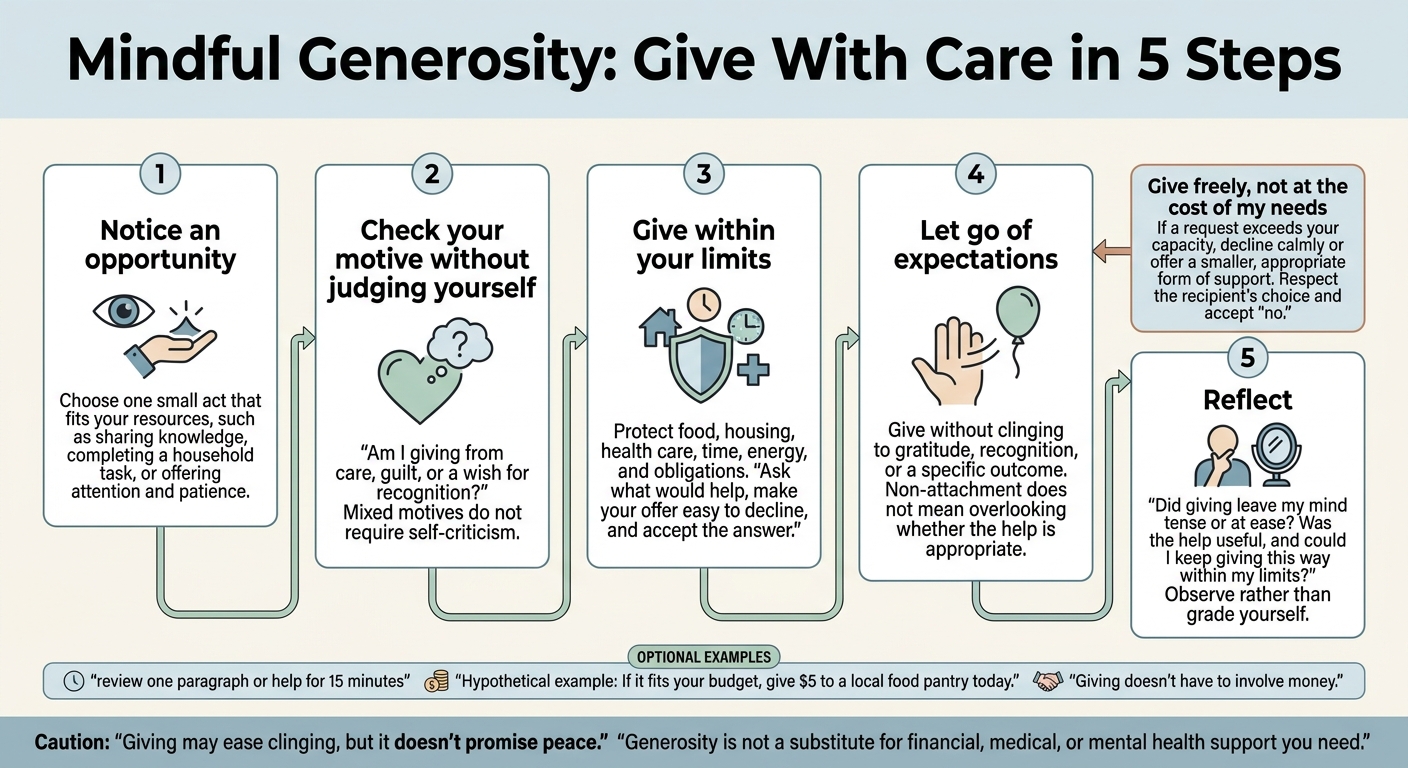
Mindful Generosity: Give With Care in 5 Steps
Give With Care and Set Boundaries
Once your intention is clear, consider whether the request is worth the cost.
In Buddhist ethics, intention matters as much as the gift. Before answering, pause to see what’s guiding you: care, guilt, or pressure.
Kindness or Seeking Recognition
Mixed motives are common. You may want to help and hope someone notices. That wish is a passing motive, not proof that you’re selfish. Notice it without judging yourself so you have room to choose with care.
| Motivation | Likely effect | Reflection question |
|---|---|---|
| Kindness | Less resentment, greater calm | Am I trying to relieve suffering? |
| Gratitude | Contentment, joy | Am I giving out of appreciation? |
| Letting go of greed | Less attachment | Can I let go of this gift without regret? |
| Seeking praise | Anxiety, dependence on others | Would I give if no one knew? |
| Trying to control the outcome | Tension | Am I trying to manage their response? |
| Expecting something back | Resentment | Is this a gift or a hidden transaction? |
Feeling guilty or wanting praise doesn’t mean you need to criticize yourself - or say yes right away. Pause and consider what you can freely offer. Does your choice feel pressured or steady?
Let Go of Expectations, Not Your Needs
Non-attachment means giving without clinging to gratitude, recognition, or a specific outcome. It doesn’t mean overlooking whether the help is appropriate.
Protect your basic needs before giving. Make sure you have enough money, time, and energy for housing, food, health care, and your obligations. Offer only what you can give freely. If a request goes beyond your limits, decline calmly. A clear boundary protects goodwill and peace of mind better than a guilt-driven yes. Let that same clarity guide your words and actions.
Give Through Words and Actions
Once your intention and boundaries are clear, generosity shows up in how you speak and help.
Words, attention, patience, encouragement, and practical help can ease suffering without costing money. Give in ways that protect dignity. Forced help can feel controlling; respectful help, freely accepted, helps both people stay calm.
Speak Kindly and Listen Patiently
“Do not speak harshly to anyone; those who are thus spoken to will retort. Malicious talk is indeed the cause of trouble, and retribution will come to you.” - Dhammapada, verse 133.
This verse warns against harsh speech and retaliation, but it doesn’t address every form of harmful communication. Buddhist right speech also rejects lying, divisive speech, and idle chatter.
Set aside distractions, listen fully, and pause before responding. When you express thanks, name the person’s actual contribution. Encourage them without promising too much. Avoid gossip and humiliation. Give hard feedback privately, and focus on behavior you can observe. These choices can interrupt conflict instead of feeding it.
Ask Before Offering Help
Ask what would help, make your offer easy to decline, and accept the answer. Find out whether the person wants someone to listen, offer advice, or lend a hand. That keeps help useful rather than controlling.
State exactly what you can do and for how long: review one paragraph or help for 15 minutes.
Generosity doesn’t require false praise, agreement with harmful behavior, or more work than you can manage. You can acknowledge someone’s distress without supporting an unsafe choice. If you can’t meet their request, say so clearly and offer a smaller, appropriate form of support.
Practice Giving Each Day
With intention, boundaries, and kind speech in place, make generosity a daily habit. Notice an opportunity, check your motive without judging yourself, give within your limits, let go of expectations, and reflect. Pay attention to how giving affects your mind.
Choose One Small Act of Giving
Start with something small that fits your resources. Share part of a meal, donate a useful possession someone has requested, pass along a professional skill, complete a household task, or offer your full attention and patience. Consider the person’s need and consent, your capacity, and whether the gift will help. Give only what fits your budget, energy, and obligations.
Hypothetical example: If it fits your budget, give $5 to a local food pantry today.
Giving doesn’t have to involve money. Sharing knowledge or listening patiently is equally valid.
Reflect on Your Giving
Take a quiet moment afterward. Ask yourself: Did giving leave my mind tense or at ease? Was the help useful, and could I keep giving this way within my limits? Observe rather than grade yourself. If you feel resentment, consider whether you gave more than you could afford in money, time, or energy.
For a daily reading prompt, Sutta 423 offers one Dhammapada verse each day for quiet reading and reflection, beginning with 423 verses and continuing after that. Read today’s verse, let it settle, and connect your reflection with one small act that fits your circumstances.
Conclusion: Give With Care and Let Go
When you give with clear intent, kind words, and firm boundaries, staying within your limits can feel less reactive and more peaceful.
Generosity is not a substitute for financial, medical, or mental health support you need.
Try one small act of kindness without seeking recognition. Notice what happens in your mind, but don’t expect peace right away. Give with care, then let go of the outcome.
FAQs
Why might I feel uneasy after giving?
Feeling uneasy after giving may come from an unclear intention or attachment to a particular outcome. Buddhist teachings encourage giving out of sincere concern for others, rather than holding tightly to goals or expectations.
Take a moment to reflect on why you gave. Did you give freely, or did cravings or a need for control play a part?
How can I say no without feeling unkind?
Practice Right Speech by setting boundaries calmly and clearly. With the “broken gong” approach, stay silent during conflict to avoid hurtful words. Then respond with clarity and compassion.
Pause to observe your thoughts before speaking. This helps your refusal come from mindfulness rather than an emotional reaction, protecting your inner peace. The Sutta 423 app’s daily verses can help you reflect on how to maintain boundaries with kindness.
How can I be truthful without speaking harshly?
Before you speak, pause, breathe, and check your intentions. If you’re frustrated or angry, staying silent may help you protect your inner peace.
Choose words that are true, gentle, timely, helpful, and guided by goodwill. Respond with kindness instead of striking back. This can counter deception, ease tension, and turn a possible conflict into mindful, compassionate communication.