
10 Simple Ways to Find Peace in a Busy Life
Short, practical mindfulness exercises—breathing, walking, lovingkindness, visualization, and mindful chores—to ease stress and stay present.
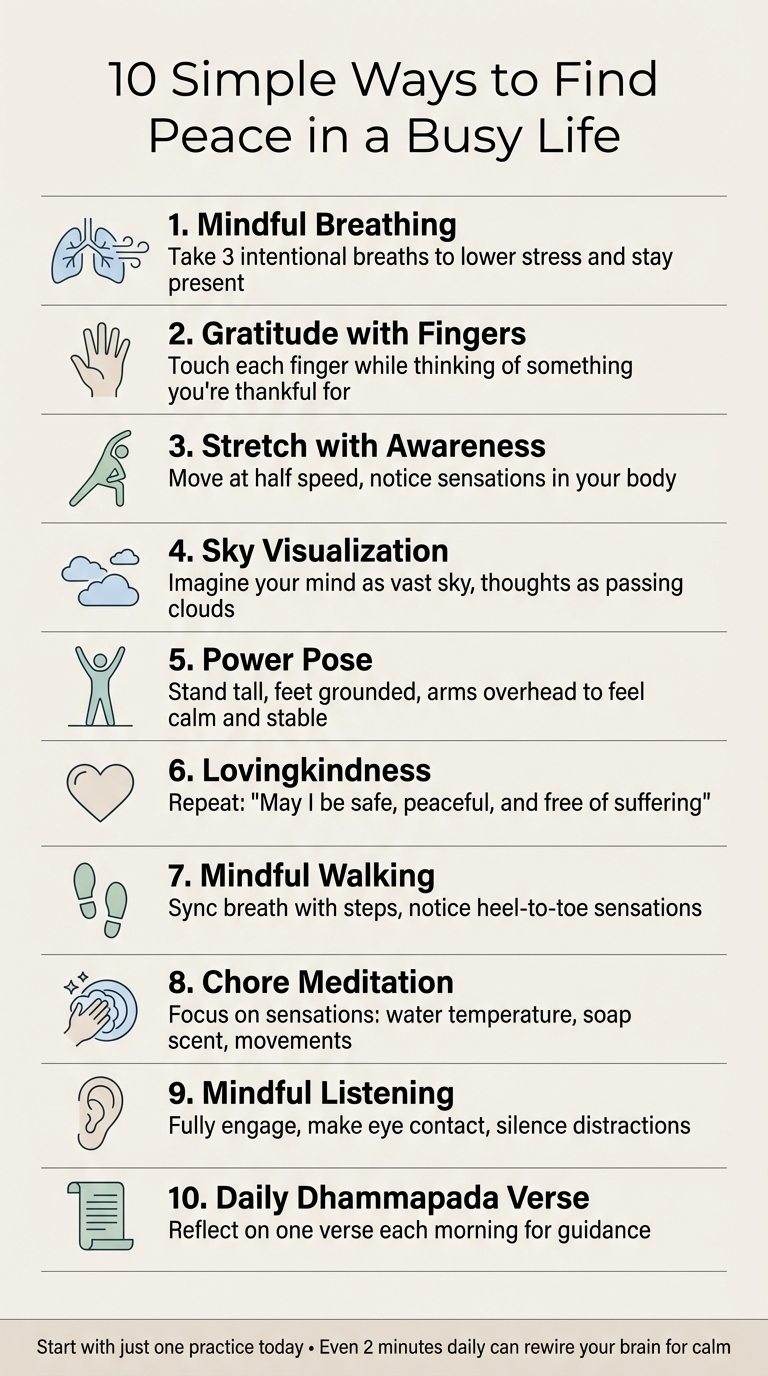
Finding peace in a busy life doesn’t require drastic changes. Small mindfulness practices can make a big difference. This article outlines 10 practical ways to bring calm into your daily routine without stepping away from your responsibilities. Here’s a quick summary:
- Mindful Breathing: Take a few intentional breaths to lower stress and stay present.
- Gratitude with Fingers: Use your fingers to focus on small things you’re thankful for.
- Stretch with Awareness: Simple stretches can ease tension and help you pause.
- Sky Visualization: Picture your mind as a vast sky, letting thoughts drift like clouds.
- Power Pose: Adjust your posture to feel more grounded and calm.
- Lovingkindness: Practice compassion through short affirmations for yourself and others.
- Mindful Walking: Slow down and sync your breath with your steps.
- Chore Meditation: Turn daily tasks into calming rituals by focusing on sensations.
- Mindful Listening: Fully engage in conversations and listen without distractions.
- Daily Dhammapada Verse: Reflect on a verse for guidance and clarity throughout the day.
These techniques are simple, quick, and can fit into any schedule. Even a few minutes of mindfulness daily can reduce stress, improve focus, and create a sense of balance. Start small - try one practice today and notice the difference.
10 Simple Mindfulness Practices to Find Peace in a Busy Life
Mindfulness for Busy People: Quick Exercises for Peace & Presence
1. Practice Mindful Breathing
Your breath is like a built-in tool for finding calm - no extra gadgets required. Mindful breathing involves focusing on the sensations of your breath as it moves in and out, helping you stay grounded in the present moment. This simple practice connects directly to your autonomic nervous system, making it a powerful way to handle stress.
Even in the middle of a hectic day, just three intentional breaths can make a big difference. Norman Fischer, a Zen Buddhist priest, highlights how quickly this can shift your perspective:
Whatever you're feeling will become less compulsive, less driven. There's a measure of detachment and equanimity even after the first breath.
This pause creates space between a stressful trigger - like a challenging email - and your reaction, helping you respond with clarity rather than on impulse.
Here’s how you can try it: Take a slow inhale through your nose, pause briefly, and then exhale while relaxing your shoulders and unclenching your jaw. Notice how your body begins to settle. If you’re in a public setting and want to keep it discreet, use pursed-lip breathing - breathe in normally, then exhale slowly through your mouth with pursed lips. It’s subtle but still effective at calming your system.
For a longer practice, try breath counting: Close your eyes and count "one" as you inhale, "two" as you exhale, continuing up to ten before restarting. If your mind drifts, gently guide it back to the count. Placing a hand over your heart while breathing can also enhance the experience. Feeling your chest rise and fall adds a physical connection that soothes your nervous system and fosters self-compassion.
The beauty of mindful breathing is its flexibility - you can do it almost anywhere. Whether you’re waiting in line, stuck in traffic, or taking a quick break, even five minutes of focused breathing can lower stress hormones and ease tension in your body, especially in your jaw and shoulders.
2. Touch Your Fingers with Gratitude
After practicing mindful breathing, try using your hands to ground yourself further. When stress starts to creep in, your fingers can offer a subtle way to refocus. By combining physical touch with appreciation, you create what mindfulness teacher Bodhipaksa describes as an easy way to bring your attention back to the present:
The starting point for developing mindfulness is to consciously become aware of the sensations of the body; a natural focus for mindfulness.
This method works because physical touch signals to your nervous system that you're safe, which can be especially comforting when your thoughts feel overwhelming [6, 13]. To begin, wiggle your fingers and observe the sensations - maybe you notice tightness, tingling, or even a sense of relaxation. Next, link each finger to something you're thankful for. These don't have to be grand gestures. As the Calm Editorial Team points out:
Gratitude doesn't have to be huge to work; simply notice what feels right.
Here’s a simple way to try this out: the Ten-Finger Gratitude Exercise. For each finger, think of one thing you appreciate - whether it’s your hands themselves, the warmth of your coffee, the comfort of your chair, or even just the steady rhythm of your breath. This practice shifts your focus from feeling overwhelmed to noticing small, positive details in your day.
The best part? This exercise takes less than five minutes, making it an ideal way to reset during a busy day. Whether you’re at your desk, waiting somewhere, or between meetings, this blend of touch and gratitude can snap you out of autopilot and bring you back into the moment. It’s a simple act that turns any moment into an opportunity for mindfulness, echoing the wisdom of the Dhammapada in finding balance in everyday actions.
3. Stand and Stretch with Awareness
This practice turns simple movements into a calming ritual, helping you find a moment of peace amidst the chaos.
When your mind feels cluttered and the endless to-do list weighs you down, standing up and stretching can do more than just ease physical tension - it can also send a powerful signal to your nervous system that it’s okay to relax. Studies show that even a brief 10-minute mindfulness practice can reduce cortisol levels, the hormone tied to stress. Think of stretching as a chance to reconnect with your body and step away from the mental noise.
The key is to slow down. Move deliberately, paying attention to the subtle sensations in your body. Try moving at half your usual speed and notice what changes. Meditation teacher Martin Aylward captures this idea beautifully:
Slowing down conduces to ease, gentleness, and relaxation.
This deliberate slowing down helps you step out of "autopilot mode" and interrupts what Aylward calls the "inner imperative" - that constant drive to keep going and doing. By grounding yourself in the present, you’re better prepared for the next mindful moment.
Need a place to start? Try The Attention Stretch. Raise your arms overhead, roll your neck gently, and wiggle your fingers and toes. Pay close attention to the sensations - maybe you’ll feel tightness melting away in your shoulders or a faint tingling in your fingertips.
For a quicker reset, try the "What's Touching Me" Check. Stand still, take a deep breath, and notice the weight of your body, the texture of your clothes, or the sensation of air brushing against your skin. This simple exercise can anchor you firmly in the present moment.
4. Visualize Yourself as the Vast Sky
When the day feels like too much and your mind is racing with worries, this visualization can help shift your perspective. Imagine your mind as a vast, open sky - boundless and free - extending far beyond the usual confines of daily concerns.
This approach draws inspiration from a Tibetan meditation teaching: "Body like a mountain, Breath like the wind, Mind like the sky". Picture your thoughts, worries, and endless to-do lists as clouds floating through the sky of your awareness. Instead of clinging to them, simply observe as they drift by. Leo Babauta, author of Zen Habits, beautifully describes this shift:
What happens when you open your mind to seeing its vast open nature … is transformational. You are no longer stuck in the smallness of our usual self-centered world. You become free.
This simple visualization offers a way to turn everyday thoughts into moments of clarity.
To start, sit comfortably and take a moment to tune into your surroundings. Gradually expand your awareness, allowing yourself to feel connected to both your inner world and the space around you. As you sit, imagine each thought as a passing cloud. Acknowledge it briefly, then let it float away. Babauta explains this process perfectly:
You can sit in this vast open sky of awareness, and then the cloud of a thought might arise. Instead of getting caught up in the cloud, allow the sky of your mind to observe the thought cloud floating gently by.
This visualization, like other mindfulness practices, can turn ordinary moments into opportunities for inner peace. What makes it so valuable is how flexible it is - you can use it while washing dishes, sipping coffee, or during any brief pause in your day. By nurturing this sense of openness, you create space to approach challenges with clarity and compassion rather than reacting on impulse. If you find yourself caught in a thought, try silently saying the word "sky" to bring yourself back to that feeling of spaciousness.
5. Use a Power Pose
Once you've embraced mindful stretching, take it a step further with a power pose. Your body and mind are deeply connected, and your physical posture can influence how you feel. Stress often shows up as tight shoulders or a hunched stance, signaling tension to your nervous system. By deliberately adjusting your posture, you can create a sense of calm and stability.
Here’s how to try it: stand tall, plant your feet firmly on the ground, and stretch your arms overhead. Focus on the sensations - notice the tightness in your shoulders, the stretch along your sides, and the relief that follows. This simple act keeps you grounded in the moment without straining your body.
Studies show that practices like this can lower cortisol levels and activate your relaxation response. Even dedicating just five minutes to this kind of body awareness can improve your emotional balance and performance.
To deepen the effect, pair your pose with affirmations like: “Inhale calm, exhale worry” or “Right now, this is enough”. You can also practice mindfulness while sitting or walking by paying attention to your posture, the rhythm of your movements, or the feeling of your feet connecting with the ground. These small shifts help you move from reacting to stress to responding with intention and resilience.
The great thing about this technique is its versatility - it works wherever you are. Whether you’re at your desk, waiting in line, or gearing up for a tough conversation, this grounding practice helps you feel steady and centered. It’s a simple way to cultivate inner peace and share that sense of calm with those around you.
6. Practice Lovingkindness
After establishing calm through mindful breathing, grounding, and visualization, practicing lovingkindness takes it a step further by opening your heart and deepening your sense of peace.
When life feels overwhelming, it’s the perfect time to extend kindness - to yourself and to others. Lovingkindness meditation, also called Metta, offers a way to access an inner well of compassion and love. As Ayya Khema explains, this love is abundant but often overlooked in the chaos of daily life.
The practice itself is straightforward: silently repeat phrases like, “May I be safe, peaceful, and free of suffering. May I be happy. May I be healthy. May I be strong and confident.” Begin by focusing on yourself, then extend these wishes to loved ones, acquaintances, and even those you find difficult. Think of it as a ripple effect of kindness spreading outward.
What’s great about lovingkindness meditation is its flexibility. You don’t need a quiet room or special setup. Whether you’re stuck in traffic, waiting in line, or feeling stressed during a meeting, you can take a moment to practice. Studies show that even two to three minutes of lovingkindness meditation can lower cortisol levels and boost feel-good chemicals like serotonin and dopamine. This rewires your stress response and strengthens empathy. If you catch yourself thinking, “I’m such a mess,” try replacing it with, “Today is hard, and I’m doing my best.” Small shifts like these can make a big difference.
Cristina Moon from the Search Inside Yourself Leadership Institute highlights the impact of staying consistent with this practice:
Sticking with loving kindness meditation has made my ability to turn on warmth for myself and others stronger and more flexible. It comes more easily and it's more resilient now.
The popularity of this practice is evident, with Silas Day’s "The 4 Metta Phrases" guided meditation earning a 4.9/5 rating on InsightTimer. It’s a simple yet effective tool for cultivating compassion.
The beauty of lovingkindness lies in its ability to soften even the hardest of days. As Nguyen Anh-Huong and Thich Nhat Hanh explain:
The longer you practice with this connection, the more your heart will be softened and opened.
7. Walk Mindfully
Mindful walking is about turning something as ordinary as walking into a calming, meditative experience. Instead of rushing through steps on autopilot, this practice invites you to truly experience each movement, grounding yourself in the present moment. As Thich Nhat Hanh beautifully explains:
When we walk in mindfulness, each step creates a fresh breeze of peace, joy, and harmony.
The goal here isn’t about getting somewhere - it’s about fully immersing yourself in the act of walking.
To begin, try syncing your breath with your steps. Take one step as you inhale and another as you exhale. Pay attention to the sensation of your foot touching the ground, from heel to toe. You might silently think, "heel, foot, toes, lift", to keep your focus steady. Let your shoulders relax and keep your gaze soft, allowing this rhythm to bring a sense of calm and presence to your movements.
The beauty of mindful walking is that it fits into everyday life. You don’t need a quiet park or meditation hall. Whether you’re walking from your car to the office, between meetings, or through a crowded airport, these moments can become opportunities for mindfulness. Research backs this up: a 2013 study revealed that even 10 minutes of mindful walking each week can reduce stress. Another study with elderly Thai adults found that practicing walking meditation two to three times a week improved both mood and cardiovascular health.
Elisha Goldstein highlights another benefit, noting that mindful walking helps expand the gap between stimulus and response. This pause allows you to respond thoughtfully rather than react impulsively. Even in a bustling city, you can find a sense of refuge by slowing your pace just enough to stay present without drawing attention to yourself. Let this practice carry the calm from earlier exercises into your daily routine, offering a steady way to nurture peace as you move through your day.
8. Turn Everyday Tasks into Meditation
Everyday chores, like washing dishes or folding laundry, can be transformed into moments of mindfulness. Drawing from the Dhammapada's wisdom, this approach emphasizes that even the most routine activities hold the potential for calm and clarity.
You don't need a special setting or tools to practice mindfulness. Tasks you might consider mundane - like scrubbing a pot, sweeping the floor, or folding towels - can become opportunities to cultivate peace. As Thich Nhat Hanh wisely said:
When washing the dishes, wash the dishes.
This means bringing your full attention to the task at hand, allowing it to become an act of calm awareness. By focusing on your senses - the warmth of the water, the scent of the detergent, or the rhythm of your movements - you can transform a routine moment into a meditative experience.
Research supports this practice. A 2015 study involving 51 students divided participants into two groups: one received mindful instructions, while the other followed basic guidelines. The mindful group experienced a 27% drop in nervousness and a 25% boost in mental inspiration. Their secret? Paying attention to simple details like the temperature of the water and the fragrance of the soap, instead of rushing through the task mindlessly.
The beauty of this practice lies in its accessibility. Household chores are unavoidable, so they naturally offer a chance to integrate mindfulness into your daily routine without carving out extra time. Studies suggest that dedicating just 10 to 15 minutes of mindful attention to tasks like vacuuming or wiping counters can lead to brain changes that enhance self-control and lower stress levels. If your mind begins to wander to worries or errands, gently redirect your focus to the sensations of the task - without judgment.
9. Practice Mindful Listening
In a world filled with constant noise and distractions, genuine listening is a rare and powerful act. Mindful listening isn’t just about hearing words - it’s about fully engaging your senses to understand others while also making space to acknowledge your own thoughts and feelings without judgment.
The Dalai Lama expressed this idea perfectly:
When you talk, you are only repeating what you already know. But if you listen, you may learn something new.
Much like mindful breathing or meditative movement, mindful listening helps anchor you in the present. The journey begins with listening to yourself. Before you can truly hear others, take time to sit with your own emotions. Don’t rush to fix or suppress them. Thich Nhat Hanh emphasized that when we pause the endless chatter of our minds and turn inward, we can face and embrace our suffering instead of avoiding it. This self-awareness creates a foundation for healing and inner peace.
When extending this mindfulness to interactions with others, start by silencing distractions - put your phone aside and focus entirely on the person speaking. Make eye contact, nod, and offer small affirmations to show you’re present. Avoid immediately offering solutions; instead, ask if they’re seeking comfort or advice. Open-ended questions like “How did that make you feel?” encourage deeper conversations. Even the sounds of daily life - a ringing phone, a ticking clock, or birdsong - can become moments to practice mindfulness. When you hear these sounds, pause, take three deep breaths, and silently remind yourself:
Listen, listen. This sound brings me back to my true home.
This approach not only creates a space where others feel heard and valued but also helps you stay grounded in the present. It builds trust, prevents misunderstandings, and promotes a sense of stability. By practicing mindful listening, you reduce suffering for yourself and those around you, enriching both your relationships and your daily mindfulness practice.
10. Reflect on a Daily Dhammapada Verse
Incorporating a daily Dhammapada verse into your routine is a simple yet powerful way to cultivate mindfulness and intentionality. With 423 verses packed with practical advice, the Dhammapada offers straightforward guidance for calming the mind, managing emotions, and finding peace in everyday life. Unlike lengthy meditations or intricate rituals, reflecting on a single verse takes just a few minutes and serves as a steadying mental anchor.
The text is divided into 26 thematic chapters, or Vaggas, making it easy to find insights tailored to specific challenges. Feeling overwhelmed by anger or struggling with indecision? You can turn to a relevant chapter for clarity. Many verses also include background stories that illuminate the Buddha's teachings, adding depth and context.
Each morning, choose a verse that resonates with you. Read it slowly and allow its meaning to guide you throughout your day - whether you're navigating a tough meeting, sitting in traffic, or making decisions. For instance, Verse 380 offers this timeless reminder:
One is one's own protector, one is one's own refuge. Therefore, one should control oneself, even as a trader controls a noble steed.
This practice isn't about memorizing verses. It's about letting their wisdom gently infuse your thoughts and actions as you go about your day.
Conclusion
Finding peace doesn’t require hours of meditation or a complete lifestyle overhaul. The ten practices shared in this article - like mindful breathing or reflecting on a verse from the Dhammapada - are simple ways to bring calm into your daily life. Whether it’s during a quick coffee break, a walk to your next meeting, or even while washing your hands, these moments of mindfulness can fit seamlessly into your routine.
Making these small adjustments consistently can create a strong foundation for inner peace. Studies show that practicing mindfulness for just two minutes a day can be more effective than infrequent, longer sessions. The brain thrives on repetition, and over time, these short, daily practices can rewire your mind to respond with calm automatically. In fact, after about six months of regular practice, mindfulness becomes less of an effort and more of a habit that helps you stay grounded and less overwhelmed.
These methods, inspired by Buddhist teachings, remind us that peace is built one moment at a time. Tools like the Sutta 423 app can help you stay consistent by offering a daily verse from the Dhammapada - a quick, reflective pause that anchors your day in timeless wisdom. As Thich Nhat Hanh beautifully said:
"I have arrived, I am home" means: I don't want to run anymore. I've been running all my life, and I've arrived nowhere. Now I want to stop. My destination is the here and now, the only time and place where true life is possible.
You don’t have to start big. Focus on one small practice today. Feel the warmth of your coffee mug. Take three deep breaths between tasks. Identify and name an emotion as it arises. These tiny, mindful actions create what mindfulness teachers call a "stable solid ground" - a place of refuge you can return to when life feels overwhelming. Relaxation is the starting point for healing, and these practices can bring moments of calm throughout your day.
Peace isn’t a one-time achievement - it’s something you nurture, moment by moment, breath by breath, every single day.
FAQs
Which practice should I start with if I’m overwhelmed?
Feeling overwhelmed? It might be time to hit pause and carve out some quiet moments for yourself. Even small practices, like paying attention to your breath or walking mindfully, can make a big difference. Start with something simple - try a breath awareness exercise or just take a moment to recognize your need for stillness. These little steps can bring a sense of calm and clarity, even in the middle of a hectic day.
How do I stay mindful in public without it feeling awkward?
To practice mindfulness in public without drawing attention, try subtle techniques like focusing on your breath, tuning into physical sensations, or observing your surroundings. For instance, during a commute, you can take slow, deep breaths or pay attention to the way your feet connect with the ground. These quiet, unobtrusive actions help you stay anchored in the present moment. Remember, mindfulness is about cultivating awareness within yourself, not about how others perceive you. It’s an internal practice aimed at fostering calm and balance.
What can I do when my mind keeps wandering during these practices?
It's completely natural for your mind to drift during these practices. When it happens, gently guide your attention back to your breath or the sensations in your body. Acknowledge the importance of stillness and make a conscious effort to slow down, allowing yourself to reconnect with the present moment. Be patient with yourself - redirect your focus without any self-criticism. Over time, this approach helps strengthen your ability to stay present.