
Dhammapada Wisdom on Mindfulness and Seeing
Pause, check intention, and choose actions that reduce harm using Dhammapada guidance on mindfulness, impermanence, and wise response.
I read the Dhammapada’s message this way: pause, check my intention, and choose actions that reduce harm. The goal is liberation, not just feeling calm.
I keep three points in view:
- Stay alert: Mindfulness and concentration help me notice impulses before acting.
- See clearly: Verses 277–279 point to impermanence, unsatisfactoriness, and not-self - without removing responsibility for my actions.
- Put it into practice: I separate facts from assumptions, watch desire and anger, and reflect on one verse each day.
<u>Calm is support, not the finish line.</u> Whether I’m answering criticism or resisting an impulse purchase, the practice is to see what is happening before choosing my response.
Dhammapada by The Buddha - Chapter 2 - Mindfulness
Heedfulness, Attention, and Calm
In Chapter Two, verses 21–32, heedfulness (appamada) means ethical vigilance: paying attention to what each action strengthens. It checks intention before action and avoids feeding harmful habits. Through this practice, calm attention becomes discernment.
How Mindfulness and Concentration Work Together
Mindfulness keeps the purpose of practice in view. Concentration steadies attention long enough to see clearly. Together, they help you notice an impulse, stay with it, and examine its intention and likely result before choosing a wise response.
Steady a Restless Mind
Steady attention interrupts anger and distraction so you can observe calmly. When your mind wanders or tension builds, return to your breath or the task at hand. Then look carefully again.
When criticism stings, mindfulness reveals not only hurt but the urge to retaliate. Seeing that urge lets you weigh the criticism before answering.
That pause helps you notice change before the mind clings.
Seeing Impermanence, Unsatisfactoriness, and Not-Self
That pause makes room for deeper understanding. Verses 277–279 call for wisdom, not calm alone. Calm settles the mind; insight shows why clinging leads to suffering. Mindfulness is more than paying attention. It is a way to see impermanence, unsatisfactoriness, and not-self.
Notice Change and the Limits of Clinging
Mindfulness turns attention toward how things change. Verse 277 teaches that conditioned things are impermanent (anicca); verse 278 describes them as unsatisfactory (dukkha). What changes cannot provide lasting security.
Observe pleasant and unpleasant feelings without trying to hold them still. Give each feeling a simple label, then notice whether its strength or quality changes. You don't need to reject pleasure or push discomfort away. Instead, recognize the limits of expecting either to stay as you want it.
Not-Self and Ethical Responsibility
Verse 279 teaches that all phenomena are not-self (anatta). Seeing thoughts and feelings as passing events can loosen the habit of treating them as a permanent identity. Notice what is present without making it who you are.
Not-self does not cancel ethical responsibility. The Dhammapada says mind leads action, so intentions and conduct still matter. Not-self is no excuse for harm; it supports closer attention to what you intend and how you act.
Make Wise Decisions Through Clear Seeing
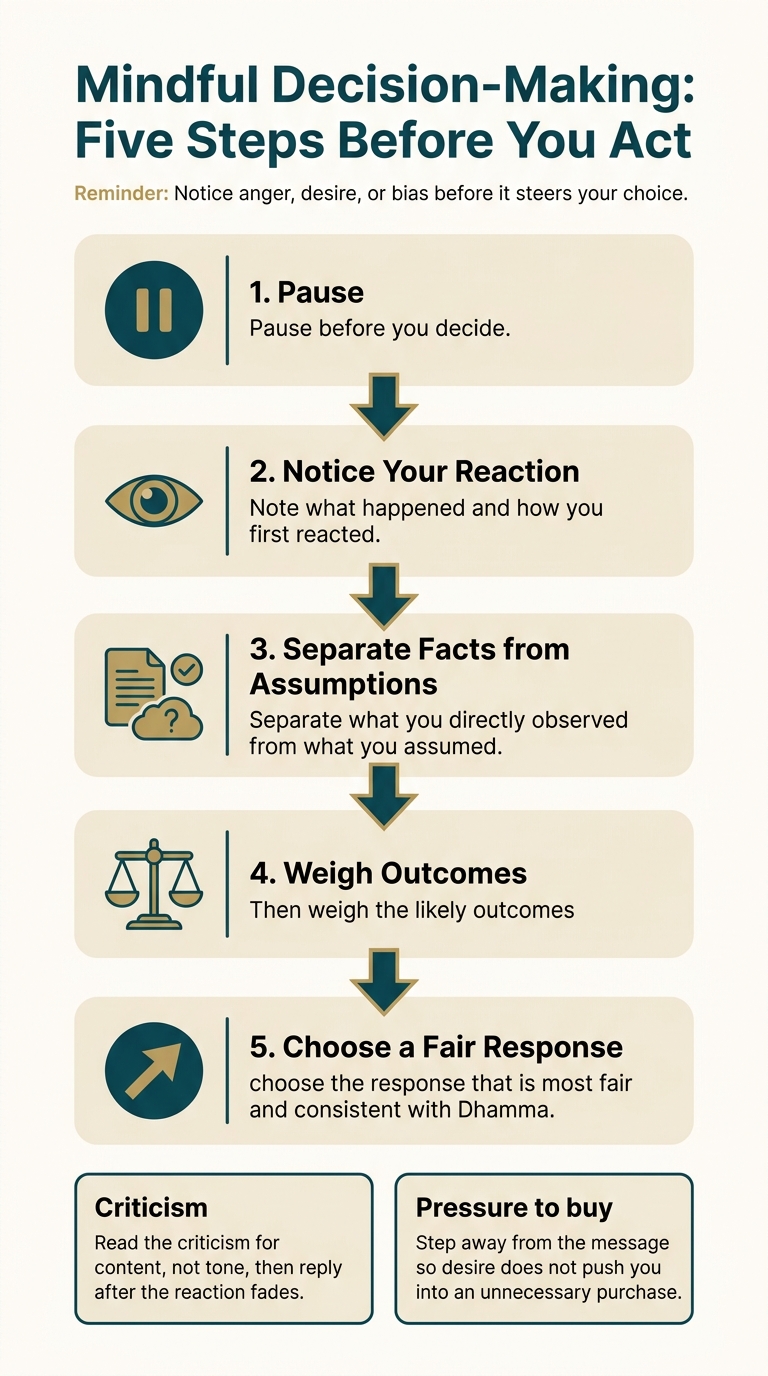
Mindful Decision-Making: Five Steps Before You Act
Clear seeing matters most when a snap decision could give bias the upper hand. Verses 256–257 warn against hasty judgment and stress impartiality. Steady awareness helps you spot anger, desire, or bias before it steers your choice. In daily life, this means judging fairly without rushing.
Pause, Check Facts, and Weigh Outcomes
Pause before you decide. Note what happened and how you first reacted. Separate what you directly observed from what you assumed. Then weigh the likely outcomes and choose the response that is most fair and consistent with Dhamma.
Handle Criticism and Pressure to Buy
That same pause helps when words or ads push you to react fast.
With a tense work email, check its claims against the facts. Read the criticism for content, not tone, then reply after the reaction fades.
Under pressure to buy something you do not need, notice desire before acting on it. Step away from the message so desire does not push you into an unnecessary purchase.
Daily Practice and Key Takeaways
Clear seeing matters when it shapes what you do each day. Mindfulness steadies attention; calm supports observation; wisdom guides action. These develop through practice and ethical discipline - not mindfulness alone. Avoiding harm helps settle the mind and makes observation clearer.
Bring Awareness to One Daily Activity
Paying attention each day trains clear seeing, which supports wiser choices. Pick one routine activity, such as walking. Notice sensations, pleasant or unpleasant feelings, and thoughts that wander. When you get distracted, gently bring your attention back. Watch how each sensation changes.
Before an important action, check your intention. Afterward, ask whether your response reduced confusion or harm. This brings ethics, concentration, and wisdom together, turning mindfulness into clear seeing in everyday life.
Read and Reflect on One Verse Each Day
For a simple daily rhythm, Sutta 423 offers one Dhammapada verse each day for quiet reflection.
Read one verse slowly and ask:
What can I observe before reacting?
Return to that question during the day, then review your response.
FAQs
How can I tell calm from genuine insight?
Pay attention to your intention and approach. Insight comes from observing your present experience with curiosity and care - not from trying to force yourself into a calm state. Chasing results, judging yourself, or getting caught up in analysis can signal overthinking.
Notice whether sensations or emotions feel pleasant, unpleasant, or neutral. Let them pass without holding on. If you start picking apart the details, gently bring your attention back to the verse or your breath.
Does accepting impermanence mean being passive?
No. Accepting impermanence is an active, disciplined practice - not resignation. The Dhammapada teaches that seeing how all things change helps you act with clarity, purpose, and strength.
When you recognize that events and feelings keep shifting, you can stay steady instead of reacting on impulse. That gives you room to choose responses that match your values, rather than letting passing emotions or circumstances steer your actions.
How can I stay mindful during strong emotions?
When strong emotions come up, meet them with gentle awareness, not judgment or avoidance. Notice your physical sensations, thoughts, and feelings. Before you respond, pause to identify your intention and choose an action with care.
If an emotion feels overwhelming, use your breath as an anchor. Notice whether the emotion feels pleasant, unpleasant, or neutral. Observe it with curiosity, giving yourself room to process it without letting it control your behavior.