

Dhammapada Verses on Path from Suffering to Peace
Practice Dhammapada verses for a week to pause before reacting, loosen craving, and act with calm ethical clarity.
I read the Dhammapada’s path to peace as a practice: pause before reacting, avoid harm, and loosen the need to control outcomes. Start with one verse group for 7 days, and notice how it changes your next response - not whether it removes every painful feeling.
These five groups draw from the collection’s 423 verses:
- Verses 1–2: Notice how intentions shape speech and action.
- Verses 212–216: Separate caring and practical needs from craving.
- Verses 21–25 and 33–37: Train attention and pause before acting on impulse.
- Verses 277–279: Observe change, the limits of lasting satisfaction, and not-self.
- Verses 5, 96, and 183: Choose non-hatred, ethical conduct, and calm action.
My focus is less clinging, not less caring. <u>Peace does not mean suppressing feelings or accepting harm.</u> These practices can support daily reflection, but they do not replace care, safety, or outside help.
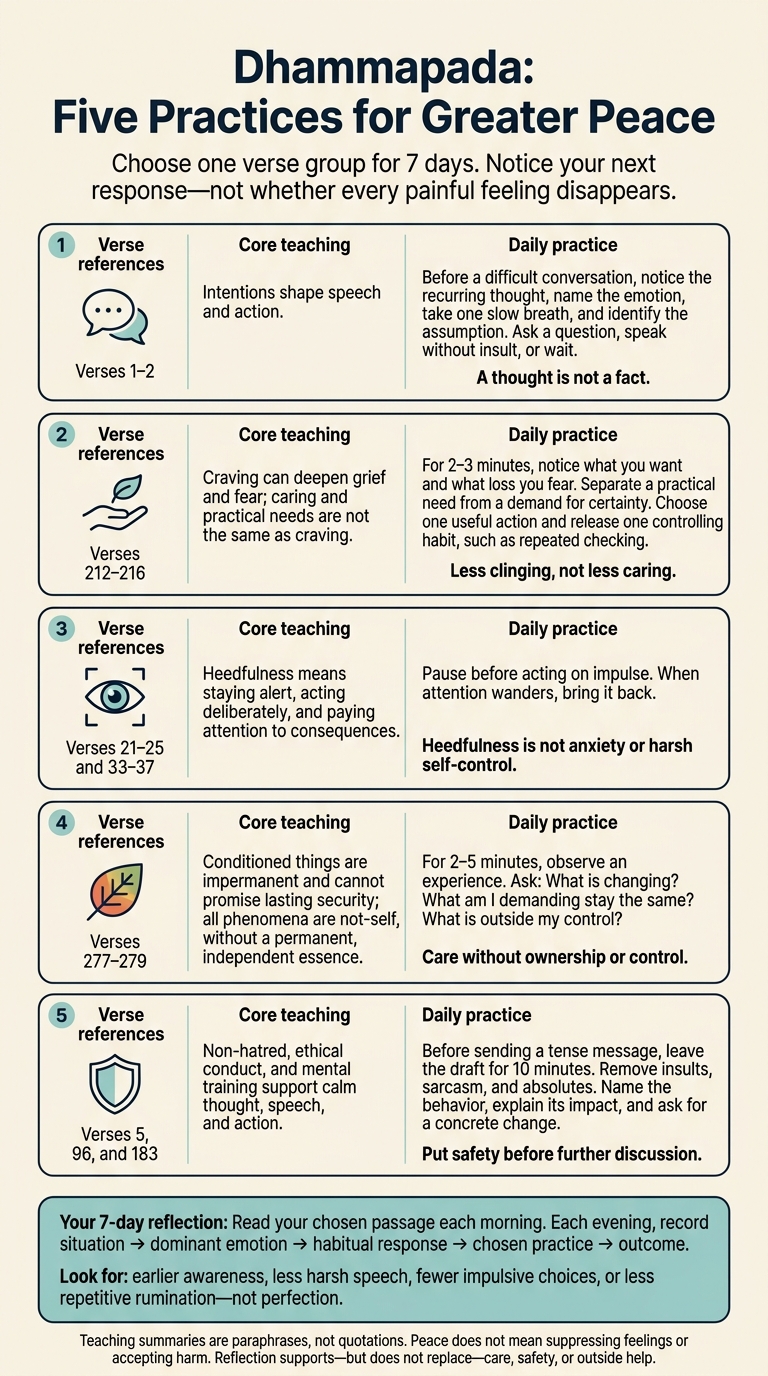
Dhammapada: Five Practices for Greater Peace
The End of Desire | A Timeless Path to Inner Peace (Dhammapada Wisdom)
How to Read and Apply These Verses
Each entry includes verse references, a paraphrase, the core teaching, a daily practice, and a link to inner freedom. Use each verse to trace where suffering starts, what keeps it going, and what helps loosen its hold. A paraphrase is an interpretation, not a quotation. When quoting directly, name the translator immediately, since English translations vary.
Take one passage at a time. Read slowly, identify the habit or ethical quality it points to, and notice where that shows up in your day. Then choose one small response. Stay with the same verse for several days if you need to.
Mental habits can intensify distress, but they don’t explain every hardship.
Illness, bereavement, discrimination, abuse, accidents, and financial hardship can occur independently of a person’s thoughts.
These teachings ask you to notice whether rumination, resentment, fear, or craving adds a second layer of suffering. They are not a reason to blame yourself. Practice does not replace medical care, psychotherapy, social support, legal protection, or material assistance.
Here, inner freedom means having more space between an impulse and an action. It means being less ruled by craving or aversion and better able to act according to your values. It does not promise constant happiness or a life without pain.
For seven days, record the situation, your dominant emotion, your habitual response, your chosen practice, and the outcome. Look for earlier awareness, less harsh speech, fewer impulsive choices, or less repetitive rumination - not a perfect record. Use the opening verses to examine how thought shapes suffering and release.
1. Verses 1–2: How the Mind Shapes Experience
Paraphrase: A mind shaped by hostility or confusion can lead to harmful words and actions - and suffering can follow. A clear, kind mind supports wholesome action. These verses address intention and its effects, not mind-over-matter claims. They set the starting point for the whole path: the mind sets the tone for what follows.
The verses use two images: suffering follows an unwholesome mind like a wheel following an ox’s foot; well-being follows a wholesome mind like a shadow. An impure mind means a state influenced by greed, hatred, or confusion. It isn’t a permanent identity or a moral label.
Before your next difficult conversation, notice the thought that keeps returning. Name the emotion it brings, take one slow breath, and identify the assumption behind it. Then choose a careful response: ask a question, speak without insult, or wait.
Don’t force the thought away. See it as a thought, not a fact, to make room between impulse and response. From here, the teaching turns to craving, which deepens grief and fear.
2. Verses 212–216: How Craving Feeds Grief and Fear
Verses 212–216 move from what is loved to delight, sensual desire, and craving. Verse 216 states:
“From craving springs grief, from craving springs fear.”
Craving (taṇhā) means “thirst”: compulsive wanting. Losing something cherished can bring grief. Anticipating that loss can bring fear. Clinging deepens both when we expect something that changes to give us permanent security. But not every desire is craving.
Ordinary needs and caring intentions are not craving. Food, shelter, safety, and medical care deserve attention. The difference lies in acting with care rather than making your well-being depend on controlling the outcome. Letting go of attachment doesn't mean rejecting love, neglecting duty, or accepting harm.
For two or three minutes, observe one attachment. Notice what you want, what loss you fear, and where you feel tension. Separate the practical need from the demand for certainty. Then choose one useful action and let go of one controlling habit, such as repeated checking. This gives the mind more space before it reacts. Let sadness or fear be present; mindful attention can make room for these feelings without suppressing them. Notice craving as something you can work with, rather than something you must obey.
3. Verses 21–25 and 33–37: Heedfulness and Mind Training
Heedfulness (appamāda) means staying alert, acting deliberately, and paying attention to consequences. In verses 21–25, it works alongside effort, discipline, and restraint. It isn't anxiety or harsh self-control. It's the pause before a harmful act - the chance to interrupt craving before it becomes action. While craving pulls the mind outward, heedfulness brings it back to choice. Heedlessness, by contrast, follows impulse and prolongs suffering.
"By effort and heedfulness, discipline and self-mastery, let the wise one make for himself an island which no flood can overwhelm." - Dhammapada Verse 25
Verses 33–37 shift the focus to training an unsteady mind. This puts heedfulness into practice: training attention weakens the habits that keep suffering active. When attention wanders, bring it back.
That steadiness prepares the mind for the next teaching: seeing clearly what changes, fails to satisfy, and cannot be owned.
4. Verses 277–279: Impermanence, Unsatisfactoriness, and Non-Self
Once attention settles, these verses turn to what it reveals: change, instability, and the limits of control.
Verse 277 teaches that anything produced by causes and conditions is impermanent (anicca). Bodies, thoughts, feelings, and relationships all change.
Verse 278 describes conditioned things as unsatisfactory (dukkha). This doesn't mean life is only pain. It means experiences that change can't promise lasting security.
Verse 279 goes further: all phenomena are not-self (anattā), not just conditioned things. This rejects a permanent, independent essence - not the existence of people. You still have a history, relationships, and responsibilities, even though no fixed self can be found in the changing body and mind.
For 2–5 minutes, observe an experience without trying to hold it still. Test these teachings through direct observation rather than accepting them only as beliefs. Ask yourself:
What is changing? What am I demanding stay the same? What is outside my control?
Notice both the experience itself and the tension that comes from resisting change.
Less clinging means caring without ownership or control. Loosening attachment to identity and outcomes makes room for compassion, responsibility, and clearer action. It also prepares the shift toward non-hatred and peace. Actions still have consequences.
5. Verses 5, 96, and 183: Non-Hatred, Ethics, and Peace
After presenting anger as changeable and not-self, the text turns to how we respond. Verse 5 teaches that hatred ends through non-hatred, not more hatred. This calls for discipline, not acceptance of harm. Refusing revenge can still mean ending an unsafe conversation, documenting misconduct, or seeking protection.
Before sending a tense message, leave the draft alone for 10 minutes. Remove insults, sarcasm, and absolutes. Separate what happened from what you assume. Name the specific behavior, explain its impact, and ask for a concrete change. If threats or abuse are involved, put safety before further discussion.
Verse 183 lays out the training: avoid evil, cultivate good, and purify the mind. Hold back harmful speech, practice honesty and kindness, and examine resentment before acting. When you see anger as a passing state, it has less power to define you.
Verse 96 describes the liberated person as calm in thought, speech, and conduct. Read together, these verses link non-hatred and ethical restraint to calm action rooted in inner freedom. Check those three areas: Is ill will shaping my thoughts? Are my words truthful, and do they avoid escalating the conflict? Does my action protect others without increasing harm?
A calm tone alone is not liberation. Nibbāna means uprooting greed, hatred, and delusion - not simply sounding composed.
Conclusion: Putting the Teachings Into Practice
The path from suffering to peace starts with recognizing craving, practicing restraint, and building insight. Awareness helps you notice reactions. Understanding names craving, fear, and attachment. Discipline interrupts harm, while mindfulness gives you room to pause. Wisdom helps you see impermanence and loosen your grip.
Choose one verse group to practice for seven days. Read it each morning and identify one behavior it speaks to. Each evening, note whether it changed how you responded.
Once or twice a day, keep a craving log. Record the trigger, what you wanted, the feeling, the impulse, and what happened if you paused.
Look for small signs of change: noticing craving sooner, pausing before speaking, or recovering from disappointment more easily. These shifts signal growing peace. Sutta 423 offers one Dhammapada verse each day for quiet reading and reflection, giving you a daily prompt for practice.
Peace grows through non-hatred, ethical conduct, mindfulness, insight, and gradual letting go - not forced positivity or emotional suppression. Difficult feelings may still be present, but they don't have to decide your next action. For depression, trauma, addiction, suicidal thoughts, or danger from another person, use Dhammapada reflection alongside professional care - not in place of it.
FAQs
Which Dhammapada verse group should I start with?
There’s no set order to follow. Choose a verse that speaks to how you’re feeling: one on anger when you’re frustrated, or one on craving or a distracted mind when you’re restless.
If you prefer some structure, the Sutta 423 app delivers one verse a day. It guides you through the full collection over a year, giving you time to reflect on each verse.
How can I distinguish letting go from avoiding problems?
The difference comes down to awareness and engagement. Letting go means actively and mindfully releasing your attachment to temporary outcomes or the need for control - while still taking part in life. This practice builds wisdom and inner freedom.
Avoiding problems means pulling away from challenges, often through passivity or indifference. That retreat can mean neglecting ethical action when it’s needed. Letting go, by contrast, means facing life’s experiences without trying to make them permanent.
What if mindfulness makes difficult feelings stronger?
Difficult feelings can surface during mindfulness. That’s a natural part of practice, not a setback. Instead of pushing emotions away or forcing yourself to be still, notice them calmly and without judgment.
Feelings come and go. Seeing them as passing processes can help you observe them without treating them as part of who you are. This may lessen their hold on your actions. With steady practice, intense moments can become chances to better understand your feelings.