
Dhammapada Verses on Joy and Simplicity
Dhammapada verses on contentment, solitude, renunciation, calmness, and present awareness as a guide to lasting, simple joy.
Happiness doesn’t come from what you own - it comes from how you live. The Dhammapada, a collection of 423 ancient verses, teaches that joy and peace are found through mindfulness, simplicity, and letting go. Here’s what you need to know:
- Contentment: True wealth isn’t material - it’s being satisfied with what you have.
- Solitude: Spending time alone fosters inner calm and clarity.
- Renunciation: Letting go of fleeting pleasures leads to lasting peace.
- Calmness: Releasing the need to win or compare yourself to others brings ease.
- Mindfulness: Staying present helps control the mind and find steady happiness.
The Dhammapada reminds us that joy is about simplifying life, focusing on the present, and appreciating what’s already within. Tools like the Sutta 423 app can help you reflect on these teachings daily.
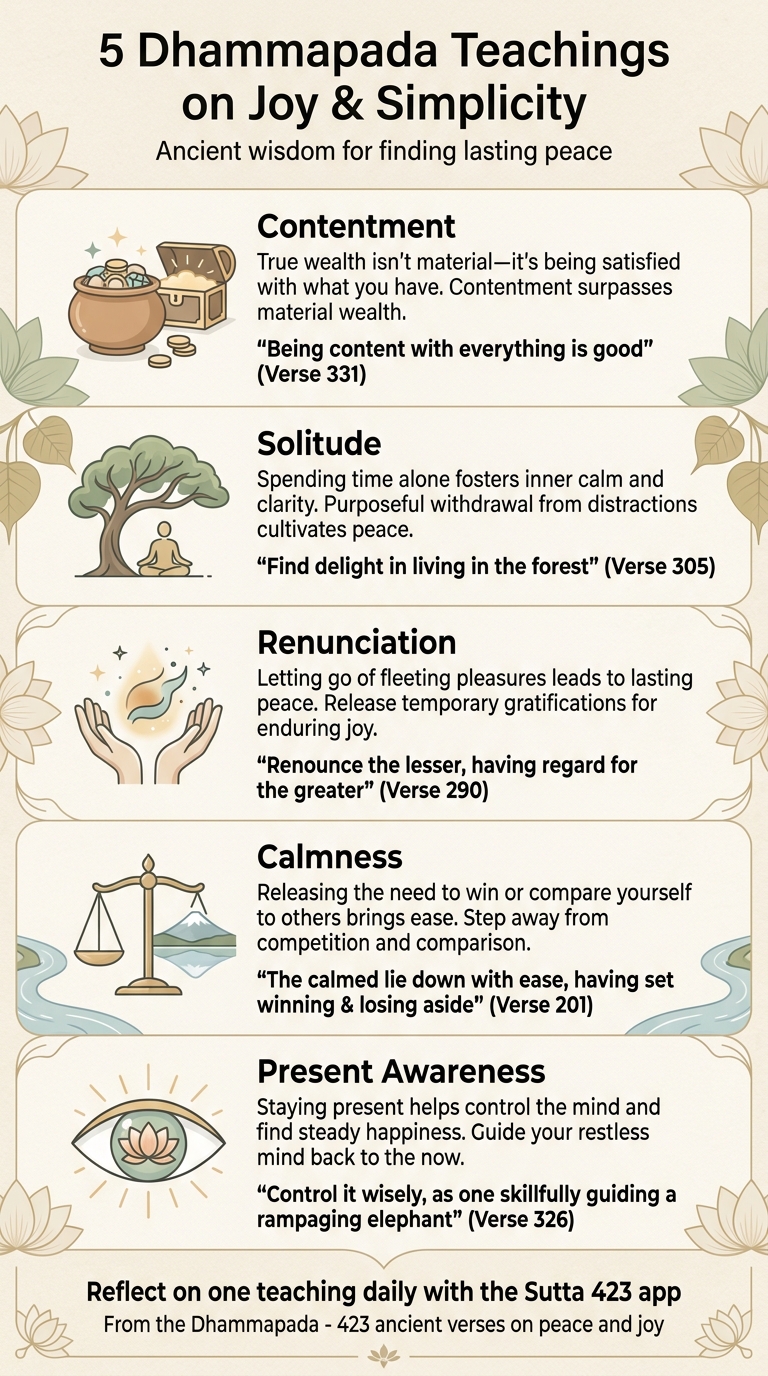
5 Dhammapada Teachings on Joy and Simplicity
1. Contentment
Finding Wealth Within
The Dhammapada conveys a profound truth: contentment surpasses material wealth. Verse 331 captures this beautifully, stating, "being content with everything is good". While ambition has its place, true stability comes from within.
A striking example of this teaching occurred during a famine in Veranja. Despite surviving on sparse, shriveled grain, 500 monks upheld their discipline. Later, when abundance returned at Jetavana, they remained composed - unshaken by the highs of gain or the lows of loss.
This steadiness highlights a key lesson: letting go of the chase for external validation shields us from emotional turbulence. The Dhammapada emphasizes that a life free from constant longing connects us to a deeper, more enduring happiness.
Contentment is not passive resignation; it’s an active choice to prioritize peace over constant striving. It invites us to see value in our health, relationships, and inner calm, transforming simplicity into a source of richness rather than scarcity. With this mindset, we cultivate an inner abundance, creating a solid base for solitude and mindfulness to flourish.
2. Solitude
The Practice of Being Alone
In the Dhammapada (Verse 305), solitude isn't portrayed as mere isolation but as a purposeful act of self-discipline. It describes:
"He who sits alone, lies down alone, walks alone, in diligent practice, and alone tames himself should find delight in living in the forest".
The Buddha supported this path, even when it faced criticism, emphasizing that a bhikkhu (monk) should embrace solitude and seclusion. This deliberate withdrawal from distractions becomes the groundwork for cultivating inner peace.
Solitude provides the space necessary for deep tranquility. As Verse 205 highlights:
"Having had the experience of solitude and the taste of Perfect Peace of Nibbana, one who drinks in the joy of the essence of the Dhamma is free from fear and evil".
Spending time with the wise and avoiding foolish company is also encouraged, as it fosters lasting happiness.
The Buddha further explained:
"You pay homage to me only by practising the Lokuttara Dhamma, i.e., Insight Meditation".
This statement underscores the value of solitary meditation over external rituals. Through solitary practice, one develops insight and learns to appreciate the simplicity of life. The story of Thera Tissa illustrates this principle - he chose meditation in seclusion over social interactions and ultimately achieved Arahatship.
Whether in a serene forest or a quiet room, disciplined solitude nurtures the mind and creates the conditions for profound inner peace.
3. Renunciation
Exchanging Fleeting Pleasures for Lasting Peace
The Dhammapada frames renunciation not as a loss but as a wise and deliberate trade-off. Verse 290 captures this beautifully:
"If by renouncing a lesser happiness one may realize a greater happiness, let the wise man renounce the lesser, having regard for the greater."
This teaching encourages us to release fleeting pleasures - like sensual indulgences, material attachments, or the highs and lows of success and failure - in favor of something far more profound: the bliss of Nibbana. It builds upon earlier reflections on contentment and solitude, guiding us toward a more enduring and meaningful peace.
Renunciation isn’t limited to external possessions; it also involves letting go of internal burdens. Verse 83 highlights this, showing how virtuous individuals relinquish attachments to the five aggregates and remain steady through both joy and sorrow. This inner renunciation frees us from suffering caused by clinging to impermanent things.
Verse 200 paints a picture of fulfillment without possessions - where "possessions" extend beyond physical objects to include mental impurities like passion. By releasing these inner attachments, we open ourselves to authentic joy and peace.
Take a moment to reflect on daily habits. What fleeting pleasures can you set aside to cultivate deeper contentment? Like the monks who found joy in simple living, we too can discover profound satisfaction by ceasing the endless chase for temporary gratifications and appreciating what’s already within reach. This practice naturally aligns with the principles of contentment and solitude.
4. Calmness
Releasing the Need to Win or Lose
The Dhammapada teaches that true ease emerges when we let go of the constant need for competition. Verse 201 beautifully states:
"The calmed lie down with ease, having set winning & losing aside."
This verse highlights how much of our stress comes from comparing ourselves to others - whether it's striving to come out on top or fearing failure. By stepping away from this cycle, we open the door to a deep inner peace that isn't tied to external achievements or setbacks. This shift not only soothes the mind but also shapes our actions in a more grounded way.
Calmness isn't just a state of mind - it extends to how we move, speak, and act. Verse 378 describes the "Tranquil One" as someone who embodies calmness in body, speech, and mind, having let go of worldly distractions. The Buddha encouraged deliberate, mindful movements as a way to quiet the chaos within.
The Dhammapada also likens calmness to nourishment for the soul. Verse 205 reveals:
"Drinking the nourishment, the flavor, of seclusion & calm, one is freed from evil, devoid of distress, refreshed with the nourishment of rapture in the Dhamma."
This imagery paints calmness as something that revitalizes and uplifts, offering a sense of renewal through the practice of mindfulness and detachment.
5. Present Awareness
Guarding the Mind Today
The Dhammapada emphasizes that mindfulness is the path to lasting happiness, but it requires us to stay anchored in the present. Verse 326 captures this idea vividly:
"Once, the wandering mind pursued desire, pleasure, and fleeting happiness; today, I control it wisely, as one skillfully guiding a rampaging elephant with a goad."
This imagery highlights the importance of actively guiding our restless minds, pulling them away from distractions and back to the present moment. By doing so, we take the first step toward creating a calm and centered inner world.
This mindful control, as described in Verse 326 and further reinforced by Verse 379, is essential for finding true contentment. When we maintain awareness, we cultivate a sense of peace that feels genuine and lasting.
The Dhammapada likens mindfulness to a "precious jewel" treasured by the wise. It allows us to navigate life's chaos without being overwhelmed, transforming how we relate to our circumstances. Instead of trying to change external situations, mindfulness helps us remain steady and "untouched by the chaos of everyday busyness", even when surrounded by activity. This awareness naturally supports other teachings, such as contentment, solitude, renunciation, and calmness, uniting them into a cohesive path toward inner joy.
Dhammapada Verse 290: Profound Happiness
Conclusion
The Dhammapada verses on joy and simplicity offer a timeless message: true happiness doesn't come from accumulating more but from letting go. By practicing contentment, embracing solitude, letting go of attachments, cultivating calmness, and staying present, we can nurture a deep sense of inner peace. These practices, woven together, create a clear and practical guide inspired by the Dhammapada.
Simplicity can be practiced in many ways - by moving more slowly, speaking only what's necessary, and quieting the mind from unnecessary worries or overthinking. This creates room for clarity and insight. The beauty of the Dhammapada lies in its approachability. You don't need to grasp all 423 verses at once. Simply reflecting on one verse each day can help these teachings gradually become part of your life. Tools like the Sutta 423 app make this easier by sharing one verse daily, offering a gentle way to engage with the wisdom of the Dhammapada over time.
This week, consider focusing on one area of simplicity - whether it's in your actions, words, or thoughts - and let mindfulness guide you. Joy doesn't require perfection or extreme renunciation. Instead, it thrives in mindful simplicity, in guarding your mind with awareness, and in staying steady through life's inevitable challenges. The Dhammapada provides a daily reminder of this path to peace.
FAQs
How do I practice contentment without losing ambition?
The Dhammapada highlights that contentment and ambition can exist side by side when you practice gratitude for what you already have while pursuing your goals with mindfulness. It teaches that genuine happiness stems from inner peace, not from material possessions or relentless striving. By focusing on the present and cherishing life's simple joys - like living free from hatred or excessive desires - you can maintain a balanced approach. This perspective keeps ambition grounded, steering it away from greed or attachment, and instead anchoring it in peace and thankfulness.
What’s the difference between solitude and isolation?
Solitude is when someone chooses to be alone, creating space for mindfulness, self-reflection, and a sense of inner calm. It can even nurture spiritual growth. Isolation, however, is usually not a choice and can bring feelings of loneliness or emotional discomfort. In Buddhism, solitude practiced mindfully is seen as a path to peace and deeper understanding, whereas isolation might obstruct spiritual development.
How can I renounce attachments without giving up everything I enjoy?
You can let go of attachments by embracing simplicity and finding joy in the little things. Shift your focus to living without excessive craving or possessiveness, and practice mindfulness to maintain balance and clarity. This approach helps you avoid being swept away by overwhelming desires or emotions. As the Dhammapada teaches, true happiness and inner calm come from releasing attachments and fully appreciating the present moment.