

Hatred Ends Through Love: Dhammapada Verse 5
Dhammapada Verse 5 explained: how loving-kindness (metta), not retaliation, dissolves hatred, with practical mindfulness and Metta practices.
Hatred cannot end through more hatred - it ends only through love. This principle, from Dhammapada Verse 5, is an ancient teaching of the Buddha. It emphasizes that responding to anger with compassion, rather than hostility, breaks the cycle of negativity. The verse, originally shared to resolve a deep feud, teaches us how loving-kindness can transform even the most entrenched conflicts.
Key points include:
- Verse 5's Message: Hatred is overcome only through non-hatred (loving-kindness), not retaliation.
- Practical Application: Practices like Metta (loving-kindness) meditation and mindfulness help manage anger and foster inner peace.
- Daily Integration: Tools like the Sutta 423 app offer ways to reflect on this wisdom and build habits of compassion.
This teaching remains relevant today, offering a path to resolve conflicts and cultivate emotional balance in daily life.
The Text and Translation of Dhammapada Verse 5
The Pali Text
The original Pali text of Verse 5 is as follows:
Na hi verena verāni
sammantīdha kudācanaṁ
averena ca sammanti
esa dhammo sanantano.
In this text, macrons (ā, ī) indicate elongated vowels, while the dot over "m" signifies a nasal sound. These pronunciation details are essential for maintaining the verse's rhythm and its intended meaning.
English Translations
Several translations capture the essence of this verse. Here are three well-regarded versions:
"Hatred is, indeed, never appeased by hatred in this world. It is appeased only by loving-kindness. This is an ancient law."
"Not by hatred are hatreds ever pacified here (in the world). They are pacified by love. This is the eternal law."
"Hatreds never cease through hatred in this world; Through loving kindness alone they cease. This is an eternal law."
The term averena translates to "non-hatred", often interpreted as "loving-kindness" (metta). This translation highlights an active, positive quality rather than just the absence of hostility. Likewise, esa dhammo sanantano is rendered as "eternal law" or "ancient law", emphasizing this teaching as a timeless principle upheld by the Buddha and his followers. The word sammanti refers to the way hatred is pacified, suggesting a gentle, natural calming rather than a forceful suppression.
These interpretations reveal the profound teaching that loving-kindness, not hatred, has the power to dissolve animosity.
Where Verse 5 Appears in the Dhammapada
Verse 5 in the Yamakavagga Chapter
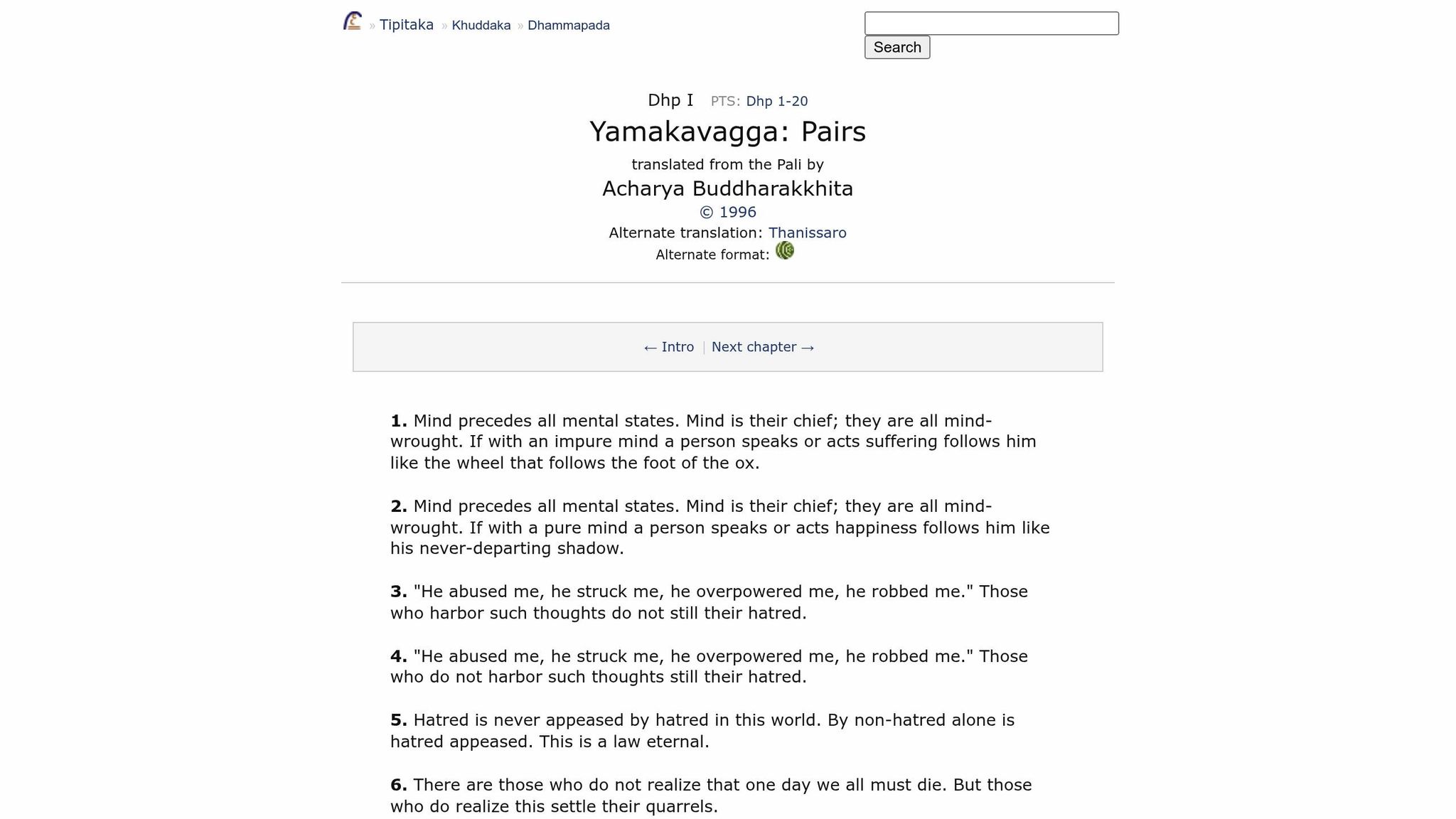
Verse 5 is located in the Yamakavagga, the first chapter of the Dhammapada. The term "Yamaka" translates to "Pairs" or "Twins", highlighting how the teachings in this chapter are presented in contrasting pairs. Specifically, Verse 5 is closely linked with Verse 6. While Verse 5 emphasizes overcoming hatred with loving-kindness, Verse 6 focuses on easing quarrels through the understanding of mortality. Together, these verses provide a dual approach: an emotional solution through love and a deeper reflection on life's impermanence. Positioned early in the Dhammapada, Verse 5 underscores the essential Buddhist principle of emotional regulation. Its placement not only highlights its importance in Buddhist practice but also introduces its potential to disrupt cycles of hatred.
Breaking Cycles of Hatred in Buddhist Teaching
The verse embodies a timeless teaching aimed at breaking the cycle of hatred. This principle is tied to the concept of esa dhammo sanantano - an eternal law central to Buddhism. According to the Tipitaka commentary, this phrase aligns with poranako dhammo, the doctrine upheld by all Buddhas and their followers. The Buddha shared this teaching to resolve a deep-rooted feud between a nobleman's daughter and an ogress named Kalayakkhini. Their enmity, which had persisted across multiple lifetimes, began with a barren wife causing harm to a second wife through abortion. The cycle of revenge ended only when the Buddha taught them Verse 5, leading to the ogress achieving Sotapatti Fruition, the first stage of enlightenment. This story demonstrates how the power of loving-kindness can dissolve even the most entrenched cycles of revenge and hostility.
Understanding Non-Hatred: What Verse 5 Teaches
What Non-Hatred Means
The term 'averena' refers to the conscious absence of hostility. It’s not about feeling warm or affectionate but about deliberately letting go of aversion. This subtle yet powerful distinction is key. Non-hatred manifests as goodwill, friendship, and understanding, even in the face of conflict.
This principle, upheld by the Buddha, emphasizes a timeless truth: hatred cannot end through more hatred. Responding to hostility with more hostility only intensifies the cycle, feeding the flames of anger.
Negative thoughts often trap us, replaying old wounds and keeping us bound to destructive emotions. By embracing non-hatred, we soften our minds, fostering a sense of selflessness and inner peace. This understanding becomes the cornerstone for managing anger in our daily lives.
Using This Teaching to Manage Anger
When anger takes hold, it often perpetuates itself through repetitive, negative thoughts. Verse 5 offers a way out: a conscious decision to disrupt this cycle with non-hatred. Whether it’s a frustrating situation at work, tension in a relationship, or even a minor annoyance like traffic, the teaching encourages a thoughtful pause. Instead of reacting with aggression, you can choose to stop replaying grievances and prevent anger from escalating.
Forgiveness plays a crucial role here. It’s an active decision to release resentment and break free from its grip. Practices like Metta meditation help retrain the mind to respond with kindness rather than hostility. Start by imagining a vulnerable being who needs care. Gradually extend that sense of compassion to someone you love, then to acquaintances, even adversaries, and finally to yourself. This practice transforms conflict into an opportunity for compassion and growth.
Overcoming Hatred: The Eternal Law of Non Hatred
How to Apply Verse 5 in Daily Life
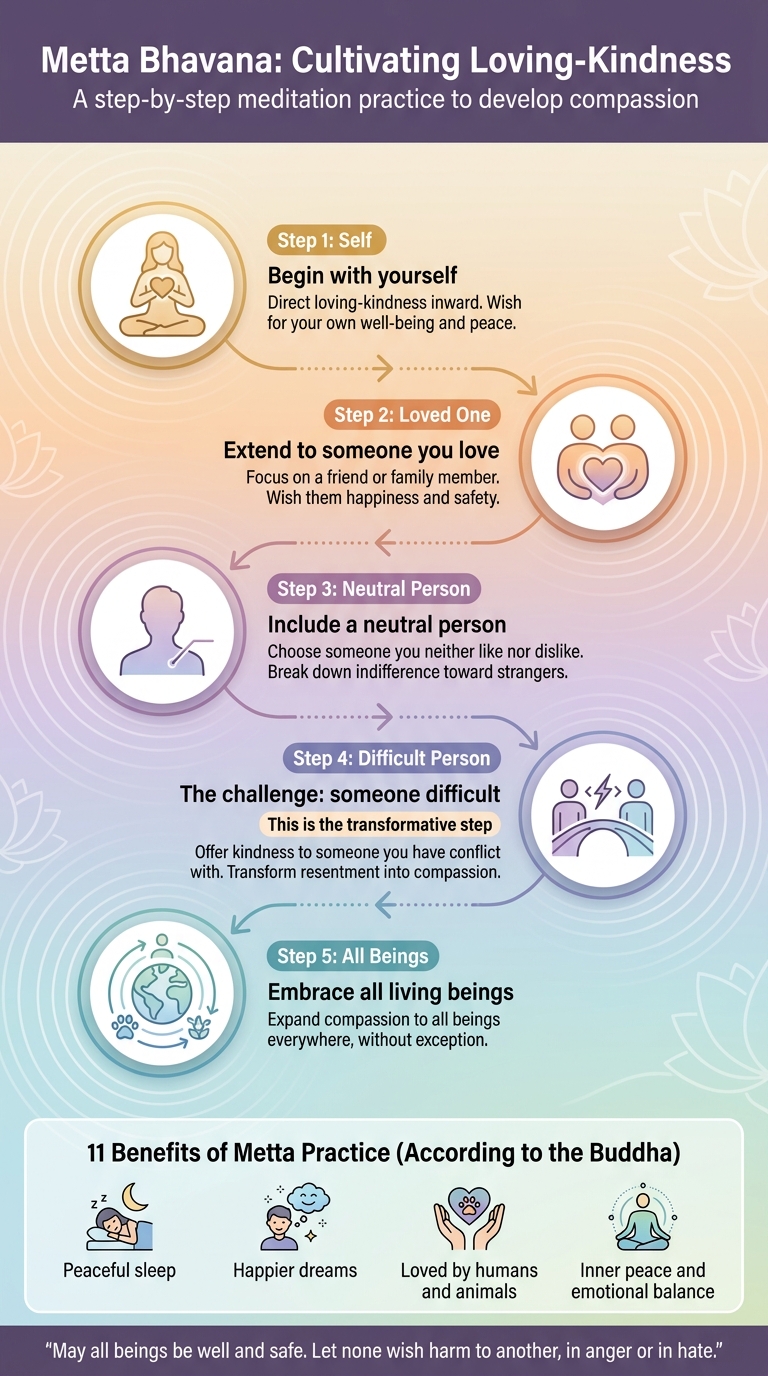
Metta Meditation: 5-Step Loving-Kindness Practice Guide
Loving-Kindness (Metta) Meditation
Metta Bhavana is a meditation practice focused on nurturing loving-kindness. The word "Metta" translates to loving-kindness, while "Bhavana" means cultivation or development. This practice is about actively wishing for the well-being of others, even when it feels difficult.
The process begins with directing kindness toward yourself. From there, you extend it outward - to a friend, a neutral person, someone you find challenging, and finally, to all living beings. The inclusion of a neutral person, someone you feel neither close to nor distant from, helps break down feelings of indifference toward strangers. The real challenge comes with offering kindness to someone you have conflict with, transforming resentment into an opportunity for compassion. Ultimately, the practice expands to embrace all beings everywhere.
Metta meditation helps you become more aware of your emotional patterns, replacing negativity with positive intentions. When focusing on someone who has hurt you, this practice isn't about justifying their behavior. Instead, it's about recognizing that their actions often stem from their own struggles. As a French proverb aptly says, "To know all is to forgive all."
The Buddha highlighted 11 benefits of practicing Metta, including peaceful sleep, happier dreams, and even being loved by both humans and animals. Integrating a simple daily Metta prayer, such as "May all beings be well and safe" or "Let none wish harm to another, in anger or in hate", can help you build a consistent habit of kindness.
Pairing this cultivation of love with mindfulness can further refine your ability to respond to anger with clarity.
Using Mindfulness for Emotional Balance
Mindfulness complements Metta by offering a practical way to manage anger and emotional reactions. It creates a pause between what triggers you and how you respond. In Buddhist psychology, the initial sensation is called "vedana", while the conscious choice to act is "cetana." This gap allows you to experience discomfort without reacting impulsively.
When anger arises, try focusing on your body's sensations. Identify where the tension is most noticeable - your chest, stomach, or elsewhere - and observe it without judgment. This simple act of noticing can help you understand that anger often masks deeper emotions like fear or pain. Addressing those root causes with compassion can lead to more thoughtful and calm responses.
If resentment lingers, start by practicing self-compassion. Treat your own hurt feelings as you would comfort a scared child, with gentle words like, "It's okay, I've got you." Then, remind yourself that those who hurt you are often acting out of their own unresolved struggles.
A reflective technique known as the "death-bed" perspective can also help. When you consider how short life is, it becomes easier to let go of anger and focus on what truly matters. As the saying goes, "Holding onto anger is like picking up a hot coal to throw at someone else - you might hurt them, but you'll definitely burn yourself."
Sutta 423: Daily Reflection on Dhammapada Teachings

The Sutta 423 app takes inspiration from Verse 5 of the Dhammapada, offering a tool to help you integrate the practice of non-hatred into your daily life.
One Verse Each Day for Reflection
With the Sutta 423 app, you receive a single verse from the Dhammapada each day for focused contemplation. This approach aligns with the wisdom of Dhammapada 100: "Better than a thousand meaningless words is one meaningful word that brings peace to the one who hears it". Instead of overwhelming you with extensive readings, the app provides one teaching to reflect on throughout the day.
For instance, when Verse 5 is highlighted, it encourages you to reflect on this teaching: "Hatred is, indeed, never appeased by hatred in this world. It is appeased only by loving-kindness. This is an ancient law." The app's journaling feature allows you to document moments when you choose compassion over anger - whether it's during a tense discussion at work or resolving a family disagreement with patience and understanding.
This daily practice fosters a habit of mindfulness, offering a manageable way to incorporate loving-kindness into your routine without feeling overwhelmed. It’s a simple yet effective method to strengthen your mindfulness exercises and deepen your connection to Buddhist teachings.
A Year-Long Journey Through 423 Verses
The app also offers a structured path through the 423 verses of the Dhammapada, creating a full-year journey of reflection. Each verse is presented once, offering a comprehensive exploration of Buddhist principles, including managing anger, cultivating compassion, and achieving inner peace.
This year-long cycle ensures that you revisit essential teachings like loving-kindness regularly, allowing their meaning to deepen as you grow. Even after completing the full cycle, the app continues to share daily verses, giving you the opportunity to encounter familiar wisdom with a new perspective shaped by your experiences.
With its journaling and reflection tools, the app helps you track how these teachings influence your reactions to conflict and frustration, turning timeless wisdom into practical skills for everyday life.
Conclusion
Dhammapada Verse 5 reminds us that hatred cannot be extinguished by more hatred - it’s only through loving-kindness that the cycle can be broken. The verse reflects the profound wisdom of the Pali phrase "esa dhammo sanantano," or "this is the eternal law." By choosing compassion, we interrupt the forces that perpetuate anger and hostility.
However, this does not imply passively accepting wrongdoing. Instead, it encourages setting firm boundaries while avoiding the trap of anger or resentment.
Taking time each day for reflection can help identify moments when bitterness begins to take root, offering an opportunity to pause and respond with kindness. Whether through personal practice or tools like the Sutta 423 app, these moments of mindfulness reaffirm that this timeless teaching continues to hold value in our daily lives.
FAQs
Does “non-hatred” mean I have to forgive or reconcile?
In Dhammapada Verse 5, "non-hatred" refers to the practice of releasing hatred and nurturing emotions like loving-kindness, understanding, and goodwill. The idea isn’t necessarily about forgiveness or mending relationships, but rather about shifting away from negative emotions and fostering compassion and inner peace. This mindset aims to dissolve hatred by replacing it with positive and peaceful intentions.
How do I practice Metta when I’m still angry at someone?
Practicing Metta (loving-kindness) during moments of anger begins with self-compassion. As highlighted in Dhammapada Verse 5, hatred can only be overcome through love. Start by being kind to yourself - acknowledge your anger without criticism or judgment. Once you've grounded yourself, try extending this kindness outward. Picture the person you're angry with and, in your mind, wish them peace, happiness, and well-being. With regular practice and patience, this approach can gradually shift anger into a sense of compassion.
How can I use Verse 5 in the moment during an argument?
Verse 5 of the Dhammapada emphasizes a timeless truth: hatred can only be conquered through love and kindness. When you're in the middle of an argument, take a moment to pause. Breathe deeply and make a deliberate choice to respond with compassion rather than anger. This approach aligns with the Buddha’s wisdom, showing that true peace and resolution come from goodwill - not from mirroring negativity.