

How Dhammapada Teaches Calm in Chaos
A daily Dhammapada practice trains your thoughts—using mindfulness, silence, and nonviolence—to stay calm amid life's chaos.
The Dhammapada, a 2,500-year-old collection of verses from the Buddha's teachings, offers practical advice for staying calm during life’s challenges. Its central idea: your mind shapes your experience. By training your thoughts, you can navigate stress, conflict, and uncertainty with greater ease.
Key takeaways include:
- The mind creates both peace and chaos. A focused mind leads to happiness (Verse 2), while a distracted mind causes suffering (Verse 1).
- Cultivating mindfulness helps you stay present and steady, even in difficult moments.
- Three practical steps: let go of anger and delusion, embrace silence during conflict, and practice nonviolence in thoughts, words, and actions.
- Daily reflection on the verses builds resilience over time, helping you respond to life’s pressures with clarity.
The Sutta 423 app simplifies this practice, delivering one verse daily to guide reflection. Start small - apply a verse to a specific challenge, and notice how it shifts your perspective.
Mindfulness as the Foundation
How the Mind Creates Peace or Chaos
The Dhammapada emphasizes that the mind shapes every experience. As Acharya Buddharakkhita explains:
Mind precedes all mental states. Mind is their chief; they are all mind-wrought.
In essence, our internal state influences everything we do.
The verses use vivid imagery to make this point. When someone acts or speaks with an impure mind - clouded by anger, fear, or distraction:
suffering follows him like the wheel that follows the foot of the ox.
This highlights how powerful the mind is in shaping well-being. One verse even warns:
Whatever foe may do to foe, or hater to hater, greater is the harm done (to oneself) by a wrongly directed mind.
On the flip side, a well-directed mind has unmatched benefits:
neither mother nor father, nor any other relative, can do one as much good as a perfectly directed mind.
| Mind State | Outcome | Verse Reference |
|---|---|---|
| Impure mind | Suffering follows like a wheel behind an ox | Verse 1 |
| Pure mind | Happiness follows like a shadow that never leaves | Verse 2 |
| Wrongly directed mind | Greater harm than an enemy can cause | Verse 42 |
| Perfectly directed mind | Greater good than what parents can provide | Verse 43 |
These ideas lay the groundwork for mindfulness, which helps us stay present and steady, even in the midst of chaos.
Staying Alert and Present
Since the mind has such a profound influence, the Dhammapada urges us to actively guard our thoughts. It describes the mind as restless and easily distracted. Verse 36 advises:
The mind is extremely subtle and difficult to grasp, alighting on whatever it pleases. Let the wise guard their mind. A guarded mind brings happiness.
This wisdom stresses the importance of staying vigilant over our thoughts. Monitoring the mind is key to cultivating calmness, even under pressure.
The text compares mindfulness to straightening an arrow - an act that requires deliberate care and focus. It also suggests viewing the mind as a fortified city, with mindful awareness acting as a shield against distractions and inner turmoil.
In practice, this means observing your thoughts. When stress creeps in, notice if your mind is clinging to past grievances or racing toward future anxieties. Even a brief moment of non-judgmental awareness can break these patterns, easing fear and tension.
The Dhammapada edited by Eknath Easwaran (Heroic Wisdom Daily)
3 Steps to Stay Calm During Chaos
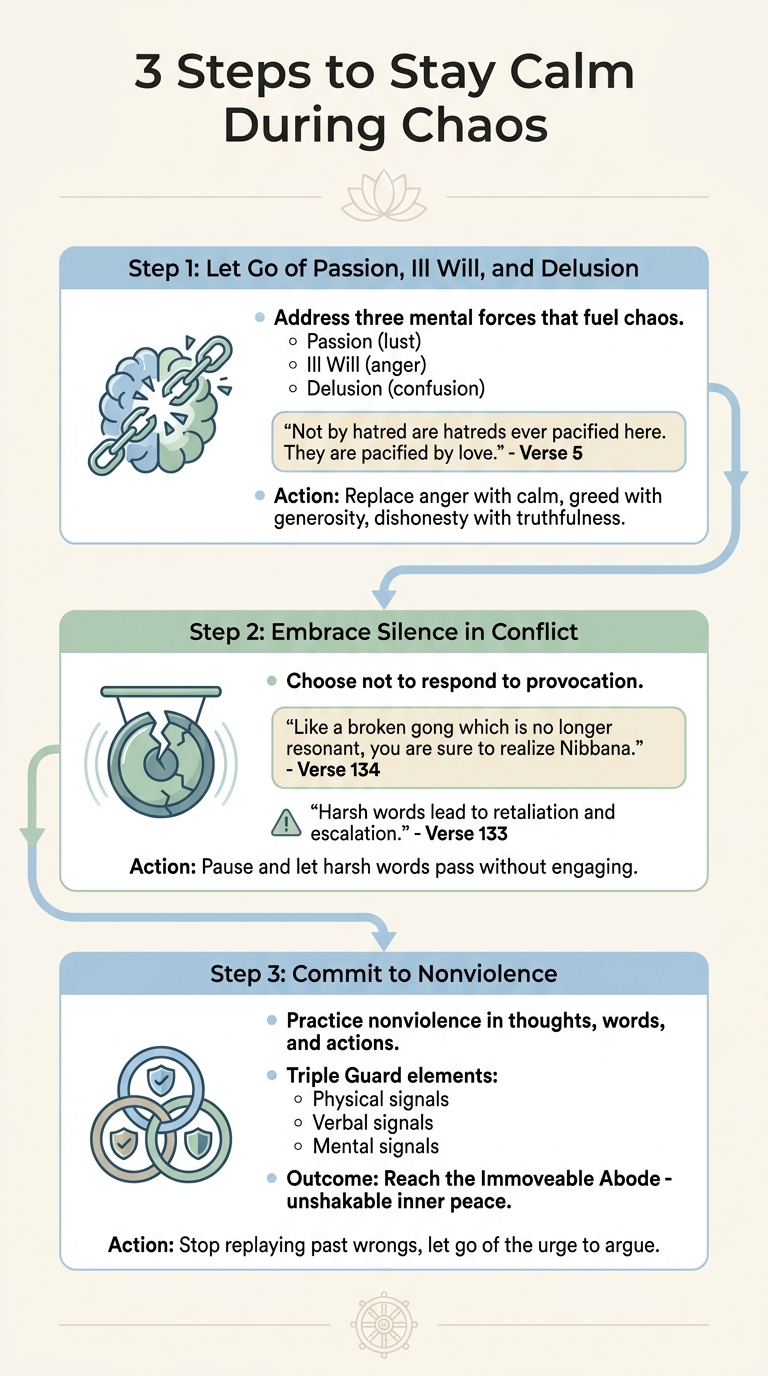
3 Steps to Stay Calm During Chaos Using Dhammapada Teachings
Step 1: Let Go of Passion, Ill Will, and Delusion
The Dhammapada highlights three mental forces that fuel chaos: passion (or lust), ill will (or anger), and delusion (confusion about reality). These arise internally, and addressing them starts with awareness.
Ill will, for example, thrives when we replay old grievances. Whether it's recalling an insult, a loss, or a defeat, revisiting these memories keeps anger alive. The Dhammapada offers a timeless principle in Verse 5:
Not by hatred are hatreds ever pacified here (in the world). They are pacified by love. This is the eternal law.
To counter delusion, focus on seeing situations clearly. Ask yourself: Are you reacting to facts, or to stories your mind has created? This simple question can help you separate reality from assumptions.
A strong mind acts like a shelter, keeping destructive impulses at bay. Replace anger with calm, greed with generosity, and dishonesty with truthfulness. As the text advises, this is not passive acceptance but active restraint. It’s like steering a swerving chariot - the goal is to guide your emotions rather than let them run wild.
When these destructive tendencies loosen their grip, silence becomes a powerful tool for managing conflict.
Step 2: Embrace Silence in Conflict
Silence can be surprisingly effective during heated moments. Verse 134 introduces the "broken gong" approach:
If you can keep yourself calm and quiet like a broken gong which is no longer resonant, you are sure to realize Nibbana, there will be no harshness in you.
The idea is simple: like a broken gong that no longer rings when struck, you can choose not to respond to provocation. The Dhammapada warns that harsh words often lead to retaliation, escalating tension. Verse 133 explains:
Do not speak harshly to anyone; those who are thus spoken to will retort. Malicious talk is indeed the cause of trouble (dukkha) and retribution will come to you.
A story about Thera Kondadhana illustrates this. Haunted by a phantom image due to past karma, he initially responded to mockery with insults. Following the Buddha’s advice, he chose silence instead - like a gong with its rim broken off - and broke the cycle of suffering.
In practice, imagine yourself as that silent, broken gong. When harsh words come your way, pause. Let them pass without engaging.
Step 3: Commit to Nonviolence
The final step is to practice nonviolence, which goes beyond avoiding physical harm. It also means refraining from aggressive speech and unkind thoughts. This approach creates room for empathy and reduces reactive anger.
The Dhammapada reminds us that all beings fear pain and death, just as we do. Recognizing this shared vulnerability can soften conflicts. Reflecting on mortality often helps put disagreements into perspective.
Nonviolence also involves the "triple guard" - paying attention to physical, verbal, and mental signals of rising agitation. This mindfulness helps you pause and recalibrate before reacting.
Silent, self-controlled individuals who embrace nonviolence are described as reaching the Immoveable Abode - a state of unshakable inner peace:
Those silent sages who are harmless (ahiṃsaka-s) and always (self-)controlled go to the Immoveable Abode, whither having gone they do not grieve.
This isn’t about passivity. It’s about letting go of harmful thoughts and actions. Stop replaying past wrongs and let go of the urge to argue. By doing so, you can diffuse negativity and create a calmer, more centered life.
Building a Daily Practice with Sutta 423

Incorporating these timeless teachings into your everyday life can be made simple with a consistent, meaningful practice.
Why Daily Verse Reading Makes a Difference
Reading just one verse a day creates a steady rhythm that nurtures clarity over time. The Dhammapada captures this gradual process beautifully:
One by one, little by little, moment by moment, a wise man should remove his own impurities, as a smith removes his dross from silver.
True change doesn’t happen overnight - it’s a slow, deliberate journey. A daily verse serves as a gentle reminder to embrace mindfulness and practice nonviolence, as discussed earlier.
This approach is easy to manage and can act as a touchstone during challenging moments, whether you’re stuck in traffic, navigating a tough conversation, or dealing with daily frustrations. By committing to this habit, you’ll naturally cultivate patience and awareness without disrupting your routine. It’s a simple yet impactful way to prepare for tools like the Sutta 423 app.
Starting Your Journey with the Sutta 423 App
The Sutta 423 app is designed to make this daily practice seamless. Sutta 423 delivers one verse from the Dhammapada each day, guiding you through its 423 verses over the course of a year. The best part? The daily verse is always free. The app’s philosophy is refreshingly straightforward:
One verse a day. Read it. Sit with it.
Set aside a few quiet minutes each morning or evening to reflect on the verse. The app avoids distractions like streaks or gamification, keeping the focus on the teachings themselves. As the creators explain:
No streaks. No pressure. Just the teachings, day by day.
For those who want to dive deeper, there are optional paid features to save favorite verses or access additional tools, which also help support the app’s development. But the heart of the practice - reading one verse daily - remains free and accessible to everyone.
Using Dhammapada Verses in Real Situations
Once you've built a habit of reading the Dhammapada daily, its wisdom truly comes alive when applied to everyday challenges. By pairing specific verses with real-life situations, you can bring mindfulness into every corner of your life.
Matching Verses to Common Challenges
Each challenge you face can find guidance in a specific verse. For instance, if a coworker unfairly criticizes your work, Verse 227 offers perspective: "There is no one in the world who is not blamed". This verse reminds you that criticism is a universal part of life, not a personal attack.
When tempted to send a defensive email in the heat of the moment, Verse 222 provides a grounding image:
I call him a charioteer who holds back the arisen anger as though (holding) a swerving chariot. Others are only holders of reins.
This verse encourages you to pause, reflect, and control your anger before it spirals out of control.
Family arguments often revolve around repeating old grievances. Verse 4 addresses this cycle directly:
Those who do not entertain such thoughts as 'He abused me, he beat me, he conquered me, he robbed me,' will still their hatred.
By letting go of these negative narratives, you can break free from resentment and foster peace.
When deadlines feel overwhelming or your mind is racing with anxious thoughts, Verse 233 offers clarity: "Be on your guard against mental agitation; be controlled in mind". Use this as a reminder to gently redirect your focus and stay present, even amidst chaos.
Practical Examples of Verse Applications
The table below illustrates how specific verses can guide your responses to common challenges:
| Scenario | Relevant Verse | How to Apply It | What Changes |
|---|---|---|---|
| Workplace Criticism | Verse 227: "There is no one in the world who is not blamed." | Accept criticism as a shared human experience. | Stay calm and emotionally balanced. |
| Heated Argument | Verse 222: "I call him a charioteer who holds back the arisen anger..." | Pause and control your urge to react impulsively. | Prevent escalation and keep your composure. |
| Conflict | Verse 223: "Overcome the angry by non-anger; overcome the wicked with good." | Respond to hostility with calm and kindness. | De-escalate tension and open paths to peace. |
| Financial Loss | Verse 367: "Does not grieve for what he has not." | Choose not to dwell on losses or missed opportunities. | Maintain inner peace despite setbacks. |
| Persistent Resentment | Verse 5: "Not by hatred are hatreds ever pacified here... They are pacified by love." | Release hatred and focus on compassion. | Break cycles of negativity and find serenity. |
Conclusion
The verses of the Dhammapada provide a clear and practical guide for navigating the complexities of modern life. At its heart lies a timeless truth:
Mind is the source of all states, mind is the master of the mind.
By dedicating time each day to reflection and mindful action, you can reshape how you handle stress, conflict, and uncertainty.
It's not about doing a lot all at once - consistency matters more than intensity. Even a few minutes of daily practice can stabilize your mind. As Peter Burns wisely observed:
Rain cannot penetrate a well-thatched house.
A regular habit of mindful reflection acts as a shield, safeguarding your peace of mind and keeping your positive habits intact, even during life's most challenging moments. This connection between reflection and action is what makes the practice so transformative.
The Sutta 423 app is a helpful tool to support this journey. It delivers one verse each day, making it easier to stay consistent. Plus, the daily verse feature is completely free, offering a simple way to incorporate mindfulness into your routine.
Start small. Pick a verse that speaks to a challenge you're currently facing. Use techniques like the Three-Breath Rule to pause during stressful moments, or the Four Gates of Speech to guide your responses during conflicts. Each mindful choice you make strengthens your inner calm, reminding you that karma isn’t about fate - it’s built on the choices you make every day.
The wisdom of the Dhammapada is timeless. Begin today, and let its teachings help you uncover the calm that’s already within you.
FAQs
How do I pick the right Dhammapada verse for my situation?
To find the right Dhammapada verse, think about the qualities or lessons that speak to your current needs. For example, if generosity is on your mind, Verse 177 emphasizes the happiness that comes from giving. Reflect on what you’re working on - whether it’s patience, calmness, or another virtue - and choose a verse that feels relevant. You can also use the daily verse app from Sutta 423 for thoughtful inspiration each day.
What should I do when I can’t stay silent during conflict?
When silence feels out of reach during a conflict, the Dhammapada offers guidance: focus on restraint and calmness. Verses 133 and 134 emphasize the importance of avoiding harsh words, as they can cause harm and escalate tensions. Practicing mindful restraint - taking a moment to pause before reacting - can defuse heated situations and open the door to mutual understanding. By observing your emotions without acting impulsively, you create space for patience and reflection, embodying the Buddhist principle of achieving inner peace through careful speech and deliberate actions.
How can I turn one verse a day into a real daily practice with Sutta 423?
To build a meaningful daily routine around Sutta 423, dedicate a few quiet minutes each day - either in the morning or evening - to read and reflect on its teachings. Think about how its wisdom, like cultivating patience or releasing attachment, can be applied to your everyday experiences. With consistent practice, this habit nurtures mindfulness and a sense of calm, helping you remain grounded even during life's more hectic moments.