

Dhammapada on Anger: What Calms Mind?
Pause before replying: use Dhammapada guidance to notice anger, set limits, and choose non-harmful responses.
I read the Dhammapada’s advice this way: pause before anger chooses your words. Notice the feeling, take a few breaths, and ask whether your reply will address the harm or punish someone.
Verses 3–5, 221–223, and 133–134 guide my reading: stop feeding resentment, loosen pride’s grip, and practice restraint. The goal isn’t to force calm. It’s to choose what I do next - and remember that <u>letting go of revenge does not mean giving up boundaries or accountability</u>.
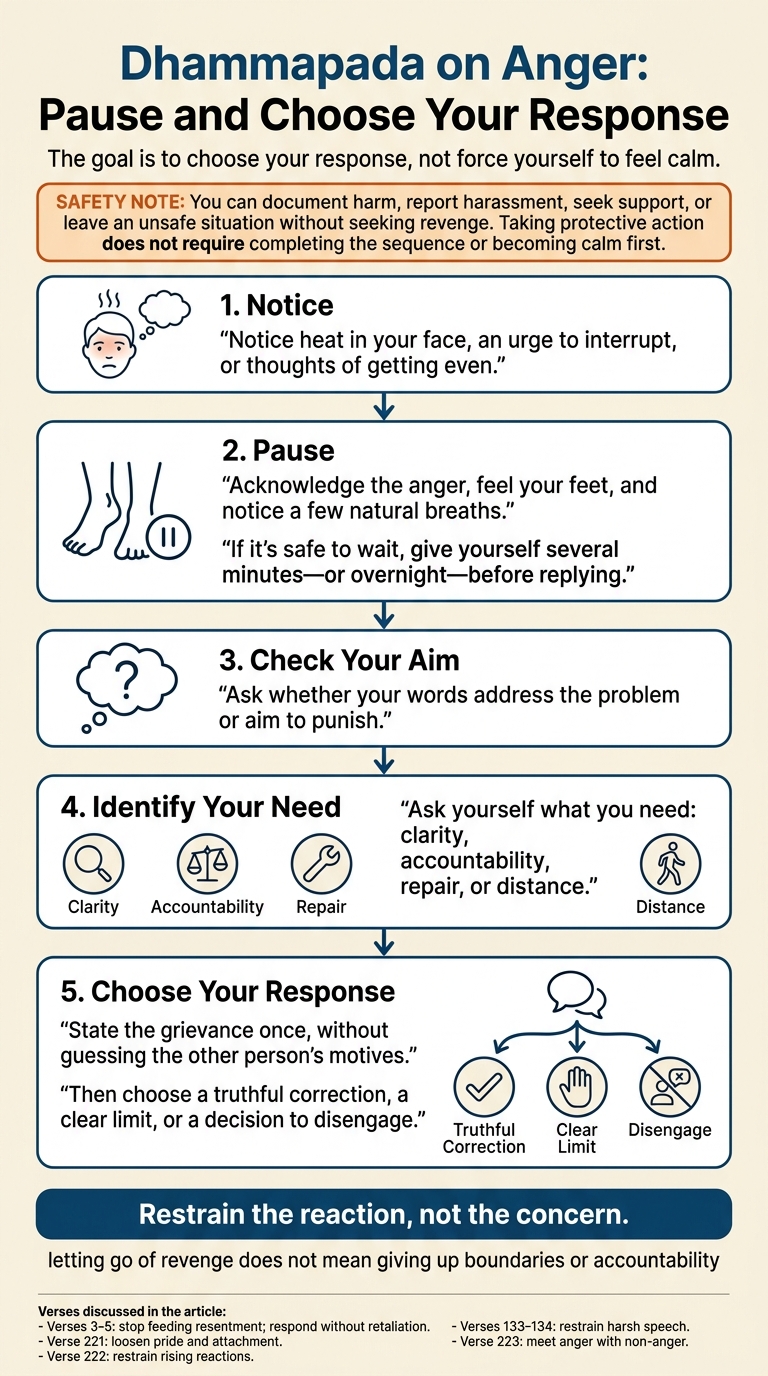
Dhammapada on Anger: Pause and Choose Your Response
What Does the Dhammapada Teach About Anger?
Verses 3–5: Ending Hatred Without Hatred
Verses 3–4 draw a line between being hurt and replaying that hurt. Going over an insult, defeat, or theft keeps the grievance alive. The point isn’t to deny the harm. It’s to notice what your mind adds to it.
Verse 5 teaches that hatred ends through non-hatred. In practice, that means responding without making retaliation your goal. You can document harm, report harassment, seek support, or leave an unsafe situation without seeking revenge. Letting go means releasing the hostility you keep feeding - not erasing wrongdoing or removing accountability.
Verse 221 turns to what keeps anger tied to your sense of self: pride and attachment.
Verse 221: Letting Go of Anger and Pride
Verse 221 links anger with pride and attachment. Pride can turn a disagreement into a contest over status. Attachment can make peace depend on a particular apology or outcome. Before responding, ask yourself: Are you addressing the harm - or protecting your self-image?
Treat letting go of anger as training, not a deadline. Acknowledge the feeling, hold back harmful words, and look at what you’re trying to protect. Loosening your grip on being right or controlling the outcome gives you room to address the problem clearly without giving up your boundaries.
What Keeps Anger Going?
Replaying Harm and Planning Revenge
Verses 3–4 show how anger persists when the mind keeps replaying an injury and planning revenge.
Write down what happened, when it happened, and who witnessed it. Then identify your next step to protect yourself. Research links workplace incivility with rumination, impaired performance, and revenge motives - but these are associations, not inevitable outcomes. When you stop rehearsing revenge, you can focus on slowing your response.
Anger also becomes harder to let go of when it gets tied to your self-worth.
How Pride and Attachment Feed Reactions
That mental replay can harden into pride. Verse 221 shows that pride and attachment keep anger going by tying it to status or control. The anger then feels personal and justified. Ask yourself whether you're addressing harm or protecting your self-image. Focus on the evidence and the outcome you need, rather than winning the exchange.
Verse 222 compares restraint during anger to controlling a racing chariot. When your jaw tightens or your speech speeds up, stop typing or speaking. Take several slow breaths and delay your response. Restrain the reaction, not the concern. You can still set a boundary, report harm, or ask for support once you can speak deliberately.
The Dhammapada - 17.Anger | Buddha
What Helps Calm Anger?
Once restraint creates room to choose, the Dhammapada turns to how we answer anger. Verse 223 teaches that anger is overcome through non-anger. It also calls for meeting wrongdoing with goodness, miserliness with generosity, and falsehood with truth. The aim is to keep anger from deciding your next action - not to excuse wrongdoing or set accountability aside.
Verses 133–134 and 222: Restraining Words and Actions
Verses 133–134 warn that harsh speech invites a harsh reply. Verse 222 compares restraining rising anger to a skilled charioteer controlling a speeding chariot. Restraint, then, means steering the exchange rather than striking back. That might mean ending an insulting conversation, leaving an unsafe situation, or seeking help. It starts with noticing anger’s first signs.
Notice, Pause, and Respond Without Harm
Notice heat in your face, an urge to interrupt, or thoughts of getting even. Pause before replying. Ask whether your words address the problem or aim to punish. State the grievance once, without guessing the other person’s motives. Then choose a truthful correction, a clear limit, or a decision to disengage.
Patience, forgiveness, and loving-kindness help you hold that pause. Patience buys time. Forgiveness lets go of the urge to punish. Loving-kindness keeps concern for well-being in view.
How Does Awareness Change Your Response?
Awareness can interrupt anger before it turns into words or actions. Noticing anger gives you a choice - not a guarantee of calm. You may still feel angry while deciding what to do. That pause matters: anger can make a response feel urgent even when the facts are unclear.
Recognizing Anger Without Suppressing It
Being aware means noticing what triggered your anger, the urge to react, and what could happen if you act on it. Anger may signal that someone crossed a boundary. But it doesn’t prove that you’ve read their intentions correctly. Once you notice the impulse, pause before responding.
A Short Reflection Before You Reply
Acknowledge the anger, feel your feet, and notice a few natural breaths. Briefly name what upset you without replaying the whole dispute. If it’s safe to wait, give yourself several minutes - or overnight - before replying.
Ask yourself what you need: clarity, accountability, repair, or distance. The goal is to choose your response, not force yourself to feel calm.
Conclusion: Let Go of Grievance and Practice Restraint
Awareness helps you practice restraint by interrupting the loop of grievance before it shapes your words or actions. This takes repeated practice, not permanent control over your emotions. Avoiding harm doesn’t mean giving in: you can set firm boundaries and seek protection without retaliating.
FAQs
Can anger be useful in Buddhist practice?
In Buddhist practice, anger isn’t seen as a useful tool. The Dhammapada teaches that anger and ill will lead to harmful words, harmful actions, and more suffering. Awareness gives you room to pause between feeling angry and acting on it. In that pause, you can choose patience, kindness, and truth.
The Sutta 423 app provides daily Dhammapada verses to reflect on, helping you practice restraint and inner peace.
How can I tell restraint from suppressed anger?
Restraint means noticing anger without letting it decide how you act. You pay attention to the feeling and recognize that it will pass. Suppression, on the other hand, means burying your feelings. The anger stays unresolved and often turns into resentment.
To practice restraint, pause and notice any tension in your body. Then choose a response that addresses the core issue with honesty and kindness - not retaliation or silence.
What if anger returns after I let go?
If anger returns, don’t be hard on yourself. It’s part of the process, not a failure. Notice it without judging yourself. Think of it as a passing cloud, not part of who you are. Then bring your attention back to your breath or a positive thought.
Small acts of restraint, like pausing before you respond, help build calm over time. Daily reflection with the Sutta 423 app can support this practice.