

Mindful Speech: Key Lessons from the Dhammapada
Practical Dhammapada tips to avoid harmful speech, speak truthfully and kindly, pause before replying, and listen with compassion.
Your words reflect your inner thoughts and shape your relationships. The Dhammapada, an ancient Buddhist text, offers timeless guidance on using speech wisely. It emphasizes avoiding harmful speech, practicing truthfulness, and using words to create harmony rather than conflict.
Key takeaways include:
- Avoid harmful speech: Lying, divisive words, harshness, and idle chatter cause harm to yourself and others.
- Speak with purpose: Words should be truthful, kind, and beneficial.
- Pause before speaking: Reflect on your emotions and intentions to prevent regretful words.
- Respond to anger calmly: Gentle speech diffuses tension and fosters understanding.
- Listen actively: Understand others' perspectives to improve communication.
The Dhammapada teaches that mindful speech isn't just about what you say - it's about how and why you say it. Small, consistent efforts, like daily reflection on its verses, can transform your communication and deepen your relationships.
The Buddha's Lessons on Skillful Communication
The Basics of Mindful Speech in the Dhammapada
The Dhammapada emphasizes the importance of speech in ethical living. It plays a key role in shaping relationships and nurturing a disciplined mind.
Right Speech in the Noble Eightfold Path
Right Speech (Samma Vaca) is the third element of the Noble Eightfold Path, grouped under the "Virtue" (Sila) category alongside Right Action and Right Livelihood. It involves avoiding four specific types of harmful speech: lying, divisive speech, harsh words, and idle chatter. These guidelines are meant to protect both the speaker and the listener from harm.
The Buddha highlighted the dangers of dishonesty with these words:
"So little... is the spiritual achievement of one who is not afraid to speak a deliberate lie." - Gautama Buddha
Lying erodes trust and weakens the foundation for spiritual growth. This principle will be explored further in the verses and practices later in this discussion.
Truth, Kindness, and Usefulness in Words
The Dhammapada outlines four key qualities of virtuous speech: clarity, justice, endearment, and truth. These qualities offer a practical guide for mindful communication.
"The calm say that what is well-spoken is best; second, that one should say what is just, not unjust; third, what's endearing, not unendearing; fourth, what is true, not false." - The Buddha
Truthfulness is the cornerstone of ethical speech. As the Subhasita Sutta states, "Truth, indeed, is deathless speech: This is an ancient principle". Beyond truth, the teachings stress the importance of fostering harmony through words - bridging divides and strengthening bonds.
Restraint and Silence as Speech Practices
Practicing restraint in speech requires conscious effort - it’s not about avoiding speech out of fear but choosing silence when appropriate. Thanissaro Bhikkhu explains this well:
"If you can't control your mouth, there's no way you can hope to control your mind." - Thanissaro Bhikkhu
The Dhammapada (verses 231–234) links verbal discipline directly to mental clarity. Verse 134 suggests that responding to hostility with calm silence reflects a state of inner peace akin to Nibbana.
Idle chatter, such as gossip or endless speculation, disrupts spiritual focus and leaves the mind unsettled. The teachings encourage steering conversations toward meaningful topics, speaking only when the timing and intent are aligned.
These principles underline how disciplined and thoughtful speech reflects the state of one’s inner self.
Key Lessons from Dhammapada Verses on Speech
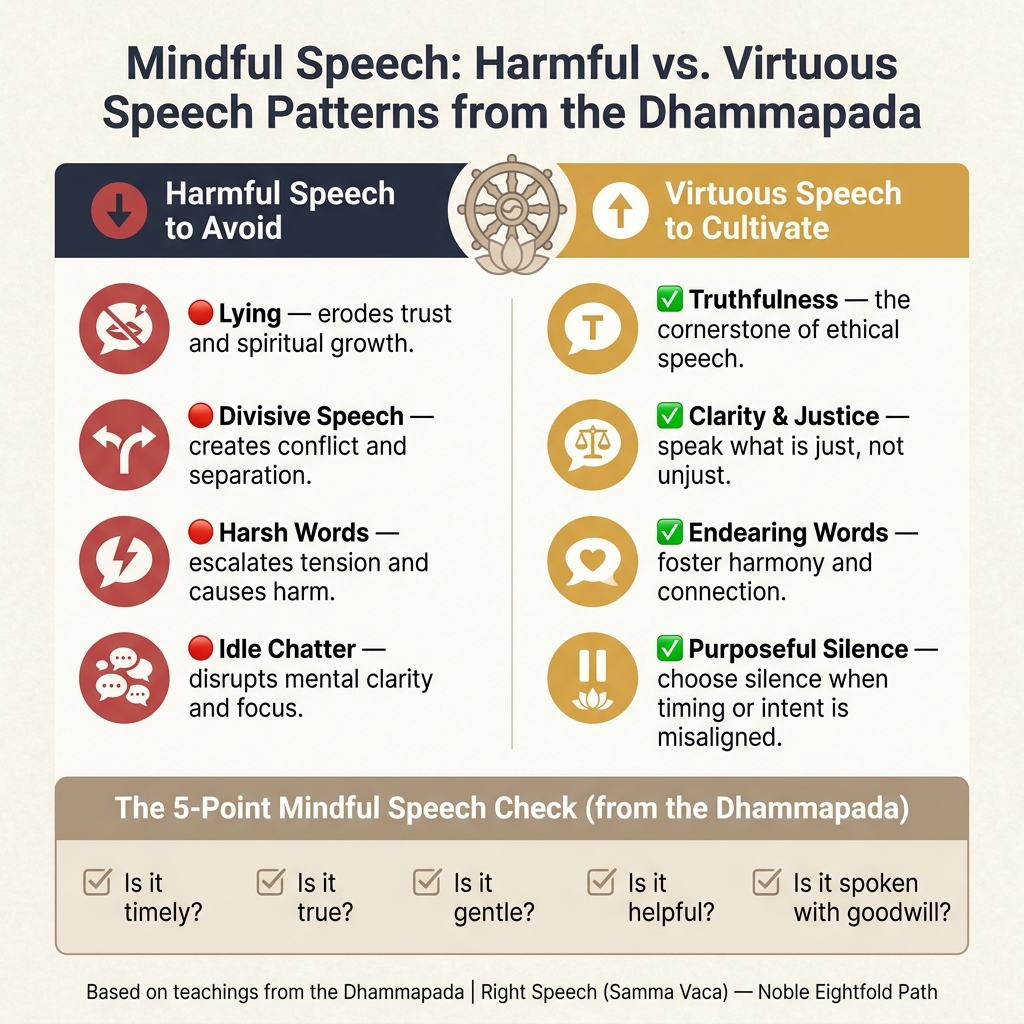
Mindful Speech: 4 Harmful vs. Virtuous Speech Patterns from the Dhammapada
The Dhammapada offers timeless insights into how speech shapes our interactions and reflects our inner world. It highlights specific patterns of speech that help us identify and correct harmful tendencies.
The Effect of Gentle Speech
Verse 223 delivers one of the most profound teachings: overcome anger with non-anger, and wickedness with goodness. Simply put, when someone speaks harshly to you, the best response isn't to retaliate but to respond with calmness.
"Overcome the angry by non-anger; overcome the wicked by goodness; overcome the miser by generosity; overcome the liar by truth." - Acharya Buddharakkhita
Responding gently diffuses tension and prevents conflicts from escalating. This approach doesn't just de-escalate situations; it also fosters a broader practice of mindful and intentional speech.
Guarding Speech as a Discipline
Verse 232 emphasizes that controlling speech is an active effort. It's not just about avoiding harmful words but also about cultivating positive habits. The verse encourages practitioners to curb irritability and avoid verbal misconduct, making speech a conscious and disciplined practice.
"Let a man guard himself against irritability in speech; let him be controlled in speech. Abandoning verbal misconduct, let him practice good conduct in speech." - Acharya Buddharakkhita
Verse 234 reinforces this idea by equating verbal control with mastery over thoughts and actions. A practical tip? Treat an impatient tone as a signal to pause and reflect instead of pushing forward. This kind of self-restraint in speech not only improves communication but also reflects a balanced inner state.
Speech as a Mirror of Inner States
The Dhammapada also teaches that speech reveals our deeper intentions and mental states. Bhikkhu Bodhi explains that kamma (action) includes speech, which reflects the state of our mind. Words driven by greed, hatred, or delusion indicate unwholesome states, while those rooted in goodwill and understanding signal a healthier mindset.
This perspective turns speech into a diagnostic tool. If you notice sarcasm, dismissiveness, or evasiveness in your words, the Dhammapada suggests looking inward. Your speech patterns often point to underlying mental habits. Paying attention to how you speak, not just what you say, can uncover areas for self-improvement.
The table below summarizes these core lessons and their practical applications:
| Verse | Theme | Practical Takeaway |
|---|---|---|
| Verse 223 | Gentle speech | Respond to anger with calm, not more anger |
| Verse 232 | Guarding speech | Treat irritability in tone as a signal to pause |
| Verse 234 | Speech as discipline | Practice verbal self-control across thoughts and actions |
| Verses 227–228 | Handling criticism | Focus on integrity rather than avoiding all blame |
How to Practice Mindful Speech Daily
Grasping the teachings of the Dhammapada is one thing, but bringing them into your daily life - especially during tense situations - is where the real work begins. Building mindful speech happens through small, consistent habits that transform how you communicate.
Pausing Before You Speak
One of the simplest yet most effective tools is the pause. Take a moment, breathe, and reflect on why you’re about to speak. If frustration or anger is driving you, it’s often better to hold back. Thanissaro Bhikkhu, a respected author and abbot, explains it clearly:
"Before you speak, you focus on why you want to speak. This clarifies the underlying chatter of your mind."
The Dhammapada uses the analogy of a fletcher straightening an arrow - steady, patient effort works far better than force. Think of pausing as this gentle pressure. It’s not about silencing your thoughts but creating the space to choose your words thoughtfully.
Once you’ve set the tone with a mindful pause, the next step is to refine your communication through active listening.
Listening as Part of Mindful Speech
Mindful speech isn’t just about the words you say - it starts with how you listen. When faced with harsh words, it’s easy to react impulsively. But mindful listening means recognizing that such words often reflect the other person’s internal struggles, not an absolute truth about you.
Thanissaro Bhikkhu highlights the impact of this practice:
"When you make a practice of these positive forms of right speech, your words become a gift to others. In response, other people will start listening more to what you say, and will be more likely to respond in kind."
This creates a ripple effect: better listening leads to better speaking, fostering a cycle of more mindful and meaningful communication.
With this foundation in place, you can better manage emotions before they influence your words.
Handling Emotions Before Speaking
Emotions like anger or impatience can easily disrupt conversations if left unchecked. Nikki Mirghafori, a teacher at Spirit Rock Meditation Center, suggests an approach rooted in kindness:
"Summon goodwill before speaking to prevent future regrets."
Before speaking, consider whether your words meet these criteria: Are they timely, true, gentle, helpful, and filled with goodwill? If they don’t check most of these boxes, silence may be the better option. The Dhammapada offers a vivid image to illustrate this: controlling anger is like a skilled chariot driver guiding a fast-moving cart - not through brute force but through precise, deliberate steering.
Bringing Dhammapada Teachings into Everyday Life
To truly embrace the principles of mindful and compassionate speech, it’s essential to weave these teachings into your daily routine. Managing emotions is important, but real transformation happens through consistent, intentional habits. Small, repeatable actions can turn sporadic mindfulness into a way of life.
Reflecting on One Verse Each Day
The Dhammapada's 423 concise verses are perfect for daily reflection. Scholar Bhikkhu Bodhi describes it as a "guidebook for resolving the countless problems of everyday life, a primer for the instruction of novices in the monasteries." Think of each verse not as a task to complete but as a daily guide to help navigate life’s challenges.
Here’s a simple practice: read one verse each morning and let it shape your day. For instance, if the verse focuses on truthfulness, carry that intention into your conversations and actions. Translator Acharya Buddharakkhita highlights the power of these verses:
"Insights that flashed into the heart of the Buddha have crystallized into these luminous verses of pure wisdom. As profound expressions of practical spirituality, each verse is a guideline to right living."
This habit naturally reinforces the mindful speech practices mentioned earlier, helping you approach interactions with greater clarity and compassion. As Tricycle magazine puts it, "Mindfulness makes it possible to recognize what we are about to say before we say it, and thus offers us the freedom to choose when to speak, what to say, and how to say it."
If you’re looking for a convenient way to build this habit, there are tools available to help you stay consistent.
Using Sutta 423 for Daily Inspiration

The Sutta 423 app (sutta423.com) is a great resource for daily reflection. It delivers one verse from the Dhammapada each day, cycling through all 423 verses over the course of a year. The app is free and designed to encourage quiet contemplation.
This daily reminder can keep your practice on track without the need to choose a verse yourself. For example, if a verse on restraint arrives on a day where you're about to face a tough conversation, it can serve as a timely nudge to pause and respond thoughtfully rather than reacting impulsively.
Conclusion: Speech as a Path to Inner Peace
The Dhammapada emphasizes a powerful truth: the way you speak shapes the person you become. Words are more than just sounds - they mirror your inner state, either intensifying suffering or nurturing peace. As the text profoundly states, "Mind is the forerunner of all actions. All deeds are led by mind, created by mind."
What makes these teachings approachable is their focus on awareness rather than perfection. Simply pausing to ensure your words are timely, truthful, gentle, and spoken with goodwill can transform the course of any conversation.
This mindful approach to speech doesn’t just change you internally - it also strengthens your relationships. The Buddha's guidance to use words that heal rather than divide reminds us that thoughtful communication is both a personal practice and a gift to others. Every truthful, kind, and well-timed word has the power to deepen connections and foster understanding.
To bring these teachings into your life, start small: one verse, one morning, one mindful intention. As the Dhammapada wisely notes, "Drop by drop is the water pot filled." You don’t need to change everything overnight - just take the first step and keep moving forward.
FAQs
How do I know when silence is better than speaking?
Silence often serves as a powerful tool for cultivating calm, mindfulness, and compassion, particularly in situations where speaking might lead to harm or unnecessary conflict. The Dhammapada emphasizes the importance of mindful speech, urging us to carefully select our words - or embrace silence - in ways that encourage peace and mutual understanding.
What should I say when someone talks to me in anger?
When someone directs anger toward you, responding with calmness and honesty can make all the difference. Instead of meeting their anger with your own, choose kindness and patience. This approach not only helps ease the tension but also opens the door to more understanding and compassionate communication.
How can I practice Right Speech at work or online?
Communicating mindfully means steering clear of lying, gossip, harsh language, or meaningless chatter. Instead, aim to speak with honesty, kindness, and purpose.
In the workplace, this could mean actively listening during conversations, steering away from gossip, and carefully choosing your words to maintain a positive and respectful environment. Online, whether you're sending a text, drafting an email, or posting on social media, it's essential to ensure your words encourage understanding and connection. Ask yourself: Are my words truthful? Are they kind? Are they necessary and delivered with compassion? These questions can guide you toward meaningful and mindful communication.