

How Dhammapada Guides Daily Peace Practices
Reflect on three Dhammapada verses—morning, midday, evening—to shape thoughts, calm stress and end the day with clarity.
The Dhammapada offers timeless wisdom to cultivate peace and mindfulness throughout your day. This guide focuses on three key verses - Verse 1, Verse 5, and Verse 183 - each aligned with specific parts of the day: morning, midday, and evening. By reflecting on these teachings, you can shape your thoughts, manage stress, and end the day with clarity. Here’s how:
- Morning: Verse 1 emphasizes the power of thoughts. Begin your day by reflecting on how your mindset shapes your actions.
- Midday: Verse 5 teaches loving-kindness as the antidote to anger. Use short breaks to reset and respond calmly to challenges.
- Evening: Verse 183 encourages reflection on avoiding harm, doing good, and clearing the mind. Use this time to release the day’s tensions.
For added support, the Sutta 423 app delivers one verse daily, helping you integrate these teachings into your routine effortlessly. Start small - choose one verse and one moment of the day to reflect. Small, consistent steps can lead to lasting peace.
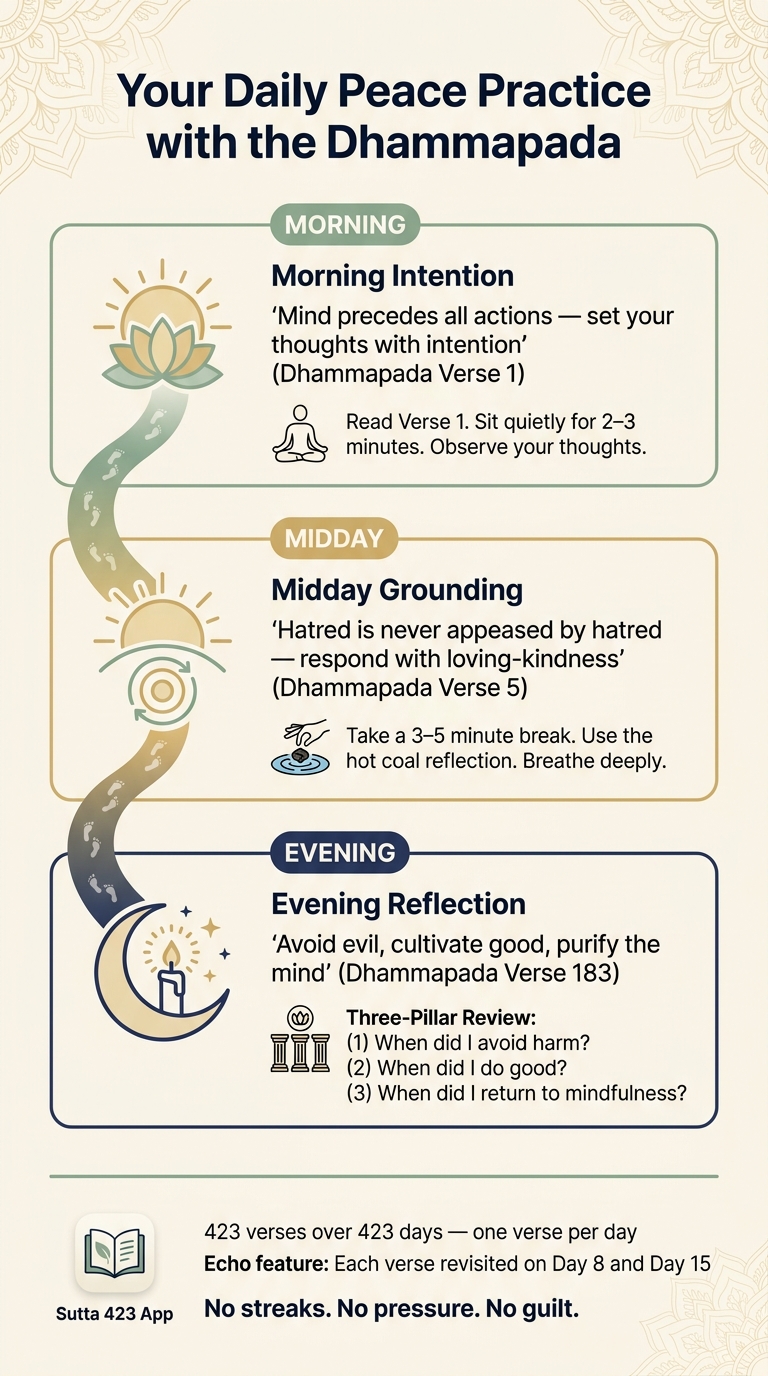
Dhammapada Daily Peace Practice: Morning, Midday & Evening Routine
Morning Buddhist Practice
Morning Routine: Starting the Day with Verse 1 on the Mind
How you begin your morning often shapes the rest of your day. Verse 1 of the Dhammapada offers a powerful reminder of the influence our thoughts have on our experiences.
What Verse 1 Says About the Power of Thoughts
The first verse of the Dhammapada provides a profound insight into the connection between our mind and our actions:
"Mind precedes all mental states. Mind is their chief; they are all mind-wrought. If with an impure mind a person speaks or acts suffering follows him like the wheel that follows the foot of the ox." - Acharya Buddharakkhita, Translator
This verse highlights how our thoughts are not passive - they actively shape our reality. Negative emotions like anger or anxiety don’t just stay in our minds; they ripple outward, influencing our actions and words. The metaphor of the ox and the wheel illustrates this beautifully: just as the wheel unavoidably follows the ox, our thoughts inevitably lead to consequences. By reflecting on this verse each morning, you can guide your thoughts intentionally, setting a foundation for mindful and conscious actions throughout the day.
Simple Steps to Begin the Morning Mindfully
You don’t need a complicated ritual to bring this teaching into your morning. A few intentional moments can make a big difference. Start by reading Verse 1 and reflecting on its meaning before diving into your day. As you go about your morning tasks, observe your thoughts. Are they calm and constructive, or are they veering toward negativity?
Take two or three minutes to sit quietly after reading the verse. Reflect on this wisdom from the Buddha:
"The mind is restless, hard to guard, hard to control. The wise one straightens it as a fletcher straightens an arrow."
This brief pause helps you center yourself and sets a mindful tone for the day ahead. By making this practice part of your morning, you create a steady framework for navigating the rest of your day with clarity and calmness.
Midday Practice: Using Verse 5 to Stay Calm Under Pressure
By the time midday rolls around, the calm you cultivated in the morning might start to waver. The stress of looming deadlines, abrupt comments, or surprise meetings can easily throw you off balance. It's during these moments that Verse 5 of the Dhammapada becomes a guiding light.
How Verse 5 Addresses Midday Stress and Conflict
Verse 5 offers a timeless piece of wisdom:
"Hatred is, indeed, never appeased by hatred in this world. It is appeased only by loving-kindness. This is an ancient law." - Dhammapada Verse 5
This teaching challenges the natural urge to respond to hostility with more hostility. Instead, it encourages choosing kindness over retaliation. Ven. Weragoda Sarada Maha Thero elaborates:
"Those who attempt to conquer hatred by hatred are like warriors who take weapons to overcome others who bear arms. This does not end hatred, but gives it room to grow."
Rather than adding fuel to the fire of anger, this verse invites you to break the cycle. Holding onto anger often hurts you more than the person who upset you. Letting go of that anger can help you maintain a sense of inner peace.
Short Breaks to Regain Calm
To live out the wisdom of Verse 5, try incorporating short pauses into your midday routine. Just three to five minutes can be enough to reset your emotions. One helpful technique is the "hot coal" reflection: when anger rises, imagine holding a burning coal. The longer you hold on, the more pain it causes you.
Use this moment to shift your focus. Breathe deeply or visualize something soothing. These small acts of mindfulness can help you step away from reactive emotions and restore calm, even in the middle of a hectic day.
Evening Reflection: Closing the Day with Verse 183
After dedicating time to mindfulness in the morning and afternoon, the evening becomes an opportunity to pause, reflect, and reset. As the day winds down, your mind often replays its highlights - both the good and the not-so-good. This makes it the perfect moment to turn to Verse 183 of the Dhammapada for guidance.
The Core Message of Verse 183
Verse 183 offers these timeless words of wisdom:
"To avoid all evil, to cultivate good, and to purify one's mind - this is the teaching of the Buddhas." - Dhammapada Verse 183
Evening reflection invites you to ask yourself: Did I refrain from harm today? Did I contribute something positive, no matter how small? Did I work to bring clarity to my mind when it wandered into worry or frustration? These questions aren’t about self-criticism but about honest, compassionate self-awareness.
What makes this verse particularly helpful at night is its focus on mental purification. After a full day of choices and interactions, it’s natural for the mind to hold onto irritation, regret, or tension. Verse 183 encourages you to release those lingering thoughts - not by being harsh on yourself, but by gently acknowledging them and letting them go.
Building an Evening Gratitude Practice
Using Verse 183 as a guide, you can create a simple evening ritual called the Three-Pillar Review. This involves reflecting on three key moments from your day:
- A time when you avoided causing harm.
- A moment when you did something kind or positive.
- An instance when you caught yourself drifting and returned to a calmer, more mindful state.
This practice doesn’t need to take long - just a few minutes of quiet contemplation is enough. Afterward, sit peacefully with the verse in mind. As Sutta 423 advises: "Read it. Sit with it. Return tomorrow."
If your reflection feels incomplete or imperfect, that’s okay. This practice thrives on being pressure-free. There’s no need to chase streaks or feel guilty if you miss a day. What matters is that you return when you’re ready. By clearing your mind of today’s residue, you prepare yourself for a more mindful tomorrow.
Using the Sutta 423 App to Support Your Daily Routine
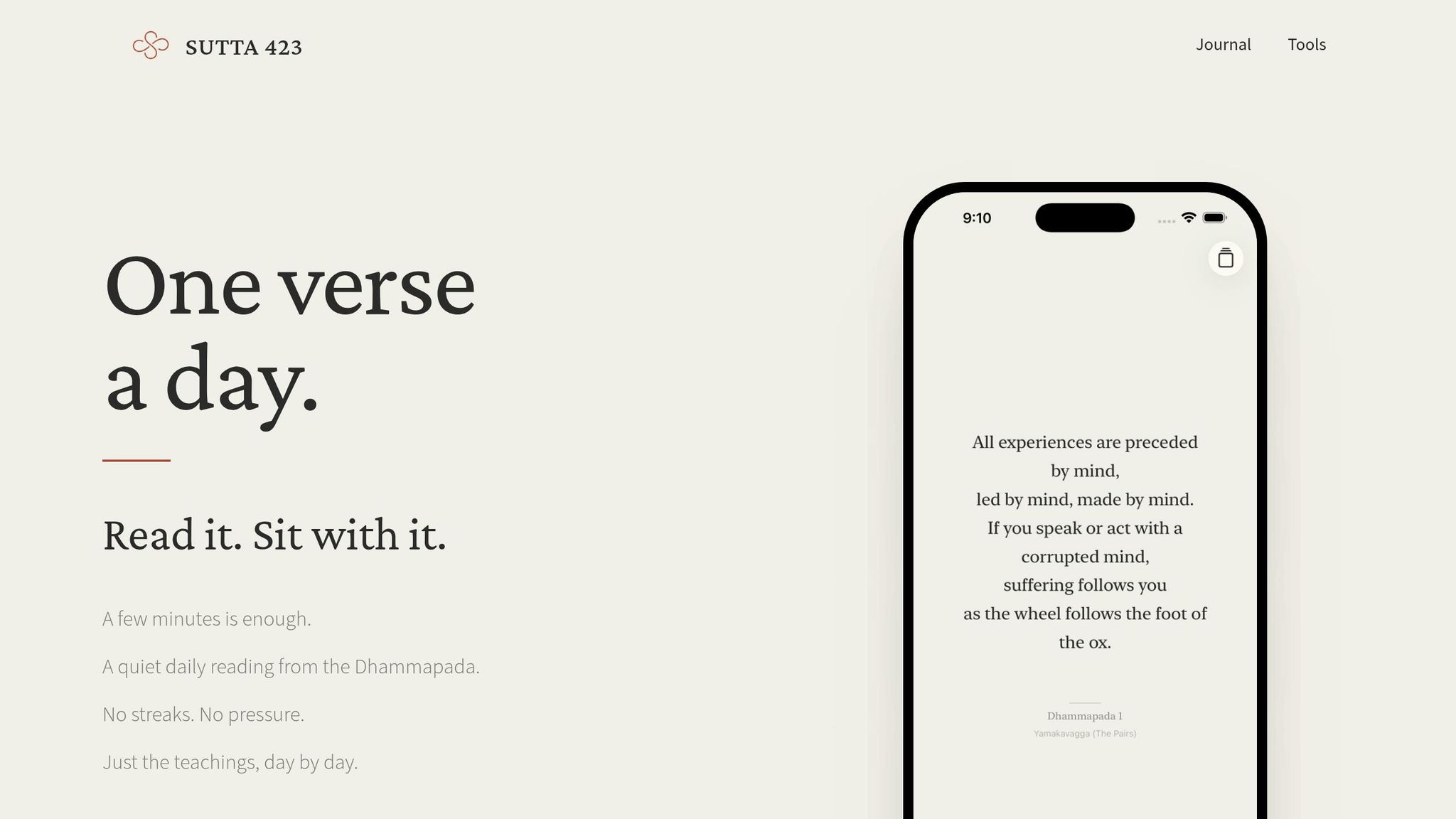
The Sutta 423 app offers a simple yet impactful way to engage with the teachings of the Dhammapada. Each day, it delivers a single verse for quiet reading and reflection, making it easy to weave mindfulness into your daily life.
How Sutta 423 Delivers One Verse a Day
The app takes you through all 423 verses of the Dhammapada over the course of 423 days, presenting one verse every 24 hours. This steady pace allows you to not only read the text but also live with its teachings. As the app describes:
"In 423 days, you'll have walked through the entire Dhammapada - not just read it, but lived with it."
A standout feature of the app is "The Echo." This feature ensures that each verse reappears on Day 8 and Day 15 after you first encounter it. By revisiting these verses, you can reflect on how their meanings evolve as you apply them to your daily experiences.
The app is free to use, with optional contributions ranging from $0.99 to $99.99. You can also enable notifications to gently remind you when the next verse is available. There’s no pressure to keep a streak or meet a deadline.
"This isn't an app that wants more of your time. Miss a day? Your progress remains intact. No streaks. No pressure. No guilt."
Fitting the App into Your Daily Practice
The app’s structure makes it easy to incorporate into various parts of your day. Its minimalist design complements practices like morning intention-setting, midday grounding, or evening reflection. Here’s how you might use it:
| Time of Day | How to Use the App |
|---|---|
| Morning | Start your day by reading the new verse to set a mindful intention. |
| Midday | Revisit the verse during a break to regain focus and perspective. |
| Evening | Reflect on how the verse’s message resonated with your day’s experiences. |
The Echo feature is particularly impactful in the evening. When a verse reappears after 7 or 14 days, it invites you to reflect on how your understanding has deepened through your lived experiences.
Conclusion: Building a Daily Peace Practice with the Dhammapada
The Dhammapada provides a practical guide to cultivating inner peace, seamlessly integrating into your daily life. Its wisdom can accompany you throughout your day - whether in the calm of the morning, during moments of midday stress, or in the quiet reflection of the evening.
This rhythm of morning intention, midday grounding, and evening reflection brings the Dhammapada to life. As one verse reminds us: "You yourself must strive. The Buddhas only point the way." While the teachings offer direction, it’s your consistent effort that moves you forward.
Incorporating this practice doesn’t require carving out extra time - it blends into your routine. Its simplicity makes it easy to maintain without added pressure, and missing a day doesn’t derail your progress. Tools like the Sutta 423 app can support your journey by delivering one verse each day over a 423-day cycle.
Start by choosing a time - morning, midday, or evening - to reflect on a verse. These small, consistent moments can build a foundation of lasting peace.
"The teachings layer naturally, without turning practice into homework." – Sutta 423
FAQs
What if I only have 1 minute a day?
If you’ve only got a minute to spare each day, the Sutta 423 app offers a simple way to cultivate daily mindfulness. Every morning, you can read a single verse from the Dhammapada and carry its wisdom with you throughout the day. This small habit encourages reflection and mindfulness, gradually enriching your perspective - no major time investment needed.
How do I use these verses when I’m really angry?
When anger takes hold, turning to verses from the Dhammapada can be a soothing practice. Take your time reading the verse - slowly and with intention - so its meaning can truly resonate. Find a quiet space, sit still, and reflect on the words, letting their wisdom guide you toward a calmer state of mind. By incorporating this practice regularly, you can cultivate deeper self-awareness and gradually shift how you handle emotions, giving yourself the space to pause, reflect, and respond more peacefully.
How can I remember the verse during a busy day?
Use the Sutta 423 app to get a daily Dhammapada verse for reflection. Start your day by reading the verse in the morning, then take a moment to think about its meaning. During breaks or transitions throughout your day, revisit the verse to deepen your understanding. By regularly reflecting on and repeating the verse, you can absorb its wisdom and let it guide you, even during hectic moments.