

Dhammapada Chapter 17: Anger Gives Way to Compassion
Practice restraint: pause before reacting, pair compassion with firm boundaries, and review responses to reduce harm.
I don’t have to stop feeling angry to stop myself from causing harm. My starting point: pause before replying, check the facts, and set a clear limit without attacking the person.
Chapter 17 of the Dhammapada covers 14 verses (221–234). I read its guidance as a practice in choosing my response - not hiding pain or letting harm continue:
- Restrain my actions, words, and thoughts instead of striking back.
- Pair compassion with boundaries so kindness doesn’t mean giving in.
- Set pride aside so I can hear criticism without needing to win.
- Review one difficult interaction each day, repair harm I caused, and reflect on one verse.
The aim is not perfect calm. It’s <u>less harm, clear limits, and a willingness to try again</u>.
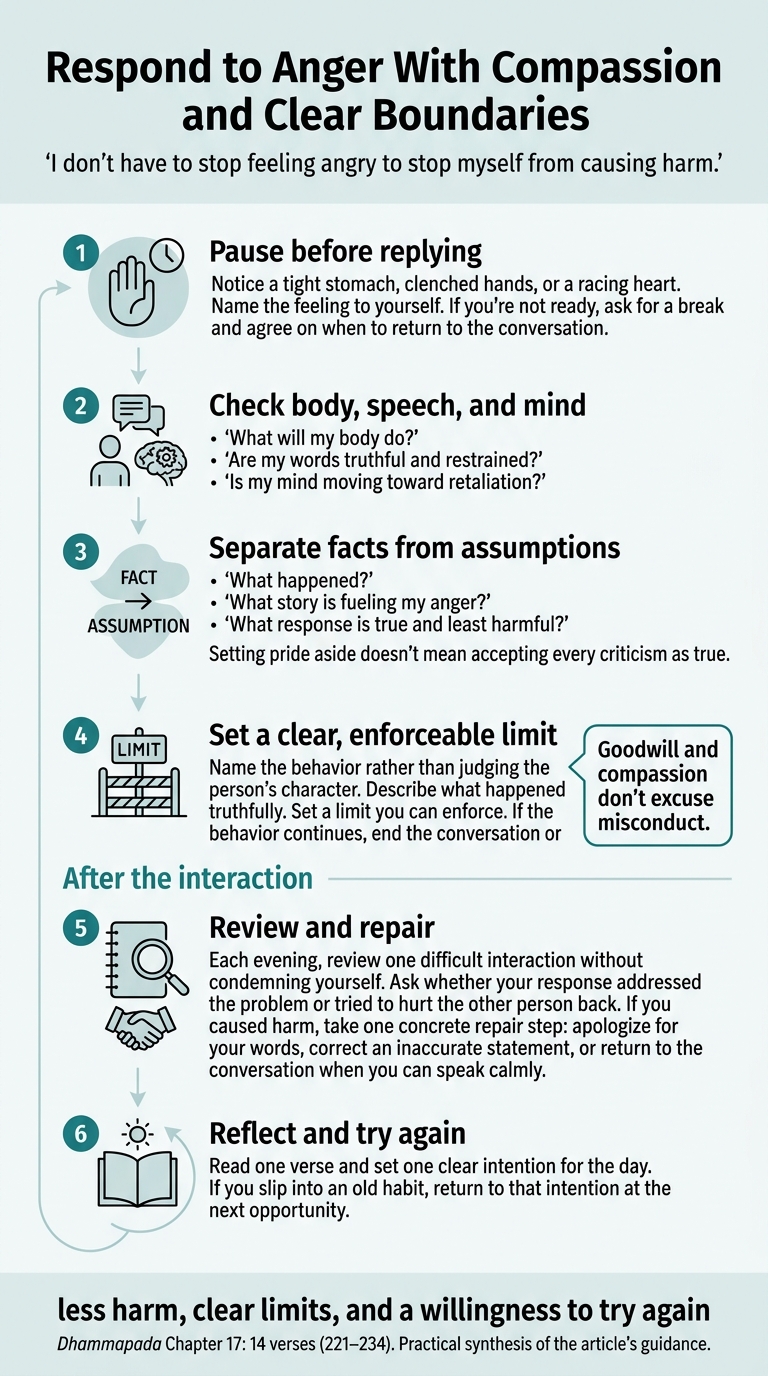
Respond to Anger With Compassion and Clear Boundaries
All About Anger - Dhammapada Kodhavagga Ver 221 to 234 by Sindhu Dhondi
Practice Restraint in Body, Speech, and Mind
Verse 222 compares rising anger to a swerving chariot. Verses 231–234 call for restraint in body, speech, and mind. Restraint redirects a reaction rather than denying it. Practice it through what you do, say, and think.
Pause Before You Respond
Pay attention to a tight stomach, clenched hands, or a racing heart. Pause before replying and name the feeling to yourself. Choose words that are truthful and avoid harm. If you’re not ready, ask for a break and agree on when to return to the conversation.
Use that pause to check how you’re about to respond.
Check Your Actions, Words, and Intentions
Ask yourself three questions: What will my body do? Are my words truthful and restrained? Is my mind moving toward retaliation?
Keep your body from acting on anger. Remove insults before sending a message. Notice thoughts of revenge without rehearsing how to carry them out or turning them into retaliation.
Example: Respond to Harsh Customer Feedback
When harsh feedback brings frustration, pause before replying. Separate the complaint from its delivery and verify the facts before correcting inaccuracies. Name any unacceptable behavior without attacking the person.
Pair restraint with compassion and clear limits.
Combine Compassion With Firm Boundaries
Once you’ve paused, turn restraint into a clear boundary. Verse 223 teaches overcoming anger with non-anger and falsehood with truth. Goodwill and compassion don’t excuse misconduct. You can feel angry and still choose not to add to the harm.
Restraint becomes compassion when it stops harm without feeding anger.
Compare Four Responses to Conflict
Verse 223 rejects both retaliation and passivity. Compassion sets the tone; boundaries set the limit.
| Response Type | What it does |
|---|---|
| Retaliation | Hurt the other person in return. |
| Bottling it up | Hide or deny the feeling. |
| Passive acceptance | Let the harm continue to avoid conflict. |
| Compassionate firmness | Address the problem without adding harm. |
The aim isn’t to avoid conflict. It’s to refuse harm without causing more.
State the Problem and Set a Limit
Name the behavior rather than judging the person’s character. Describe what happened truthfully, then set a limit you can enforce. That’s different from demanding that the other person feel differently. Acknowledge your anger without using it as a threat or an attack.
If the behavior continues, end the conversation or seek support.
Let Go of Pride and Approval
Verse 221 links anger to pride; verses 227–228 remind us that praise and blame pass. When criticism threatens your self-image, protecting your reputation can take priority over understanding what happened.
After restraint comes an inward test: can you hear criticism without needing to win? Pause, separate facts from the story you’re telling yourself, and let go of the need for approval.
Let go of needing others’ approval; stay responsible for your actions. You can weigh criticism, admit a mistake, and correct it without waiting for approval. Setting pride aside doesn’t mean accepting every criticism as true.
Separate Facts From Assumptions
Before reacting, slow down. Ask yourself: What happened? What story is fueling my anger? What response is true and least harmful? Start with what you can verify, rather than guessing someone’s intent. Look for useful feedback and a specific action to change instead of focusing on your reputation.
Even when the facts are clear, pride can keep an argument alive.
Release Resentment Without Excusing Harm
Keep the boundaries you need and seek repair when possible. Taking responsibility for your part doesn’t mean accepting blame for someone else’s behavior.
When you catch yourself replaying the conflict, notice the urge to prove you’re right without feeding it. The hurt may remain, but the need for approval can pass.
Conclusion: Make Restraint and Compassion a Daily Practice
The goal isn’t to avoid anger. It’s to notice it, hold back harmful reactions, and choose compassion and truth. Progress takes repeated practice, not perfect calm.
Review Your Responses Each Day
Put the chapter’s teaching to work after a conflict: look back at what happened and decide what to do differently next time.
Each evening, review one difficult interaction. Notice the first signs of anger in your body, speech, and mind. Recall how your body reacted and what you said. Did your response help address the problem, or were you trying to hurt the other person back?
Review without condemning yourself. If you caused harm, take one concrete step to repair it: apologize for your words, correct an inaccurate statement, or return to the conversation when you can speak calmly.
Then choose a single verse to carry that lesson into the next day.
Reflect on 1 Dhammapada Verse Each Day
Read one verse and use your review to set one clear intention for the day. If you slip into an old habit, return to that intention at the next opportunity.
For a daily prompt, Sutta 423 sends one Dhammapada verse each day for quiet reading and reflection. You can resume after missed days without pressure.
FAQs
Can anger motivate change without causing harm?
Yes. Anger can be a signal to pause and redirect your energy. Instead of pushing it down, recognize it as a feeling that will pass - not something that defines you.
That pause gives you room to respond with patience and honesty rather than retaliate. It can help you set boundaries or address problems calmly instead of acting on impulse.
How can I practice compassion when someone keeps hurting me?
When someone keeps hurting you, pause before you speak or act. Notice your anger and check in with your body, words, and thoughts. Give yourself room to choose a response that avoids harm rather than strikes back. Speak calmly; harsh words can make the conflict worse.
If you keep replaying what happened, meet anger with goodwill (metta) and resentment with kindness. You can still set firm boundaries when needed. [3]
How do I let go of resentment without an apology?
Letting go of resentment is an act of personal freedom, not an obligation to reconcile. The Dhammapada teaches that forgiveness means choosing to stop carrying the weight of anger.
When anger comes up, pause before you react. Journaling or loving-kindness meditation can help you focus on your own peace. Releasing bitterness doesn’t mean giving up boundaries. You can still hold others accountable and stay firm about what you will and won’t accept.