

Dhammapada 183: Purification Insights
Let go of harm, cultivate goodness, and purify the mind for lasting inner freedom.
Dhammapada Verse 183 distills the Buddha's teachings into three actionable steps:
- Avoid harmful actions.
- Practice virtuous behavior.
- Purify your mind through mindfulness and meditation.
These principles guide ethical living and inner transformation, addressing the roots of suffering - attachment, ill-will, and delusion. By integrating these steps into daily life, you create a path toward mental clarity and peace.
This verse also aligns with the Noble Eightfold Path, reinforcing the connection between ethical conduct, mental discipline, and wisdom. The journey requires consistent effort, focusing on internal change to achieve lasting freedom from suffering.
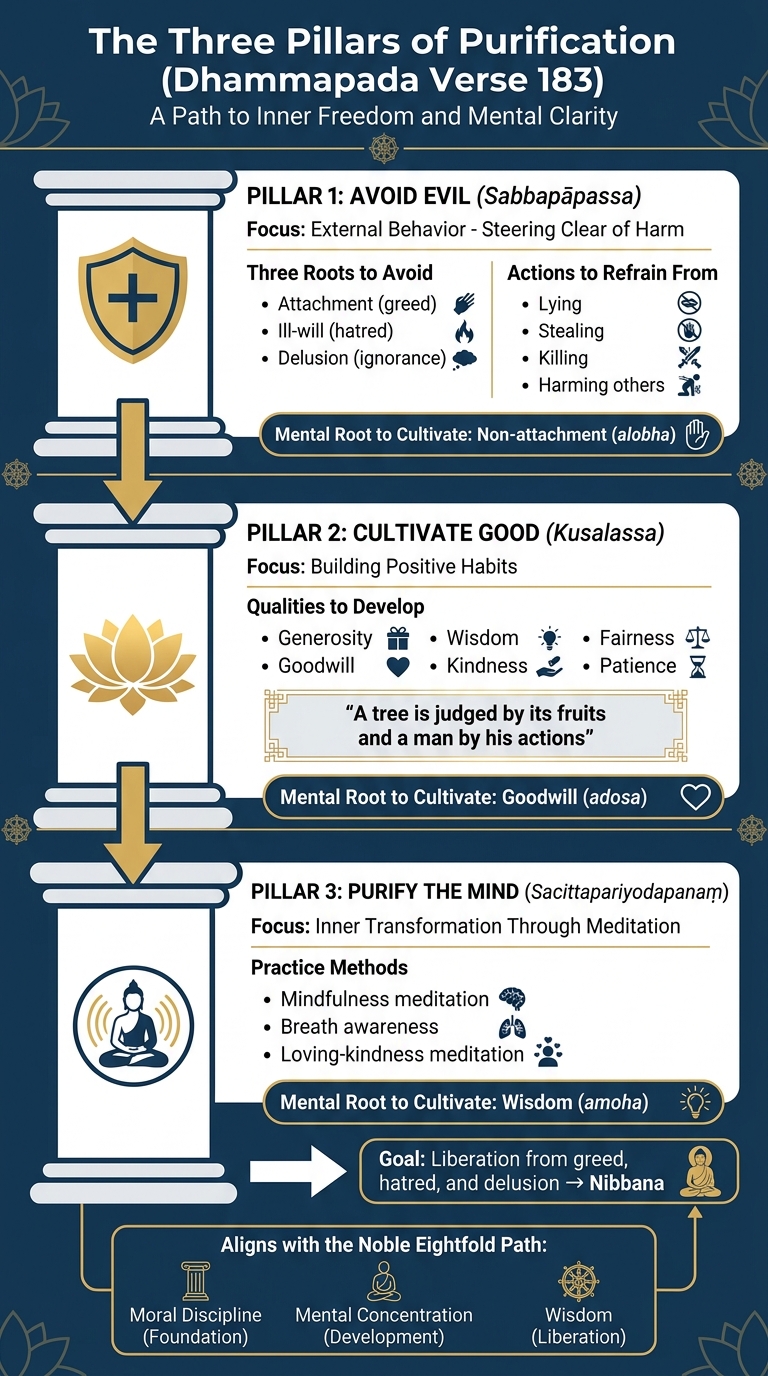
The Three Pillars of Buddhist Purification from Dhammapada Verse 183
The Three Pillars of Verse 183
Avoiding Evil: The First Step
The first pillar, avoiding evil (sabbapāpassa), focuses on steering clear of harmful thoughts and actions that stem from attachment, ill-will, and delusion. These three forces are seen as the roots of all negative behavior. In practice, this means refraining from acts like lying, stealing, and killing, as well as avoiding actions that demean or harm others.
This step lays the groundwork by addressing visible harmful behaviors. By establishing a strong ethical base, you prepare yourself for deeper spiritual growth. Once this foundation of non-harm is in place, the next step moves toward actively fostering positive actions.
Cultivating Good: Building Positive Habits
The second pillar, cultivating good (kusalassa), emphasizes the intentional development of qualities like generosity, goodwill, and wisdom. It goes beyond simply avoiding harm, encouraging deliberate acts of kindness, fairness, and patience. As Ven. Weagoda Sarada Maha Thero aptly puts it:
A tree is judged by its fruits and a man by his actions; there is no other criterion.
This stage builds on the ethical groundwork of the first pillar, directing efforts toward creating merit and developing constructive habits. With outward actions aligned with goodness, the focus then shifts inward to address the mind.
Purifying the Mind: The Path to Inner Freedom
The third pillar, purifying the mind (sacittapariyodapanaṃ), is central to Buddhist practice. While the first two pillars deal with external behavior, this step targets the internal forces of greed, hatred, and delusion that lead to suffering. Bhikkhu Bodhi highlights its importance:
The culmination of the three in purification of mind makes it plain that the heart of Buddhist practice is to be found here.
Through meditation and mindfulness, practitioners learn to recognize and gradually eliminate these mental defilements. This process takes time and relies on the ethical foundation built in the earlier steps, fostering a sense of inner calm where wisdom can thrive. As Bhikkhu Bodhi further explains:
The purpose of all insight and enlightened understanding is to liberate the mind from the defilements, and Nibbana itself, the goal of the teaching, is defined quite clearly as freedom from greed, hatred, and delusion.
This inward journey completes the transformative process that begins with ethical living, leading to ultimate freedom.
Dhammapada Verses 183-185: The Teaching of the Buddhas
How Verse 183 Connects to the Eightfold Path
Verse 183 aligns closely with the Noble Eightfold Path, offering a clear framework that integrates ethical conduct, mental discipline, and wisdom. These three pillars reflect the interconnected nature of the Eightfold Path, highlighting how each aspect supports and strengthens the others. Bhikkhu Bodhi summarizes this beautifully:
The path evolves through its three stages, with moral discipline as the foundation for concentration, concentration the foundation for wisdom, and wisdom the direct instrument for reaching liberation.
Right View and Right Intention
The first two elements of the Eightfold Path - Right View and Right Intention - tie directly to the principles of avoiding harm and fostering good. Right View emphasizes understanding how actions lead to consequences, particularly recognizing that behaviors driven by greed, hatred, and delusion result in suffering. Meditation deepens this comprehension, helping one see the bigger picture.
Right Intention builds on this by cultivating a mindset focused on non-harming and goodwill. It reflects the verse’s encouragement to develop the three moral roots: generosity (alobha), kindness (adosa), and wisdom (amoha). Together, these components guide intentions, ensuring that actions stem from wholesome mental states. This ethical and mental clarity naturally transitions into the practical actions outlined next.
Right Action, Speech, and Livelihood
The next steps - Right Action, Right Speech, and Right Livelihood - translate the ethical principles of avoiding harm and doing good into daily life. These aspects focus on honesty, fairness, and non-harming in behavior, creating a solid ethical foundation. By adhering to these guidelines, one fosters the moral discipline necessary for deeper mental and spiritual growth.
Right Effort, Mindfulness, and Concentration
The final components of the path - Right Effort, Right Mindfulness, and Right Concentration - center on mental discipline (Samadhi). Right Effort involves actively preventing unwholesome thoughts while encouraging positive mental states. Right Mindfulness acts as a constant watch over the mind, helping to weaken the hold of greed, aversion, and delusion.
Right Concentration, developed through meditation (bhāvanā), refines the mind further by uncovering the true nature of reality. The Mahā-Satipaṭṭhāna Sutta describes how this practice dissolves the illusion of a fixed self, guiding practitioners toward liberation. These practices of mental discipline align with the final pillar of Verse 183, emphasizing the path to inner purification and ultimate freedom.
Applying Verse 183 in Daily Life
Verse 183 becomes meaningful when woven into the fabric of daily living. Its essence lies in recognizing that purification begins in the mind, where defilements first take root. This involves being mindful of your thoughts, words, and actions as they occur. By building on the ethical and mental principles discussed earlier, you can integrate Verse 183 into everyday routines.
Developing Mindful Awareness
The three roots of unwholesome actions - attachment, ill-will, and delusion - can be spotted in your daily thoughts. A simple pause to examine your intentions can reveal whether they stem from greed, anger, or confusion. This small act of mindfulness creates a gap between impulse and reaction.
Mindfulness helps you view defilements as temporary states, not fixed aspects of who you are. For instance, when stuck in traffic or feeling stressed about a looming deadline, observe these emotions as passing sensations. This detachment reduces their power over you and eases fears tied to rigid self-identity. Patience (khantī) plays a crucial role here, as the Buddha emphasized its importance, calling it the "highest austerity." The Kakacūpama Sutta beautifully illustrates this mindset:
"Unsullied shall our hearts remain. No evil word shall escape our lips. Kind and compassionate with loving-heart, harbouring no ill-will shall we abide…"
Creating Positive Daily Habits
Living in alignment with Verse 183 means replacing harmful habits with positive ones. For example, practicing moderation in eating helps you distinguish between genuine hunger and cravings. This isn’t about strict dieting but about understanding the difference between the body’s needs and the mind’s desires.
Similarly, choosing kind words and avoiding harm in your interactions fosters better habits. Focus on cultivating generosity (alobha), goodwill (adosa), and wisdom (amoha) - the antidotes to attachment, ill-will, and delusion. Even small acts, like finding a quiet space at home or during a break, can help you achieve clarity and focus. These habits prepare the mind for deeper transformation through meditation.
Using Meditation to Purify the Mind
Meditation serves as a cornerstone for mental purification, offering a structured way to address unwholesome patterns that cloud judgment and values. It reinforces the principles of avoiding harm, doing good, and purifying the mind. As Bhikkhu Bodhi explains:
"Meditation, in the Buddhist training, is neither a quest for self-effusive ecstasies nor a technique of home-applied psychotherapy, but a carefully devised method of mental development... for attaining inner purity and spiritual freedom."
Through meditation, you can observe defilements as they arise, rather than reacting impulsively. The Mahā-Satipaṭṭhāna Sutta provides guidance for maintaining awareness of bodily movements and shifting mental states. Techniques like breath awareness and loving-kindness meditation are practical tools for countering negative tendencies.
When defilements surface during meditation, apply the corresponding antidotes taught by the Buddha. As Ven. Weagoda Sarada Maha Thero noted:
"The patient meditator really gets results of lasting value, the seeker after 'quick methods' or 'sudden enlightenment' is doomed by his own attitude to long disappointment."
Achieving self-purification requires consistent effort and care to address even the most persistent inner challenges.
| Pillar of Verse 183 | Practical Daily Application | Mental Root to Cultivate |
|---|---|---|
| Avoid Evil | Refrain from causing harm to others. | Non-attachment (alobha) |
| Cultivate Good | Practice generosity, kindness, and moderation. | Goodwill (adosa) |
| Purify the Mind | Use meditation to observe thoughts objectively and build concentration. | Wisdom (amoha) |
Sutta 423: Daily Dhammapada Verses for Reflection

Daily reflection is a powerful way to bring the Dhammapada's teachings into everyday life. The Sutta 423 app offers a simple yet meaningful way to engage with these teachings. Each day, the app presents one verse from the 423 stanzas for quiet contemplation, embracing the wisdom behind:
"Better than a thousand meaningless words is one meaningful word that brings peace to the one who hears it."
A standout feature of the app is its built-in Journal, which encourages users to document their personal reflections on the day’s verse. For instance, if Verse 183 appears, you might jot down one harmful action you avoided, a positive habit you nurtured, or a moment when you observed your thoughts without reacting. This practice transforms abstract concepts into personal, actionable insights.
Daily engagement with a single verse helps sharpen focus and build the concentration needed to calm the mind. Over time, this habit develops the sustained attention essential for reducing mental restlessness.
Available on the App Store, the app provides tools to establish a steady rhythm for applying the principles of Verse 183. By consistently reflecting on avoiding harm, fostering good, and purifying the mind, users align their daily actions with the essence of these teachings.
Conclusion: The Path of Purification
Dhammapada Verse 183 lays out a straightforward yet profound guide for personal transformation: avoid harmful actions, do good, and purify the mind. This timeless teaching addresses the universal struggles tied to attachment, ill-will, and delusion. Its enduring relevance comes from its simplicity and clarity, reflecting principles taught by all Buddhas throughout history. The verse invites a lifelong journey of both internal and external transformation.
This path isn’t about shortcuts or instant results - it’s about steady, patient effort. True mental purification is a gradual process that leads to meaningful, lasting change. Those seeking quick enlightenment often find frustration instead, as clarity and fearlessness emerge only through consistent practice over time.
What makes this teaching so powerful is its focus on internal change. While ethical behavior - like avoiding harm and practicing generosity - is essential, the real work happens within. Through disciplined practice, the mind can be transformed into a tool for profound inner growth. This transformation uproots suffering and replaces it with wisdom, compassion, and kindness.
The three pillars outlined in the verse - ethical conduct, mental clarity, and purification - are deeply interconnected. Ethical conduct lays the foundation for a clear mind, making it impossible to purify the mind while engaging in harmful actions. By observing thoughts and feelings as impersonal events rather than identifying them as "self", you begin to dissolve the illusion that drives fear and selfishness. This shift opens the door to seeing reality as it is and alleviating suffering.
In a world filled with complexity and stress, the guidance of Verse 183 remains remarkably relevant. Its message is clear and actionable: let go of harmful habits, embrace goodness, and cultivate peace through mindful effort. Whether navigating modern challenges or timeless spiritual questions, this verse provides a dependable path toward inner peace and freedom.
FAQs
How do I know if a thought is unwholesome?
Unwholesome thoughts are those rooted in greed, hatred, or delusion. These types of thoughts often bring harm, lead to suffering, or cloud the mind with negativity. To recognize them, consider their impact: do they foster peace and mental clarity, or do they result in distress and harmful consequences? Reflecting on this can help you understand their nature.
What’s the difference between doing good and purifying the mind?
Practicing good involves engaging in positive actions, speaking kindly, and maintaining wholesome thoughts. On the other hand, purifying the mind takes things a step further. It’s about clearing the mind of negativity like greed, hatred, and delusion. This deeper process fosters clearer thinking and supports spiritual growth.
What meditation should I start with for mind purification?
Mindfulness meditation, especially rooted in the Theravada tradition, serves as an excellent way to clear and refine the mind. By practicing mindfulness, you can build greater awareness of your thoughts, words, and actions, helping to confront and reduce mental impurities such as greed, hatred, and delusion. This approach encourages patience, self-control, and deeper understanding, reflecting the principles outlined in Dhammapada 183 on mental purification.