

Dependent Origination and Karma in Daily Life
Apply dependent origination and karma: notice feeling, craving, and action; pause before reacting and change conditions to reduce harm.
I can’t choose every feeling, but I can practice choosing my response. When criticism stings or my phone pulls my attention, I can pause, name the feeling, and check my intention before acting.
Here’s how I connect the two teachings:
- Dependent origination: Experience depends on conditions. Its 12 links describe how suffering develops, with both daily-life and rebirth readings.
- Karma: My intentional actions - not fate or cosmic punishment - help shape habits and relationships. Other causes also affect what happens.
- Daily practice: I can notice craving, loosen my grip on approval or control, and change one trigger, such as a phone alert.
The point isn’t to blame myself or anyone else. It’s to <u>look for causes, take responsibility, and reduce harm</u>. Reviewing one interaction each evening gives me a place to start.
Dependent Origination and Karma: Pause and Choose
Day 7 -2022 10 Day June Retreat - SN 12.25 Karma and Dependent Origination
How Karma Fits Within Dependent Origination
Karma means intentional action of body, speech, and mind - not events or accidents alone. What you deliberately do can shape later experience, but the results depend on many conditions.
How Feeling Leads to Intention and Action
Karma comes into view when a feeling turns into a response. In dependent origination, intention takes shape through both habit and present conditions.
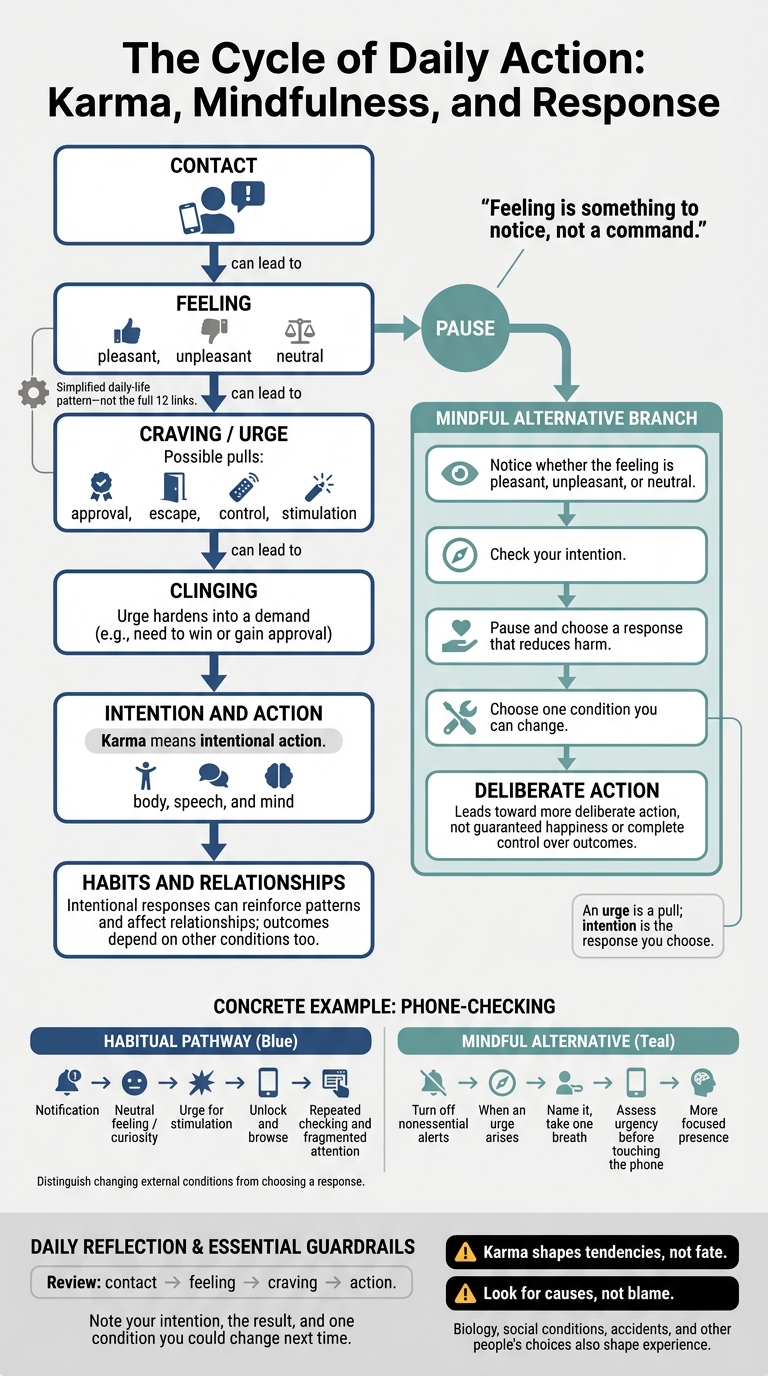
Contact gives rise to feeling. Feeling can lead to craving, craving can harden into clinging, and clinging can shape becoming. Mindfulness can interrupt this sequence.
Before you speak or act, notice whether the feeling is pleasant, unpleasant, or neutral. Then ask what your mind wants: approval, escape, control, or stimulation. Pause and choose a response that reduces harm. This helps separate an experience you didn’t choose from conduct you can influence.
Why Karma Is Not Fixed Destiny
Karma shapes tendencies, not fate. Biology, social conditions, accidents, and other people’s choices also shape experience. Karma is not cosmic reward or punishment, and it never means someone deserves suffering. Use this teaching to examine present choices - not to assign blame.
| Distinction | Explanation | Everyday meaning |
|---|---|---|
| Intentional actions vs. accidents | Karma concerns intentional thought, speech, and bodily action, not accidental events. | Consider intention separately from the event itself. |
| Conditioned possibilities vs. fixed destiny | Conditions shape tendencies without making every response inevitable. | Pause before angry speech, remove a phone trigger, or seek support. |
| Effects within this lifetime vs. Buddhist rebirth teachings | Intentions shape observable habits and relationships. Karmic results beyond one lifetime are Buddhist teachings, not scientifically established facts. | Separate observed habit patterns from claims about rebirth. |
Anger, approval-seeking, and habit loops offer clear examples of these patterns.
Everyday Examples of Karma and Conditions
Everyday moments show how contact, feeling, and intention can turn into speech and habit. These examples trace part of that chain, starting with feeling and showing where a different response is still possible. An urge is a pull; intention is the response you choose.
The pattern shows up in how we speak, seek approval, and repeat habits.
Anger at Criticism and Desire for Approval
Hypothetical small-business scenario - criticism: A customer emails that an order was handled carelessly. Unpleasant feeling turns into aversion, with embarrassment and anger. Wanting to retaliate, you decide to send a cutting reply. Conflict may escalate, and you reinforce the habit of reacting defensively. Instead, reread the complaint, separate facts from assumptions, and address the order rather than attack the customer.
Hypothetical small-business scenario - approval: Your business post receives enthusiastic praise. Pleasant feeling turns into craving: you want more reassurance and decide to keep seeking it. You repeatedly refresh comments instead of finishing customer work. Attention scatters, and checking becomes the habit. Enjoy the praise without requiring continued attention, choose one review time, and return to the unfinished task.
Blaming Others and Checking Your Phone
Hypothetical workplace scenario - blame: An employee submits an incorrect invoice. Unpleasant feeling brings concern about the consequences. Concern turns into self-protection, and you decide to assign blame, criticizing the employee publicly. Trust weakens, and later mistakes become harder to address. Instead, verify what happened, then speak privately about the incorrect entries and agree on a review step - accountability does not require a personal attack.
Hypothetical workplace scenario - phone checking: A neutral notification can spark curiosity during focused work. Drawn toward possible stimulation, you decide to unlock the phone and browse. With repetition, curiosity turns into habitual checking. A brief reward may give way to fragmented attention. Turning off nonessential alerts changes the conditions supporting the habit; when an urge arises, name it, take one breath, and assess urgency before touching the phone. That pause is the opening the next section will use.
How to Interrupt a Conditioned Reaction
Awareness gives you room to choose, even when anger or desire is still present. Observing means naming what you feel without denying it or acting on it. The pause starts where contact becomes feeling. Here, awareness can interrupt craving before it turns into clinging.
Notice Contact, Feeling, and Craving
Start with the first moment after contact. Notice vedanā: a pleasant, unpleasant, or neutral feeling tone. Keep that feeling separate from the story your mind adds.
Then notice the push or pull - the urge for reassurance, escape, control, or for someone else to change. Feeling is something to notice, not a command. You don’t have to make it go away before choosing how to act.
Question Clinging Before You Respond
Look for the demand beneath the urge: the need to win, protect your status, or gain approval. Ask whether the issue calls for a response or whether you’re trying to protect yourself from criticism. Pause if you need to, then choose how to respond. Non-clinging can still mean setting a firm boundary or holding someone accountable.
Review what your intention, words, and actions supported, without judging yourself. Choose one condition you can change. Changing your intention and the conditions around it changes the next reaction.
Daily Reflection and Key Takeaways
Once you notice the chain in the moment, revisit it later to see the pattern more clearly.
Reflect on One Event Each Day
Each evening, review one interaction through contact → feeling → craving → action. What set it off? What feeling arose? Did you move toward it or away from it? Note your intention, the result, and one condition you could change next time.
The goal isn't just to analyze what happened. It's to respond with more care next time. Look for causes, not blame. Understanding the conditions doesn't excuse harm. It helps you take responsibility for your action, repair what you can, and choose a different response.
If it helps, pair your review with a daily Dhammapada verse from Sutta 423.
Choose One Response Deliberately Today
Daily review helps turn insight into choice. Dependent origination explains how conditions shape experience. Karma refers to intentional action within those conditions. Anger, desire, speech, and habits are places to practice - not proof that your future is fixed.
Feeling need not become craving or harm. Today, notice one feeling tone, check for harm, and choose your response deliberately.
FAQs
If intentions are conditioned, how can I choose freely?
Past habits and patterns shape your intentions, but a pause creates room for freedom. Mindfulness helps you notice the gap between a feeling and habitual craving, letting you observe instead of reacting automatically. Adding new conditions - such as reflecting on a verse from the Sutta 423 app - can help you shape your future through deliberate, wholesome choices.
How can I tell non-clinging from suppressing anger?
Suppression means trying to push anger away or force it out of your mind - which can leave it trapped. Non-clinging means pausing before you react and recognizing anger as a passing emotion shaped by conditions.
Instead of denying anger, notice the tension in your body without judging it. Let the feeling come and go without letting it control your words or actions, or turn into a harmful habit.
What can I do after reacting harmfully?
Don’t turn the experience into self-hatred. That only reinforces negative patterns. Instead, recognize your capacity to grow and look at the habit loop behind your reaction.
Next time, pause before responding. Check your intentions, then choose kindness over impulse. Regular reflection - such as reading the daily verses from Sutta 423 - can help you build this awareness over time.