

Daily Reflection Checklist: 5 Steps to Inner Calm
Five 5‑minute practices—breathing, gratitude, self-reflection, loving-kindness, and an evening release—to build daily calm and focus.
Finding peace in a busy world doesn't require hours of effort - just 25 minutes a day. The Daily Reflection Checklist offers five simple practices to help you feel calmer and more focused. Inspired by the Dhammapada and backed by research, these steps are easy to follow and effective when practiced consistently:
- Mindful Breathing: Spend 5 minutes focusing on your breath to reduce stress and ground yourself in the present.
- Gratitude Practice: Write down 3–5 things you’re thankful for to shift your mindset toward positivity.
- Self-Awareness Reflection: Observe your thoughts and emotions for 5 minutes to build emotional clarity and resilience.
- Loving-Kindness Meditation: Extend compassion to yourself and others with simple, heartfelt phrases.
- Evening Release Ritual: Let go of the day’s worries and set intentions for tomorrow to prepare for restful sleep.
These steps are supported by studies showing that regular, short mindfulness practices improve emotional well-being, reduce stress, and enhance focus. Start with one practice today and build from there to create a daily habit of calm and clarity.
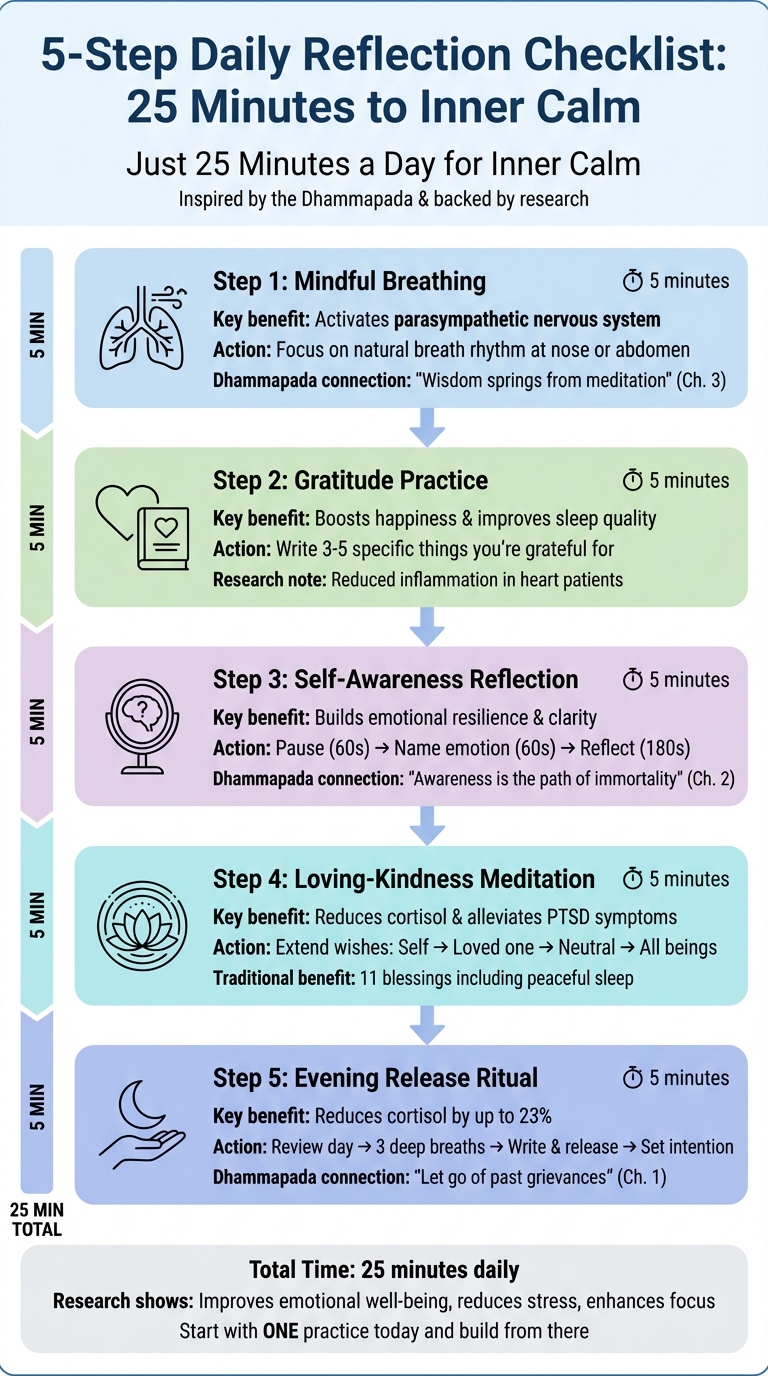
5-Step Daily Reflection Checklist for Inner Calm in 25 Minutes
Mental Reset in 5 Minutes - Guided Mindfulness Meditation - Calm Anxiety and Stress
Step 1: Mindful Breathing
Your breath is like an anchor, keeping you grounded in the present and steady amidst life's distractions. In Buddhist tradition, this is called Anapanasati, or mindfulness of breathing, which involves maintaining continuous awareness of each breath. The Dhammapada verse 282 reminds us: "Wisdom springs from meditation; without meditation wisdom wanes". By focusing on your breath, you create a mental space where calm and clarity can grow. This makes mindful breathing a key part of the Daily Reflection Checklist.
Breathing serves a practical function - it redirects your attention away from endless planning, anxious thoughts, or sensory distractions. Shaila Catherine, a Buddhist teacher, explains: "The breath offers meditators a versatile meditation subject... to steer attention away from distractions and anchor attention on a present experience". The goal isn’t to control your breath or force it into a specific pattern. Instead, simply observe its natural rhythm. Let’s explore how to incorporate this into your daily life.
How to Practice Mindful Breathing
Find a quiet spot where you can sit comfortably. Set a timer for 5–10 minutes, and either soften your gaze or close your eyes to focus inward.
Pick an anchor point for your attention: either the tip of your nostrils (where you feel air moving in and out) or your abdomen (noticing its gentle rise and fall). Let your breathing flow naturally, and focus on the sensations of each inhale and exhale.
When your mind wanders - and it will - acknowledge the distraction without frustration. You might label it as "thinking" or "wandering", then gently guide your focus back to your breath. This process of noticing and returning is the essence of the practice, not a sign of failure.
Benefits of Mindful Breathing
Mindful breathing activates the parasympathetic nervous system, which triggers the "rest and digest" response, counteracting the stress-driven "fight or flight" mode. Even a single minute of focused breathing can reduce tension and reset your mental state by signaling to your brain that everything is okay. Over time, regular practice can improve heart rate variability (a marker of stress resilience) and may lower your resting heart rate and blood pressure.
On a deeper level, mindful breathing gives you emotional breathing room. Instead of immediately reacting to worries or judgments, you’ll start to observe them as fleeting thoughts rather than urgent truths. As Buddhist teacher Bodhipaksa puts it: "The breath is just a tool to help us develop mindfulness, and it's not an end in itself". The real reward is the sense of clarity and presence you bring to the rest of your day.
Step 2: Gratitude Practice
Gratitude helps train your mind to focus on and appreciate what you already have. As the Dhammapada says:
"What we are is the result of what we have thought, is built by our thoughts, is made up of our thoughts. If one speaks or acts with a pure thought, happiness follows one, like a shadow that never leaves".
When you redirect your attention from what’s lacking to what’s present, you begin to nurture thoughts that bring contentment. This mindset shift lays the groundwork for simple, practical exercises that can become part of your daily routine.
Consistency is key here. Studies show that dedicating just 5 minutes a day to gratitude can significantly enhance your overall well-being and create long-lasting changes in perspective. Even jotting down 3 things you’re grateful for can make a difference. For example, research found that gratitude journaling reduced inflammation in heart failure patients, potentially improving their survival rates. Over time, you might also notice benefits like better sleep, lower blood pressure, and stronger relationships.
Daily Gratitude Exercise
Building on the mindfulness you developed in Step 1, this simple exercise can help you start or end your day with gratitude. Pick a consistent time and place to make this a habit. Many people find success with an "if-then" approach, such as: "When I sit down with my morning coffee, I will write three things I’m grateful for."
Write down 3–5 things you’re thankful for, and be as specific as possible. For example, instead of just writing "my home", you might say, "the cozy warmth of my living room where I relax with my favorite book." The added detail helps you connect more deeply to your gratitude.
If writing feels repetitive, try switching things up. You could explore other methods like taking mindful walks or simply reflecting on gratitude during quiet moments. The most important part is staying consistent.
Impact of Gratitude
Practicing gratitude regularly reshapes your mindset, making it easier to notice everyday kindness, beauty, and support. Over time, this shift can build emotional resilience and help you adapt to life’s challenges. It may also encourage you to celebrate others’ successes, deepening your relationships and fostering a sense of connection.
The Dhammapada offers another insightful reminder:
"The virtuous find joy in this world, and they find joy in the next... They find joy and are glad when they see the good they have done".
Gratitude creates a powerful cycle - the more you recognize what’s good, the more inspired you feel to act with kindness and integrity. With regular practice, gratitude doesn’t just boost your mood; it helps shape the person you become.
Step 3: Self-Awareness Reflection
Take a moment to observe your inner world without letting it overwhelm you. The Dhammapada offers a timeless reminder: "Awareness is the path of immortality; thoughtlessness is the path of death. Those who are aware do not die. The thoughtless are as if dead already." By simply observing your thoughts and emotions without reacting, you create space for calm and deliberate choices. This practice builds on mindfulness techniques, paving the way for a more peaceful inner state.
Think of self-awareness as your inner compass. It allows you to notice emotional patterns and respond intentionally rather than falling into habitual reactions. This isn’t about overanalyzing every feeling or getting stuck in your head. Instead, it’s about noticing what’s happening in the moment, naming it, and letting it pass.
The Dhammapada also advises: "As fletchers make their arrows straight, the wise make straight their wavering and unsteady thought, which is difficult to guard and difficult to restrain." Your mind will wander - that’s natural. The key is to gently bring your attention back to the present moment, over and over again.
5-Minute Self-Reflection Exercise
To deepen your self-awareness, you don’t need hours of meditation. Short, consistent practices are often more effective than occasional long sessions, as shown by a 2018 study in the Journal of Personality and Social Psychology. Here’s a simple, three-step exercise you can try anytime:
- Pause and Scan (60 seconds): Close your eyes and scan your body for areas of tension. Don’t try to change anything - just notice it.
- Name and Note (60 seconds): Label your current emotion with precision. Instead of saying "bad", try "frustrated" or "anxious." Research shows that naming emotions can reduce their intensity by activating the prefrontal cortex.
- Reflect and Redirect (180 seconds): Ask yourself, "What caused this feeling?" and "Have I felt this way before?" Use these insights to pause and reset your response.
To make this practice a habit, tie it to something you already do - like waiting for your coffee to brew, during your commute, or before lunch. Remember, consistency is more important than duration. Just 5 minutes a day can lead to noticeable improvements in emotional regulation within weeks.
How Self-Awareness Promotes Inner Calm
Self-awareness, like mindful breathing and gratitude, plays a key role in cultivating inner calm. When you observe your thoughts without judgment, you develop what researchers call the "observer effect". This is the moment when you catch yourself before reacting impulsively, creating the opportunity to choose a more thoughtful response.
The Dhammapada offers further wisdom: "There is no fear for the one whose thought is untroubled, whose mind is not confused, who has ceased to think of good and bad, who is aware." This doesn’t mean suppressing emotions or pretending everything is fine. It’s about recognizing that emotions are temporary and that you don’t need to act on every passing thought.
Over time, practicing self-awareness rewires your brain, making this process more natural. You’ll start noticing patterns - maybe checking your inbox sparks anxiety, or certain conversations leave you feeling drained. With this awareness, you can make small, intentional changes that gradually build a sense of lasting calm.
Step 4: Loving-Kindness Meditation
Loving-kindness meditation, or metta, is a practice that invites you to extend a heartfelt wish - like "May you be well" - to yourself and others. This meditation encourages you to take the mindfulness you've cultivated internally and direct it outward, creating waves of compassion that touch everyone, starting with yourself. The Dhammapada offers a timeless reminder:
"Hatred is never appeased by hatred in this world. By non-hatred alone is hatred appeased. This is a law eternal."
Unlike forcing an emotion, metta meditation focuses on gently setting an intention for well-being. Studies suggest that this practice can reduce cortisol levels and may alleviate symptoms of PTSD and chronic pain. By building on the self-awareness developed in earlier steps, metta helps you foster a sense of compassion toward others.
Guide to Loving-Kindness Meditation
- Find Comfort: Begin by sitting or lying down in a position that feels natural and supports easy breathing. Close your eyes and take a moment to notice the rhythm of your breath.
-
Start with Yourself: Silently repeat phrases like:
- "May I be safe."
- "May I be happy."
- "May I be healthy."
- "May I live with ease." Let the words flow gently, without trying to force any particular feeling.
- Expand Your Circle: Picture someone you care about deeply - a friend, mentor, or even a pet - and direct the same wishes toward them. Next, think of someone neutral, like a neighbor or someone you see often but don’t know well, and offer them these wishes. If you're ready, extend the practice to someone you find difficult. If that feels overwhelming, return your focus to yourself or a loved one.
- Include Everyone: Finally, imagine your wishes radiating outward to all living beings: "May all beings everywhere be safe, happy, healthy, and at ease."
Practicing this meditation for just 5 minutes a day can make a meaningful difference. You can also weave these phrases into everyday moments - like waiting in line or walking to your car. The goal isn’t perfection; it’s about showing up and being present. Over time, this practice not only nurtures compassion but also delivers emotional benefits you can feel.
Benefits of Loving-Kindness Meditation
This meditation fosters empathy by encouraging you to treat others with the same kindness you extend to yourself. It reminds us that everyone shares the same desire to be happy and free from pain. This shift in perspective can help you approach conflicts with patience instead of anger, strengthening your relationships and sense of connection.
Over time, metta meditation can ease stress and anxiety by releasing the inner tension that fuels emotional reactivity. It also helps you let go of grudges, freeing you from the emotional weight of anger. According to traditional teachings, practicing metta brings 11 blessings, including peaceful sleep, pleasant dreams, and a calm demeanor. Even a few minutes a day can lead to meaningful changes over weeks and months.
Step 5: Evening Release Ritual
Unfinished tasks and lingering worries can easily disrupt your ability to rest. An evening release ritual allows you to put the day behind you, clearing mental clutter so you can sleep more peacefully and wake up feeling refreshed. This practice takes inspiration from Buddhist traditions like Beginning Anew, which encourages reflecting on your actions, words, and thoughts to reset your mind and strengthen your relationships.
The ritual is all about intention. By consciously choosing to let go of what no longer serves you, you tap into a universal principle: energy doesn’t disappear - it transforms. That frustration from a tough meeting or anxiety about tomorrow’s to-do list won’t simply evaporate. But with focused effort, you can shift that energy from tension to calm. As Claire Elise puts it:
"It is only when we are willing to let go and open our hands that we are able to receive".
Studies show that daily expressive writing and reflection can reduce cortisol levels by up to 23%. People who stick with such practices for 30 days or more often report improved mood stability and better decision-making. Even 10–15 minutes a day can make a noticeable difference. The secret? Consistency, not perfection.
How to Practice the Evening Release Ritual
This ritual builds on earlier mindfulness techniques, helping you end your day with a sense of clarity. Find a quiet place where you won’t be interrupted - your bedroom, a cozy chair, or even the edge of your bed works fine. Start by briefly reviewing the highs and lows of your day without judging yourself. Take note of any feelings or lessons that come up.
Once you've acknowledged your day, let it go with three deep, intentional breaths. The Plum Village tradition teaches:
"With just three conscious breaths we can release the tensions in our body and mind and return to a cool and clear state of being".
You might imagine your worries being washed away, offering gratitude for the lessons they brought.
If a particular thought or worry continues to weigh on you, write it down. Describe the thought, fear, or belief in a few sentences. Then, if it’s safe to do so, burn the paper as a symbolic way of releasing that energy. This isn’t about erasing the memory - it’s about acknowledging what you’ve learned and choosing not to carry its weight into tomorrow.
Finally, set a simple intention for the next day. It doesn’t need to be complicated - something like “I’ll be patient with challenges” or “I’ll notice small moments of joy.” This small act gives your mind a positive focus, steering it away from endless worry. End the ritual with a moment of deep relaxation to ease into restful sleep.
Why Letting Go is Important
Letting go of today’s events isn’t just about getting a better night’s sleep - it’s about starting tomorrow with a clear mind and steady emotions. Regular practice strengthens your brain’s ability to respond calmly and thoughtfully, building resilience over time. It also ties into earlier steps like self-awareness and gratitude, creating a full-circle approach to daily reflection.
This practice helps break repetitive cycles. As the saying goes: "What we don't reflect on, we repeat". Acknowledging your struggles gives you the space to make new choices. It’s not about obsessing over mistakes - it’s about understanding your reactions and decisions on a deeper level.
Mindfulness teachings often emphasize the value of release. A well-loved story illustrates this:
"A man once said to the Buddha, 'I want happiness.' The Buddha replied, 'First remove "I", that is ego. Then remove "want", that is desire...'" - Chris Essey.
Summary Table: Daily Reflection Checklist
Checklist Table
This five-step daily reflection process requires just 25 minutes - five minutes per step - and can reshape how you manage stress and cultivate calmness in your life. The checklist below is a handy guide to seamlessly incorporate these practices into your day.
Rooted in the timeless teachings of the Dhammapada, each step transitions your mind from distraction to clarity. The Dhammapada, with its 423 verses across 26 chapters, offers enduring insights that align perfectly with these practices. The table summarizes the benefits of each step and its connection to the Dhammapada, making it easier to anchor your practice and nurture mindfulness daily.
| Step | Time Commitment | Core Benefits | Dhammapada Connection |
|---|---|---|---|
| 1. Mindful Breathing | 5 Minutes | Soothes the nervous system; eases immediate stress | Ch. 3 (Thought): Taming the wandering, restless mind |
| 2. Gratitude Practice | 5 Minutes | Boosts happiness; enhances sleep quality | Ch. 1 (Twin Verses): Pure thoughts bring lasting happiness, like a shadow |
| 3. Self-Awareness Reflection | 5 Minutes | Strengthens emotional resilience and perspective | Ch. 2 (Awareness): Awareness as the ultimate "treasure" and pathway to peace |
| 4. Loving-Kindness Meditation | 5 Minutes | Reduces anger; cultivates inner harmony | Ch. 1 (Twin Verses): Overcoming hate through love |
| 5. Evening Release Ritual | 5 Minutes | Encourages mental release; prepares the mind for restful sleep | Ch. 1 (Twin Verses): Letting go of past grievances to cease hate |
The American Psychological Association highlights that expressive writing and journaling can reduce negative thoughts and enhance memory. Additionally, mindfulness practices have shown positive effects on conditions like depression, insomnia, and hypertension. What makes this checklist so accessible is its simplicity - no fancy tools or costly memberships, just a commitment to daily practice. By following these steps, you can gradually build resilience and embrace a more peaceful state of mind, one small habit at a time.
Conclusion
Finding inner calm isn’t something that happens overnight - it’s a process built through small, consistent habits practiced daily. Techniques like mindful breathing, gratitude exercises, self-awareness reflection, loving-kindness meditation, and evening release rituals take just a few minutes each day, but their effects grow steadily over time. The secret isn’t in spending hours meditating but in making intentional, frequent moments to reset and rewire your mind.
Start with the practice that feels most natural to you. Maybe pair mindful breathing with your morning coffee or take a quiet moment before a meeting. Focus on one habit for a week, then build from there. As Sarah Thompson from Ahead explains:
"The compounding benefits of these micro-reflection moments build gradually but significantly over time".
These techniques act as touchpoints throughout your day - moments to pause, breathe, and reconnect with the present.
Studies back this up, showing that mindfulness-based practices can help with challenges like depression, anxiety, stress, insomnia, and even hypertension. By learning to process difficult emotions and shifting your mindset from "this is happening to me" to "this is part of life", you can develop the balance and peace that lead to lasting emotional well-being.
FAQs
What if I only have 5 minutes a day?
Even if you only have 5 minutes a day, you can make time for self-reflection and mindfulness. Try simple practices like mindful breathing, jotting down a quick gratitude list, or checking in with yourself during everyday moments - like sipping your morning coffee or standing in line. These brief pauses can help you feel more grounded and less stressed, turning ordinary routines into chances to find calm and reconnect with yourself.
Do I have to be Buddhist to do this?
No, you don’t need to be Buddhist to try these reflection steps. They’re based on mindfulness and self-awareness techniques that anyone can adopt, no matter their beliefs or background. These practices are meant to be simple, inclusive, and open to all.
What should I do when my mind won’t stop racing?
When your thoughts feel like they're running a marathon, mindfulness can help you hit pause. Start with deep, intentional breathing - it’s a simple way to anchor yourself in the present. Another option? Take a moment for a mental check-in or jot down your thoughts in a journal. Both can help clear the mental fog. Making these habits part of your daily routine, like using a tool such as the Daily Reflection Checklist, can bring a sense of calm and make it easier to handle those relentless, racing thoughts.