

Best Times of Day for Spiritual Reading Practice
Match spiritual reading to your daily energy—practical times and short routines for morning, midday, evening, and bedtime practice.
The best times for spiritual reading align with your body’s natural rhythms and energy levels. Here's a quick guide:
- Early Morning (4:00–6:00 AM): The pre-dawn period, known as Brahma Muhurta, offers clarity and focus. Your mind is calm, and distractions are minimal, making this an ideal time for deep, reflective reading.
- Morning (Around Sunrise): Cortisol levels peak, enhancing alertness. This is perfect for absorbing teachings that inspire action for the day ahead.
- Midday Break: A short reading session during lunch can reset your energy and calm your mind, helping you tackle the afternoon with renewed focus.
- Evening (Sunset): As the day winds down, this is a peaceful time for reflective reading. It helps transition from the day’s busyness to a calmer state.
- Night (Before Sleep): Reading just before bed promotes relaxation and better sleep. Focus on light, calming material to end your day on a peaceful note.
The key is consistency. Start with manageable sessions, even 5–10 minutes, and choose times that fit your daily schedule. Experiment with these periods to find what works best for your spiritual growth.
Best Times of Day for Spiritual Reading: Daily Schedule Guide
Early Morning (4:00 AM–6:00 AM): Reading During Brahma Muhurta
Benefits of Brahma Muhurta
Brahma Muhurta, which translates to "time of the creator", is a pre-dawn period that begins 1 hour and 36 minutes before sunrise and lasts for 48 minutes. This tranquil window aligns with the Ayurvedic Vata phase (roughly 2:00 AM to 6:00 AM), a time when the mind is naturally calm and the body’s functions slow down. With fewer distractions and the brain entering alpha-wave states, this period is particularly suited for spiritual and reflective reading.
Yoga teacher Tirumalai Krishnamacharya beautifully summarized the essence of this time:
"Think of God. If not God, the sun, if not the sun, your parents".
During Brahma Muhurta, oxygen levels are higher, and cortisol peaks naturally, providing energy without inducing stress. These factors combine to create an ideal environment for focused and enriching reading.
Starting Your Morning Reading Practice
To take advantage of Brahma Muhurta, determine your local sunrise time and count back 96 minutes to pinpoint when it begins. For instance, if sunrise is at 6:30 AM, you would start your reading at 4:54 AM. A consistent 10:00 PM bedtime can help you wake up refreshed, and placing your alarm across the room ensures you rise promptly.
To shake off morning grogginess, splash cold water on your face or do light stretches. Avoid checking your phone or other screens before your reading session to maintain the clarity of this peaceful time. Begin with a manageable 20-minute session, gradually increasing the duration as the habit becomes part of your routine. This serene period is perfect for contemplative reading, such as a verse from the Dhammapada or a sutta from the Pali Canon. If you feel drowsy, try reading aloud or take a short walk to stay alert.
Morning Post-Wake (Around Sunrise): Reading During Natural Receptivity
How Sunrise Supports Mindfulness
The moments just after waking are a perfect opportunity for spiritual reading. During this time, your brain transitions from delta and theta waves (associated with deep sleep) to alpha waves, which create a calm, reflective state - ideal for absorbing meaningful texts . This early-morning window allows spiritual teachings to resonate more deeply.
Your prefrontal cortex, responsible for focused attention, is naturally engaged during this period. Additionally, cortisol levels peak between 6:00 AM and 8:00 AM, providing a boost in alertness. A 2019 study from the University of Waterloo revealed that meditating within the first hour of waking reduced participants' cortisol response to afternoon stress by 23%.
Buddhist traditions also highlight the clarity of early mornings. Many teachings, including accounts of enlightenment achieved before dawn, emphasize the importance of this time . Zen Master Dogen captured this sentiment beautifully:
"To study the Buddha Way is to study the self, and to study the self is to begin each day anew".
These natural neurological and spiritual shifts make sunrise an ideal time for mindful reading and reflection.
Tips for Reading at Sunrise
To make the most of this serene time, start your day with intention and mindfulness. Avoid using digital devices for at least the first 30–60 minutes after waking. This helps maintain your contemplative state and shields you from unnecessary distractions. If possible, choose a spot with eastern-facing windows to enjoy the natural light of the sunrise .
Dedicate 15–20 minutes to reading, followed by a brief five-minute journaling session to set a positive tone for the day . Consider reading passages from the Dhammapada, focusing on chapters like "The Mind" (Cittavagga) or "Vigilance" (Appamadavagga). To deepen your practice, select an intention for the day - such as patience or kindness. This primes your brain’s Reticular Activating System to notice and embrace positive opportunities throughout the day .
Midday Break: Short Reading Sessions to Reset
Reading During Lunch Breaks
The midday slump - when your energy dips and decision fatigue creeps in - is the perfect time to pause and recharge. This natural "trough", as researchers call it, can be countered with a short reading session, even if it’s just 30 seconds to 10 minutes. Pairing this with mindful breathing can ease stress and help calm your nervous system.
Annika Rose, a mindfulness meditation teacher, puts it this way:
"Taking a short break during lunch is a powerful way to reset your energy and clear the mental clutter that builds during a busy morning".
Before diving into your meal, consider spending a few moments with verses from the Mangala Sutra. These passages emphasize blessings like gratitude, contentment, and maintaining a peaceful heart. Reading before eating keeps you more alert, as digestion can often lead to post-lunch drowsiness. If you do feel sleepy after eating, try a walking practice - recite memorized verses or read while moving to stay engaged.
With this brief reset, you can approach your afternoon tasks with renewed focus and mindfulness.
Staying Focused Between Daily Tasks
After your lunch reading, it’s important to carry that sense of mindfulness into the rest of your day. Start by grounding yourself: take 60 seconds for deep, slow breaths and notice sensations, like your feet on the ground. Turn off notifications to maintain this calm state.
Make this midday reading a non-negotiable part of your schedule. If finding a quiet spot is a challenge, get creative - use a parked car, an empty conference room, or any private space available. During this energy dip, stick to lighter spiritual content. Familiar verses or short essays work better than heavy philosophical texts, which are better suited for your more alert morning hours. A great option is the Dhammapada, with its concise verses designed for quick reflection.
These small but meaningful practices help integrate spiritual reading into your day, keeping you grounded and focused as you transition between tasks.
Evening Wind-Down: Reading and Reflection at Sunset
How Sunset Supports Spiritual Practice
The evening hours, typically around 6:00 PM, mark a natural shift from the busy pace of the day to a quieter, more reflective time. This is the perfect moment to release the stress of the day and transition into a calmer state of mind. With fewer distractions, it becomes easier to focus on reading spiritual texts.
Just like the early morning or midday, the sunset period aligns with our natural rhythms, creating an ideal space for deepening a spiritual connection. The soft, warm light of the setting sun can enhance focus and foster a sense of peace. Annika Rose, a mindfulness meditation teacher, describes this transition beautifully:
"This meditation can act as a buffer, helping you detach from the stresses of the day and prepare for a peaceful evening."
This serene environment is well-suited for engaging with Buddhist texts like the Dhammapada. The reflective mood of this time allows for a deeper connection to the teachings and sets the tone for an intentional evening.
Building an Evening Reading Routine
An evening reading routine can serve as the perfect conclusion to your day, complementing your spiritual practice. Set aside just 5 to 10 minutes each evening, carving out a peaceful space free from clutter. Gentle lighting or the glow of candles can enhance the ambiance and help you settle into the moment.
When selecting what to read, focus on small portions rather than tackling entire chapters. Acharya Buddharakkhita, a respected Buddhist scholar and translator, highlights the value of spiritual reading for those feeling mentally or emotionally drained. It can provide both inspiration and practical guidance. Take time to let a single verse or stanza resonate, reflecting on its meaning. As you read stories of the Buddha or his disciples, consider how their wisdom might shed light on your own experiences, offering new perspectives on the events of your day.
End your session while it still feels enjoyable - this leaves a positive impression and makes you more likely to return to the practice the next evening. You might also choose to dedicate the merit of your reading. As Acharya Buddharakkhita shares:
"I make this offering of Dhamma in grateful memory of my teachers, parents and relatives, departed and living."
A Day in the Life: SPIRITUAL PRACTICES
Night Before Sleep: Reading for Peaceful Closure
After your evening reading session, the last part of your daily routine is preparing your mind and body for a restful night's sleep.
How Bedtime Reading Improves Rest
Reading before bed serves as a bridge between the activity of your day and the calm of sleep. Focusing on a single verse from the Dhammapada can help quiet mental noise, allowing you to relax. This simple act reduces cognitive stimulation, slows your heart rate, eases muscle tension, and encourages melatonin production. In fact, a randomized study found that spending just 5–12 minutes reading before bed significantly improved sleep quality. If you find yourself dozing off mid-sentence, it’s a clear sign that your body is ready for rest. To make the most of this practice, stick to calm and reflective material rather than anything that might stir up excitement or stress. As the Calm Editorial Team puts it:
"Reading works because it slows you down. It helps your body recognize that the day is done, guiding you gently toward rest."
Using the Sutta 423 App for Bedtime Reading

The Sutta 423 app is a practical tool to enhance your bedtime reading. It simplifies the process by delivering one verse from the Dhammapada daily, making it easy to maintain a steady evening routine. By offering just one focused teaching, the app eliminates the need to decide what or how much to read, reducing decision fatigue and keeping things simple.
To create the perfect atmosphere for this nightly ritual, enable your device's blue light filter and switch on Do Not Disturb mode. This transforms your reading time into a peaceful moment of reflection as you prepare for sleep. The app fits seamlessly into these final moments of your day, aligning your spiritual practice with your natural wind-down process. Over time, this habit not only supports better sleep but also deepens your connection to the teachings of the Dhammapada.
Building Spiritual Reading into Your Daily Schedule
To truly benefit from spiritual reading, it helps to weave it into your daily routine in a way that aligns with your natural energy levels. The time of day you choose can significantly impact how well you absorb and reflect on spiritual teachings. For example, if you're a morning person, that early cortisol boost around 7:00 AM can enhance focus and learning. On the other hand, night owls might find evening sessions more conducive to deeper reflection and better memory retention.
The secret to success? Start small and stay consistent. Instead of overhauling your day, use small pockets of time you already have - like waiting for your coffee to brew or during your commute. Tricycle Magazine puts it perfectly:
"Find the time (don't 'make' it)... identifying available time in your day just as it is".
These brief moments can help you build a sustainable habit without feeling like you're adding more to your plate.
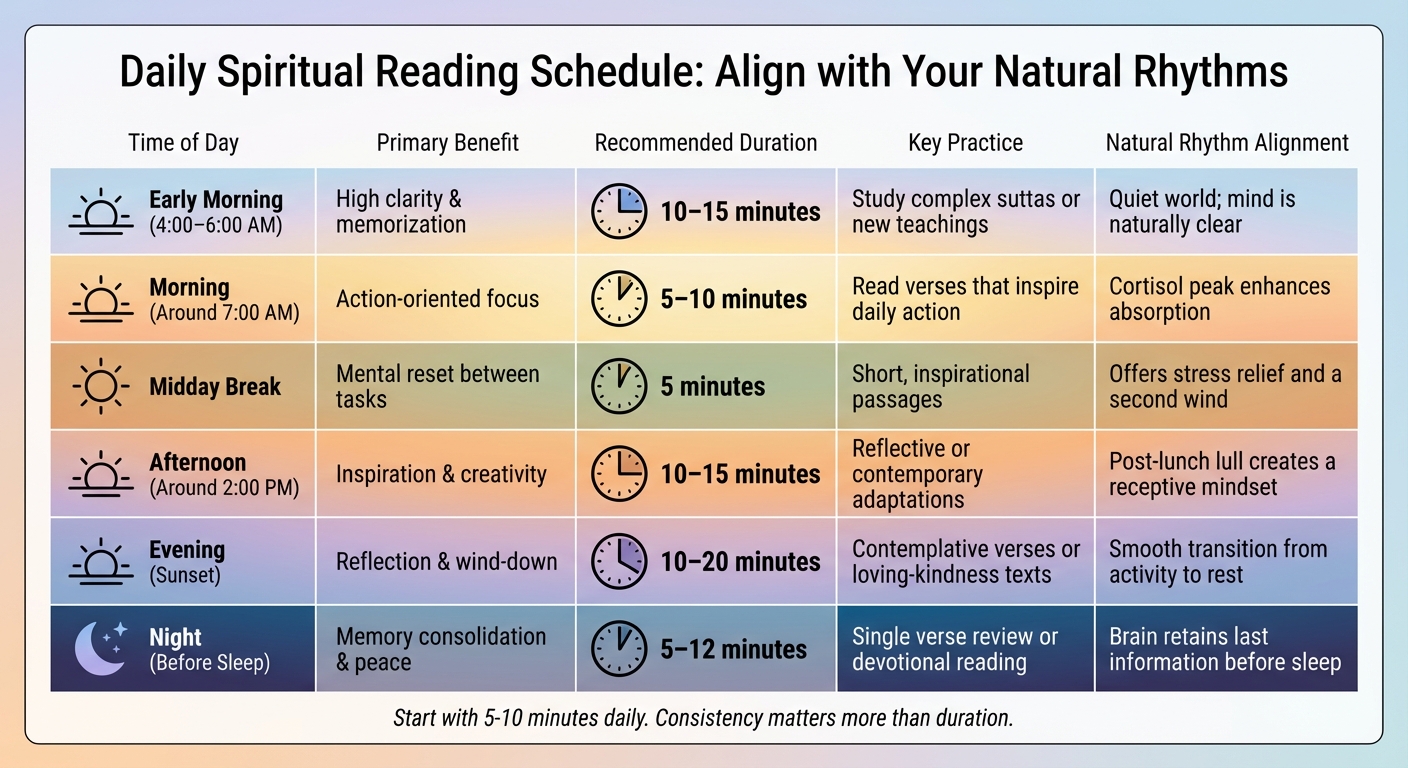
Daily Reading Schedule Table
| Time of Day | Primary Benefit | Recommended Duration | Key Practice | Natural Rhythm Alignment |
|---|---|---|---|---|
| Early Morning (4:00–6:00 AM) | High clarity & memorization | 10–15 minutes | Study complex suttas or new teachings | Quiet world; mind is naturally clear |
| Morning (Around 7:00 AM) | Action-oriented focus | 5–10 minutes | Read verses that inspire daily action | Cortisol peak enhances absorption |
| Midday Break | Mental reset between tasks | 5 minutes | Short, inspirational passages | Offers stress relief and a second wind |
| Afternoon (Around 2:00 PM) | Inspiration & creativity | 10–15 minutes | Reflective or contemporary adaptations | Post-lunch lull creates a receptive mindset |
| Evening (Sunset) | Reflection & wind-down | 10–20 minutes | Contemplative verses or loving-kindness texts | Smooth transition from activity to rest |
| Night (Before Sleep) | Memory consolidation & peace | 5–12 minutes | Single verse review or devotional reading | Brain retains last information before sleep |
This table can serve as a guide to help you align your reading practice with your daily energy rhythms.
Choosing Your Best Reading Times
The most effective reading schedule is the one that works with your natural energy flow. Mornings and evenings are often ideal for clarity and calm, making them great for spiritual practices. If you're at your sharpest in the morning, focus on action-oriented readings that inspire your day. For those who feel sluggish in the afternoon, around 2:00 PM when energy dips, this could be the perfect time for reflective or inspirational texts.
Even short, consistent sessions can create lasting habits. Tracking your progress and stopping while you're still enjoying the practice can make a big difference. As Tricycle Magazine explains:
"Stopping while you're still enjoying the task means that you will have a positive memory of the time you spent, and be eager to return".
Conclusion
Finding the ideal time for spiritual reading isn't about sticking to strict schedules - it’s about tuning into your natural rhythms. By aligning your reading with your energy levels, you can deepen both your understanding and your spiritual journey. Each part of the day - from the calm of early morning to the quiet of evening - brings its own advantages for reflection and growth.
The secret to meaningful spiritual progress lies in consistency, not intensity. As mindfulness teacher Annika Rose wisely says:
"It's better to meditate for 5 minutes every day than 30 minutes once a week. Small, steady steps".
Even science supports this idea. Studies show that just 5–12 minutes of mindfulness practice daily can significantly reduce stress and anxiety. This reinforces the flexible, approachable methods discussed earlier.
Try experimenting with different times to see when spiritual reading fits seamlessly into your routine. Perhaps mornings energize you for the day ahead, or evenings provide a peaceful space to reflect and absorb insights. The beauty of spiritual practice is its adaptability - it molds itself around your life. Over time, even small, consistent moments, like waiting for your coffee to brew, can become meaningful opportunities for mindfulness and growth.
FAQs
What if I can’t wake up for Brahma Muhurta?
If waking up during Brahma Muhurta (roughly 1.5 hours before sunrise) feels out of reach, don’t worry - you can still make time for spiritual reading at other points in the day. Early mornings or evenings are excellent alternatives, as they often provide a calm environment ideal for focus and reflection. The most important thing is to select a quiet moment that suits your natural rhythm. This can help deepen your connection to texts like the Dhammapada and nurture your spiritual journey.
How do I choose what to read at different times of day?
Choosing the right time to read can depend on your natural energy levels and ability to concentrate. Early mornings, between 4:00 AM and 6:00 AM, are often perfect for spiritual texts like the Dhammapada, as the mind tends to be calm and open during these hours. On the other hand, evenings are great for reflection and winding down before bed. The key is to match your reading schedule with the times when you feel most focused and mentally receptive.
How can I stay consistent when my schedule changes?
To keep up with your spiritual reading practice when your schedule shifts, try adjusting the time of day you read - whether it's in the morning, evening, or whenever fits best. Be intentional about making it a priority, and set up a special, peaceful spot for your reading. Remember, staying flexible and focused on the purpose of your practice is key to staying committed, even as daily routines evolve.