

7 Awakening Factors in Dhammapada Reflections
Seven awakening factors as daily lenses on Dhammapada verses—read one verse, pause, and practice a single skillful response.
I start with one Dhammapada verse a day, then choose one response to practice. The seven awakening factors guide that reflection toward awakening - not just stress relief.
Here’s how I use each factor:
- Mindfulness: Notice what is happening.
- Investigation: Examine my intentions and actions.
- Energy: Make steady effort without strain.
- Joy: Welcome gladness without holding on.
- Tranquility: Ease tension in body and mind.
- Concentration: Return attention to one focus.
- Equanimity: Respond with balance and care.
The Dhammapada does not directly list these seven factors; I use the framework from SN 46 as a lens for its verses. <u>They are supports, not a checklist.</u> When my mind feels dull, I turn toward inquiry, effort, and joy. When it feels restless, I lean toward calm, focus, and balance.
My daily starting point: read one verse, pause for 2–5 minutes, and choose one skillful action.
7 Factors of Awakening, 3 Approaches to the Unconditioned: Talk with Rick Hanson on Feb. 24, 2021
The 7 Awakening Factors at a Glance
| Factor | Pali term | Core quality | Reflection emphasis |
|---|---|---|---|
| Mindfulness | sati | present-moment awareness | heedfulness and attention |
| Investigation | dhamma-vicaya | clear inquiry | intentions and consequences |
| Energy | viriya | steady effort | steady effort |
| Joy | pīti | uplifting joy | happiness without grasping |
| Tranquility | passaddhi | bodily and mental calm | releasing tension |
| Concentration | samādhi | settled, unified attention | gathering the mind |
| Equanimity | upekkhā | balanced response | steadiness amid changing conditions |
Tranquility calms agitation, concentration gathers attention, and equanimity maintains balance without indifference.
Use this table as a guide as you read each verse.
For investigation, ask what intention shapes this reaction and what consequence may follow; for joy, ask whether you can welcome this happiness without needing it to last.
Next, look at how these seven factors support one another in practice.
How the Factors Work Together
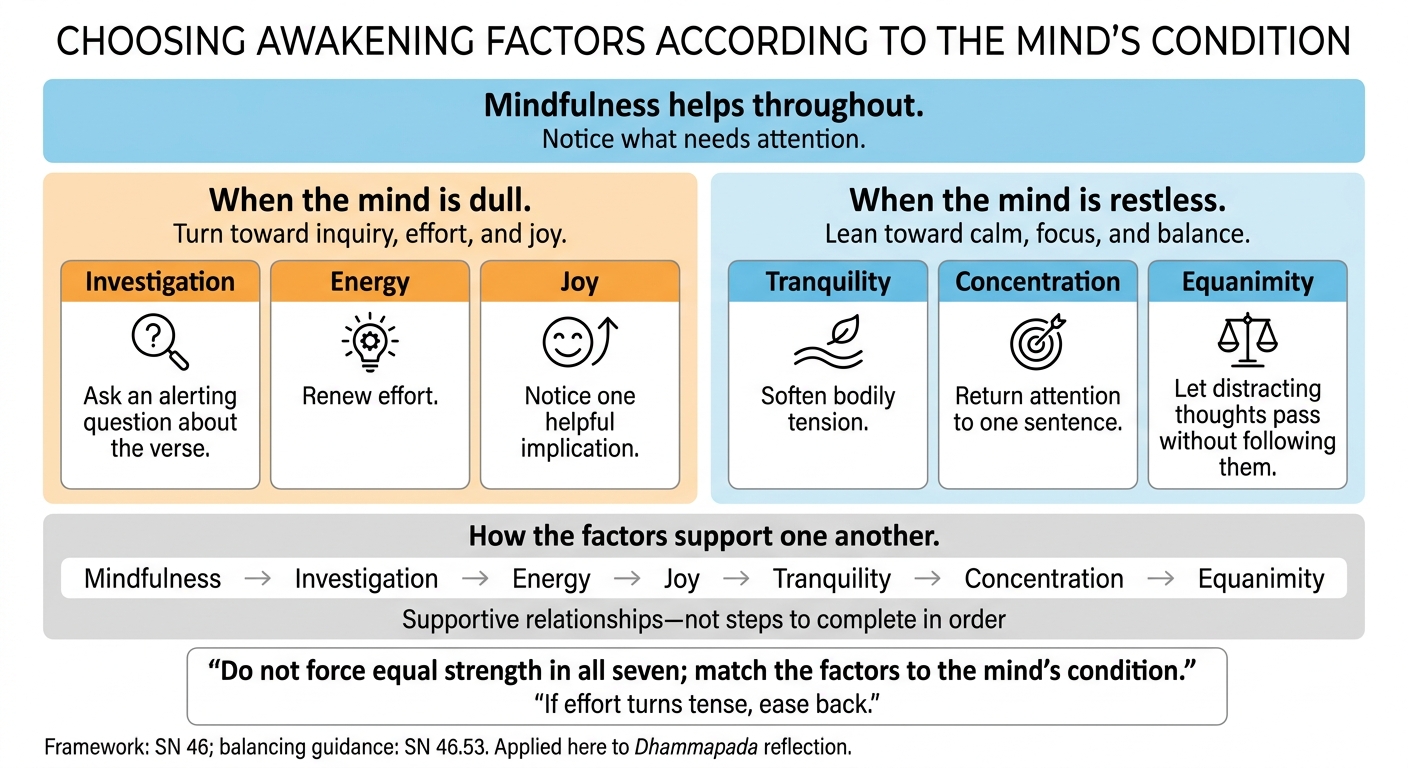
Seven Awakening Factors: Balancing Dullness and Restlessness
The table lists the factors; SN 46 shows how they work together. It presents the seven factors as supports for one another: mindfulness leads to investigation, investigation stirs energy, energy brings joy, joy settles into tranquility, tranquility supports concentration, and concentration matures into equanimity. Here, pīti means “joy” (sometimes “rapture”). These qualities offer lenses for reflecting on Dhammapada verses.
The support needed depends on the mind’s state. SN 46.53 recommends investigation, energy, and joy when the mind is dull, and tranquility, concentration, and equanimity when it is restless. Do not force equal strength in all seven; match the factors to the mind’s condition.
Mindfulness helps throughout by noticing what needs attention. Read the verse, then choose a response that fits:
For dullness, ask an alerting question about the verse, renew effort, and notice one helpful implication; for restlessness, soften bodily tension, return attention to one sentence, and let distracting thoughts pass without following them.
If effort turns tense, ease back. The verse reflections below use this flexible approach.
One Dhammapada verse can support several factors. Each paraphrase below gives its verse number and names the awakening factor it most strongly supports. These are practical readings, not verbatim translations. SN 46 provides the awakening-factor framework.
1. Mindfulness (sati): Notice Present Experience
Mindfulness (sati) means staying aware of present experience while keeping the Dhamma in mind.
Dhammapada 21, paraphrased: Heedfulness is the path to the Deathless (Nibbāna); heedlessness is the path to death.
Here, appamāda refers to careful, non-negligent practice. It isn't a strict synonym for mindfulness.
After reading the verse, notice one recurring thought, emotion, or action it brings up. Try not to judge it or follow it. Ask:
“What am I noticing, and does this need a response?”
The next factor builds on this noticing by examining what the verse reveals.
2. Investigation (dhamma-vicaya): Examine Reactions
Building on awareness, investigation looks at what a reaction reveals. Investigation means examining a reaction to see what is skillful and what is not. Focus on what happened, what you felt, and what followed. There’s no need to guess motives or judge yourself.
Dhammapada 1–2, paraphrased: The mind conditions speech and action, and those actions influence what follows. When conduct is shaped by an agitated or harmful mind, suffering tends to follow like a wheel following an animal’s foot; when conduct is shaped by a clear and wholesome mind, happiness tends to follow like a constant shadow.
These verses address intention and conduct - not every cause of suffering. Outside conditions, including illness, trauma, and injustice, still matter. Use the verse to examine one reaction, not to judge your whole self.
With today’s verse in mind, spend 3–5 minutes on one reaction. What happened first? Which thought or assumption came up, and how did it feel in your body? Then look at what you said or did. Did your response lead to clarity and care, or agitation and harm?
Choose one adjustment to try next time:
Pause before replying or ask for clarification.
Skillful doesn’t always mean easy:
An honest conversation may be difficult yet reduce later distress.
Let that insight guide your steady effort.
3. Energy (viriya): Make Steady Effort
Energy (viriya) means making steady effort to abandon unskillful states and cultivate skillful ones. It puts understanding into practice. Use this verse to check whether your effort feels steady or forced.
Dhammapada 276, paraphrased: Each person must make the effort to walk the path; awakened teachers can show the direction, but they cannot do the practice or make the transformation for someone else.
Put that reminder into practice with one small effort today. After reading today’s verse, choose one skillful quality to strengthen over the next 24 hours. During meditation, sit for 5 minutes, returning to the breath whenever your attention wanders.
Notice how the effort affects your mind: does it feel clearer or more tense? If you feel tense, relax your body or shorten the session. Balanced effort can open into joy.
4. Joy (pīti): Appreciate Joy Without Grasping
As effort becomes steady, joy may arise on its own. Joy (pīti) is the uplifting gladness that comes with practice. It doesn’t mean constant pleasure. Even a quiet lift in mood is worth noticing.
Dhammapada 200 points to the joy of non-grasping: those with little can live happily. Read the verse as a reflection on non-grasping, rather than a definition of pīti. Ask:
Can you enjoy this moment without owning it, extending it, or needing more?
After reading, notice whether generosity, gratitude, or clarity brings any joy. If joy appears, allow it to pass without clinging. If it doesn’t, don’t force it. Letting go of your grip on joy gives it room to settle toward calm.
5. Tranquility (passaddhi): Calm Body and Mind
Tranquility (passaddhi) quiets body and mind without forcing calm. After joy, practice softens into ease, giving you space to receive the verse quietly.
Dhammapada 100 offers a useful reflection:
a single meaningful word that brings peace is worth more than a thousand meaningless ones.
Let the verse remind you to release tension. Pause, notice where your body feels tight, and ease any unnecessary physical or mental effort. Read slowly, then give the meaning time to settle.
Tranquility calms the energy of inquiry, effort, and joy. Aim for relaxed alertness, not dullness - a steadiness that prepares the mind for concentration.
6. Concentration (samādhi): Settle Attention
As the mind calms, staying with one object gets easier. Concentration (samādhi) is a settled, unified mind that rests on one chosen object.
Dhammapada 35, paraphrased, says the trained mind brings happiness.
Choose a focus: breathing, walking, or a single verse. When attention wanders, gently bring it back. Each return is part of the practice - not a failure.
Concentration supports insight; it doesn’t push thoughts away. With steadier attention, you can see thoughts and reactions before following them. That steadiness opens the way for equanimity.
7. Equanimity (upekkhā): Respond With Balance
As concentration steadies the mind, equanimity helps it avoid grasping or aversion. Equanimity is balanced awareness guided by care and discernment. It notices pleasant and unpleasant feelings without clinging to them or pushing them away. It isn’t indifference, emotional withdrawal, or acting as though nothing matters.
Read the verse, then notice what still shakes your balance.
Dhammapada 81, paraphrased: As a rock is not shaken by the wind, a wise person is not thrown off balance by approval or criticism.
Use the verse to notice where approval, loss, or discomfort pulls you off balance. Accept praise without letting it define your worth. When criticism comes, separate useful feedback from the urge to defend yourself. A balanced response can mean accepting a correction - or setting a boundary when someone treats you unfairly.
Apply this reflection to approval and blame, gain and loss, pleasure and pain. Spend 2–5 minutes with one changing circumstance. Notice the sensations in your body, then name the preference or aversion:
“I want more of this”
“I want this gone.”
Allow the feeling to be there without letting it decide what you do next. Steadiness is not passivity. Notice the feeling, name its pull, and choose the calmest skillful response.
Conclusion: Reflect on 1 Verse Each Day
Read one verse each day and put one reflection into practice. Follow a simple rhythm as you read and go about your day: pause, notice, continue.
Notice what comes up and respond skillfully, allowing joy, calm, focus, and balance to grow. These qualities support each other. They aren’t steps to complete in order.
For daily support, Sutta 423 delivers one Dhammapada verse each day for quiet reading. Its 423-verse sequence runs through a year and continues beyond it. Use it as a companion for reflection, not a substitute for broader Buddhist study or formal practice. Return to the verse throughout your day.
FAQs
How can I distinguish investigation from overthinking?
Investigation means observing mindfully, guided by curiosity and direct experience. Hold the verse lightly in your awareness. Notice sensations, emotions, and thoughts instead of trying to figure it out through analysis alone.
Overthinking means chasing outcomes or getting caught in imagined scenarios. If you find yourself picking apart every detail, gently bring your attention back to the verse. Use simple labels - pleasant, unpleasant, or neutral - to notice what you’re experiencing without holding on to it.
What if I feel both dull and restless?
Feeling dull and restless at the same time is common when the mind is untrained. Low motivation pulls one way; agitated distraction pulls the other. These are temporary states, not personal flaws.
Choose a single Dhammapada verse from the Sutta 423 app as your daily point of focus. Notice these feelings without judging them, and label them as temporary. Then gently return to the verse or your breath, with the steady persistence of an arrow maker.
How can I recognize progress in daily reflection?
Progress in daily reflection isn’t about getting everything right. It’s about small, steady changes in what you notice and how you respond. Noticing mental agitation is a step forward: you’re seeing distractions and habits you once missed. With time, you may spot them sooner and pause before reacting to frustration, anger, or stress.
A regular practice, such as daily reflection with the Sutta 423 app, helps you think more clearly and find calm in a busy day.