

Applying Dhammapada to Workplace Stress
Apply Dhammapada teachings—mindfulness, right speech, and loving‑kindness—to ease workplace stress, reduce conflict, and prevent burnout.
Workplace stress is often fueled by tight deadlines, difficult colleagues, and constant multitasking. The Dhammapada, a collection of Buddha's teachings, offers timeless strategies to manage these challenges by focusing on the mind's role in creating stress. Instead of reacting impulsively to external pressures, it encourages mindfulness, calm communication, and self-awareness to transform stress into personal growth.
Key takeaways include:
- Mindset matters: Stress begins in the mind, not in external events.
- Pause before reacting: Verse 134's "broken gong" metaphor teaches calmness in conflict.
- Mindfulness reduces errors: Focus on one task at a time to conserve energy and avoid burnout.
- Daily reflection helps reset: Tools like the Sutta 423 app provide short, actionable insights to stay grounded.
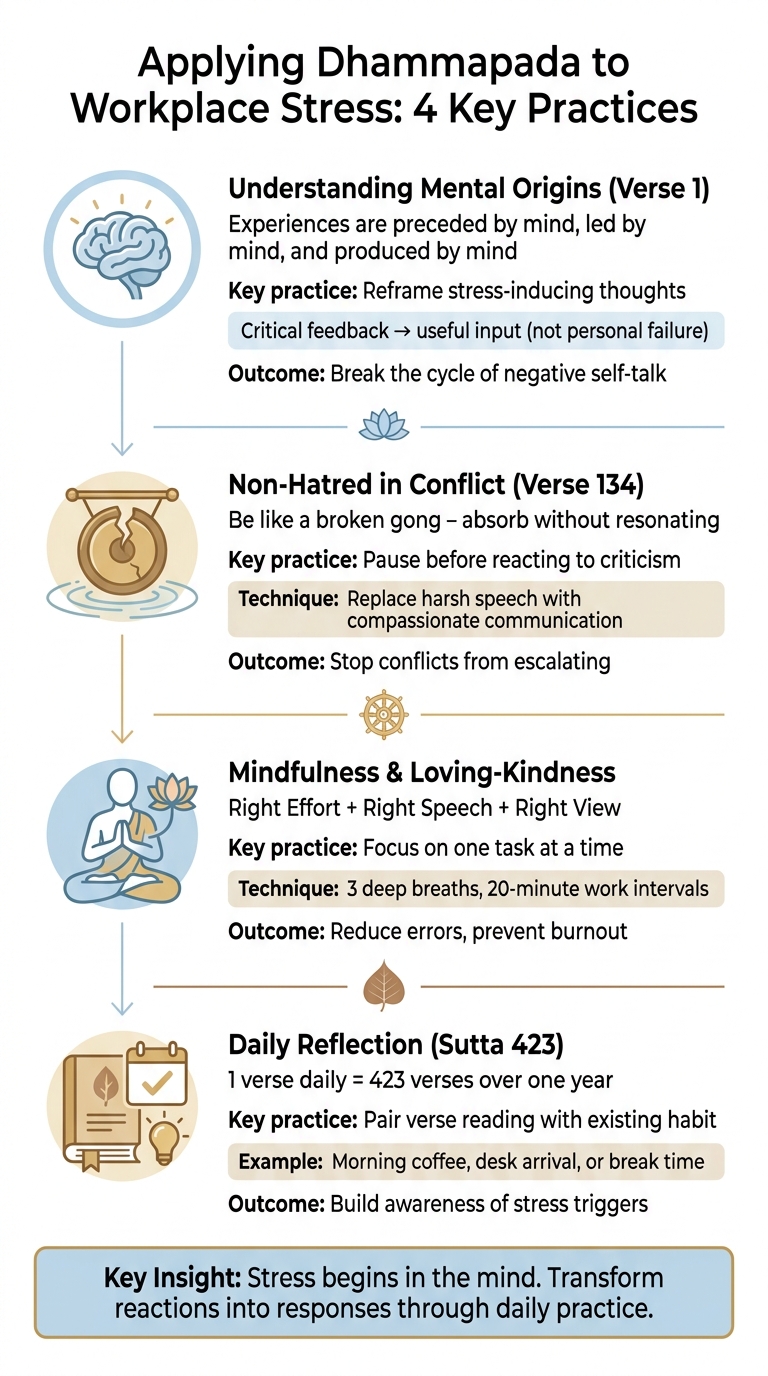
Applying Dhammapada Teachings to Workplace Stress: 4 Key Practices
Buddha's Office: The Ancient Art of Waking Up While Working Well | Dan Zigmond | Talks at Google
Understanding the Mental Origins of Stress: Dhammapada Verse 1
The first verse of the Dhammapada offers a powerful insight:
"Experiences are preceded by mind, led by mind, and produced by mind."
This teaching shifts the focus from external stressors - like tough deadlines, demanding supervisors, or difficult colleagues - to the internal workings of the mind, where stress truly begins. The verse also notes that when we act or speak with unclear judgment, suffering inevitably follows.
Take the example of an employee receiving critical feedback during a performance review. One person might internalize the comments as, "I’m a failure" or "I’m not good enough", turning a single event into a rigid self-identity. Another might see the same feedback as useful input about their skills - something they can work on rather than a permanent flaw. The Dhammapada refers to suffering (dukkha) as a sense of inadequacy or the feeling that the world, as it is, falls short. Dwelling on thoughts like "I’ll never measure up" can create a self-reinforcing loop. For instance, avoiding challenging tasks out of fear may limit growth opportunities, which then strengthens those negative beliefs.
While real workplace challenges - like being understaffed or dealing with unrealistic demands - are undeniable, this perspective highlights the role of personal agency in shaping how we experience those challenges. By recognizing the mental roots of stress, we open the door to practical strategies for breaking free from harmful thought patterns. Acting with clarity and awareness can lead to a deeper sense of well-being and directly improve how we handle work-related pressures.
Using Verse 1 to Manage Workplace Stress
This ancient wisdom offers a practical approach to reframing stress-inducing thoughts. For example, when faced with an overwhelming project, pause and examine your interpretation of setbacks. A thought like "I can’t handle this" feels less intimidating when viewed as a reflection of your current skills rather than a permanent limitation.
Perfectionism often feeds on negative thinking - the belief that anything short of flawless performance equals failure. This idea resonates deeply in today’s work culture, where unattainable standards often drive chronic stress. Recognizing that these standards arise in the mind, rather than from objective reality, can help you develop awareness and regain control over your thoughts. The Dhammapada reminds us, "Passion does not enter a tranquil and reflecting mind", suggesting that cultivating mindfulness can act as a buffer against stress, much like a well-maintained roof protects a house from rain.
One essential takeaway is to avoid self-criticism for having negative thoughts. Beating yourself up only deepens the cycle of negativity. Instead, acknowledge the thought, understand its mental origin, and gently redirect your focus. The goal isn’t to eliminate all negative thoughts - an impossible task - but to recognize the mind’s flexibility. Each moment offers a chance to shift toward a more constructive mental state, creating space for growth and calm even in the face of workplace challenges.
Reducing Workplace Conflict: Dhammapada Verse 134 on Non-Hatred
Verse 134 from the Dhammapada's Violence chapter offers a vivid metaphor for managing workplace hostility: be like a broken gong. The verse states, "If you can keep yourself calm and quiet like a broken gong which is no longer resonant, you are sure to realize Nibbana, there will be no harshness in you". A broken gong, much like a flattened pot, absorbs impact without producing any echo.
This teaching directly relates to common workplace challenges. When faced with harsh words - whether from a frustrated manager, a competitive coworker, or an unhappy client - the natural reaction might be to respond in kind. But retaliating often escalates the situation. The Dhammapada also warns against sarambhakatha, or speech that demeans others, as a frequent cause of workplace strife. The lesson here isn't about suppressing your voice; it's about fostering an inner calm that resists the urge to retaliate. By refusing to "resonate" with hostility, you can stop conflicts from spiraling. This calmness becomes the foundation for resolving disputes effectively.
While the verse focuses on cultivating internal calm, it also inspires practical strategies for handling workplace conflict constructively.
Conflict Resolution Techniques from Verse 134
The "broken gong" principle translates into actionable steps for improving workplace communication. One key tactic is to pause before replying to criticism. This brief pause disrupts the cycle of escalating tension.
Another strategy involves replacing harsh language with clear, compassionate communication, even when delivering difficult messages. The Dhammapada emphasizes "Right Speech", which means using words that build harmony rather than create division. For instance, instead of saying, "You always mess up these reports", try, "Let’s review the data together to ensure everything is accurate."
Active listening with empathy is also critical during tense interactions. Responding with equal intensity only fuels hostility. As Ven. Weragoda Sarada Maha Thero explains, "When an individual is tranquil and silent like a flattened out metal pot, it is as if he has already attained Nibbāna. Such a person does not engage in vain talk". Maintaining composure allows you to address the root issues instead of getting lost in emotional exchanges.
These mindful practices not only help resolve conflicts but also encourage greater focus and resilience in the workplace.
Building Focus and Resilience Through Mindfulness and Loving-Kindness
The Dhammapada isn't just a guide for resolving conflicts - it also provides practical tools to help you stay focused and emotionally steady during demanding workdays. Two key practices - mindfulness (sati) and loving-kindness (mettā) - work hand-in-hand to cultivate the clarity and balance you need to handle pressure without feeling overwhelmed. These practices build on the foundation of calming conflict, redirecting inner awareness to boost both productivity and resilience.
Mindfulness isn't about quick fixes or trendy productivity hacks. It's about developing a clear awareness that allows you to see things as they are, rather than reacting impulsively to stress or preconceived ideas. Loving-kindness complements this by softening your interactions, making it easier to approach tense situations with patience instead of defensiveness.
Using Mindfulness to Reduce Stress and Improve Productivity
Mindfulness embodies the Dhammapada's principle of Right Effort (Sammā Vāyāma), which involves directing your energy with intention. Instead of simply pushing harder when you're overwhelmed, mindfulness helps you recognize which mental habits drain your energy and which ones restore it. Right Effort encourages you to prevent anxiety from taking root, let go of irritation, nurture patience, and maintain focus.
For instance, imagine you're facing a tight deadline. Mindfulness can help you pause and decide whether to respond immediately or take a moment to gather your thoughts and reply more thoughtfully. Without this discernment, you might react impulsively, driven by fear or frustration.
Incorporating mindfulness into your day can start with small, simple habits. Begin your morning with three deep breaths, and try working in focused 20-minute intervals, pausing briefly between tasks or meetings to reset your focus. These small adjustments can seamlessly fit into your routine.
Multitasking, on the other hand, scatters your attention and depletes your mental energy. Focusing on one task at a time not only reduces errors but also lowers stress. Over time, this increased awareness can even help you detect early signs of burnout, such as persistent fatigue or growing negativity, allowing you to address them before they escalate.
To complement mindfulness, loving-kindness practice helps create smoother and more understanding workplace relationships.
Loving-Kindness Meditation for Better Workplace Relationships
While mindfulness sharpens focus, loving-kindness transforms tension into opportunities for connection and understanding. The Dhammapada emphasizes Right View (Sammā Diṭṭhi), which encourages you to see situations clearly instead of through an emotional or reactive lens. For example, when a colleague misses a deadline or a client sends a curt email, loving-kindness invites you to consider the pressures they might be facing. This shift in perspective turns potential conflict into a chance to approach the situation with empathy.
This practice also aligns with Right Speech (Sammā Vācā), which promotes communication that is honest, kind, and constructive. By truly listening - absorbing what someone says before formulating your response - you can build trust and ease tensions.
To deepen your practice, try a quick body scan during breaks. Pay attention to areas where tension gathers, like your shoulders, jaw, or chest, and take a few deep breaths to release it. Some people find grounding tools, like mala beads, helpful for bringing their focus back to the present during stressful moments. These small rituals help you stay emotionally steady, making it easier to engage in thoughtful and patient interactions.
When leaders model this kind of mindful presence and steady energy, they create an environment of psychological safety - a critical factor for team performance. Over time, these practices can seamlessly become part of your workday, helping you build personal resilience while fostering a more harmonious workplace environment.
Daily Dhammapada Reflection with Sutta 423

A consistent daily practice can weave mindfulness and kindness into your workday. The Sutta 423 app offers a simple way to do this by delivering one verse from the Dhammapada each day. This small, intentional pause in your routine provides a full year of reflections, helping you stay grounded.
Why does this work? Because consistency matters more than the length of time you spend. Even a short, focused moment of reading can shift your mindset. It helps you recognize when stress is creeping in, when you're reacting instead of thoughtfully responding, or when you need to refocus. This steady rhythm of reflection can turn into a practical and meaningful daily habit.
The app also includes journaling features, allowing you to connect each verse to your personal and professional life. This makes the wisdom less abstract and more actionable, giving you tools to tackle everyday challenges.
Creating a Daily Reflection Practice
Pairing the daily verse with an existing habit makes it easy to integrate into your routine. For example, you could read the verse with your morning coffee, when you sit down at your desk, or during a quick break between meetings. These mindful pauses can help you reset your focus and avoid carrying frustration from one task or conversation to the next.
You don’t need a lengthy meditation session to benefit. Just take three deep breaths, open the app, read the verse slowly, and note any thoughts that come up. That brief moment of presence can break the cycle of autopilot and gradually build the clarity needed for tight deadlines, challenging emails, or tough conversations.
Connecting Verses to Workplace Challenges
Each verse offers a fresh perspective to help you handle workplace stress. For instance, if you're in conflict with a colleague, a verse on Right View might encourage you to ask, “What actually happened?” This can help you separate the facts from the emotional storylines your mind might create. Similarly, a verse on Right Speech could remind you to pause before responding, ensuring your words are truthful, kind, and purposeful.
Take Dhammapada 100 as an example:
"Better than a thousand meaningless words is one meaningful word that brings peace to the one who hears it."
This verse can inspire thoughtful communication during tense meetings or when crafting a difficult message. As the daily verses align with your shifting challenges, they provide timely insights to navigate your day with greater mindfulness.
Over time, this practice can also act as a warning system for burnout. If you notice lingering fatigue, growing frustration, or a pattern of impatience, it might be a signal to step back and recalibrate. While the verses themselves aren’t a solution, they sharpen your ability to see clearly and respond with purpose.
Conclusion: Using Dhammapada Wisdom to Transform Workplace Stress
This article has delved into how the teachings of the Dhammapada can be applied to manage work-related stress effectively. According to its wisdom, stress originates in the mind. When we nurture a calm and steady mind, we naturally invite happiness and well-being. On the flip side, an unsettled mind brings discomfort, reminding us that we have more influence over our reactions than we often acknowledge.
The Dhammapada offers practical guidance - whether through principles like Right Effort and Right Speech, embracing non-hatred during conflicts, or reflecting daily with tools like the Sutta 423 app. These teachings help prevent burnout, encourage thoughtful communication, and develop inner resilience. For example, balanced effort ensures we avoid both overexertion and disengagement. Taking a moment to pause before speaking fosters conversations that are honest, kind, and constructive. Letting go of outcomes beyond our control also conserves mental energy that can be better used elsewhere. Over time, these practices cultivate patience, composure, and focus.
Daily reflections, such as those provided by the Sutta 423 app, offer consistent support for navigating professional challenges. The app shares one verse from the Dhammapada each day, creating a daily habit of quiet reading and reflection. This simple routine sharpens awareness of stress triggers, allowing us to respond thoughtfully instead of reacting impulsively.
With its 423 verses, the Dhammapada provides a year’s worth of insights, offering a new perspective on workplace challenges. By focusing on what we can control - our thoughts and reactions - rather than external circumstances, we can turn stress into an opportunity to build strength and grow.
FAQs
How do I stop taking criticism at work personally?
The Dhammapada emphasizes that our minds play a central role in shaping our experiences, and that clinging to attachments often leads to suffering. When faced with criticism, it’s important to recognize that it usually stems from external circumstances rather than personal shortcomings.
By practicing mindfulness, you can nurture a sense of non-attachment and free yourself from the constant need for validation. Reflecting on the impermanence of life and prioritizing inner peace allows you to approach challenges with a calm and objective mindset. Incorporating daily reflection on verses from the Dhammapada can strengthen your resilience and promote a sense of balance and harmony, even in demanding environments.
What does “be like a broken gong” mean in a workplace conflict?
"Be like a broken gong" is a reminder to stay composed and avoid reacting impulsively during workplace conflicts. By choosing calmness over confrontation, you not only preserve your peace of mind but also help keep the situation from escalating unnecessarily.
How can I build a daily Dhammapada reflection habit at work?
Start with a manageable routine by setting aside a specific time each day - perhaps during a break or at the beginning of your workday - to quietly read and think about a verse from the Dhammapada. Apps like the one recommended by Sutta 423 can send you a verse daily, making it easier to stay consistent. As you reflect, focus on how teachings like mindfulness and self-discipline can relate to your work life. To deepen the experience, consider jotting down your thoughts in a journal - this can help solidify your understanding and make the practice more meaningful.